
With fuel running out in smaller towns we decided to double down and get across the Nullarbor as soon as possible.
We stopped in Kalgoorlie to reset, fuel up, get the stone stomper sown up and replace the Anderson plug. After two days in Kalgoorlie, we headed to Norseman before turning east on the Eyre Highway to South Australia. The Eyre Highway is generally challenging due to a lack of water along the 1600 km stretch. In addition to water, the volatility of fuel supply to remote service stations, compounded the challenge.
We had no choice, we had to get to the other side of the Nullarbor where fuel and water are readily accessible.
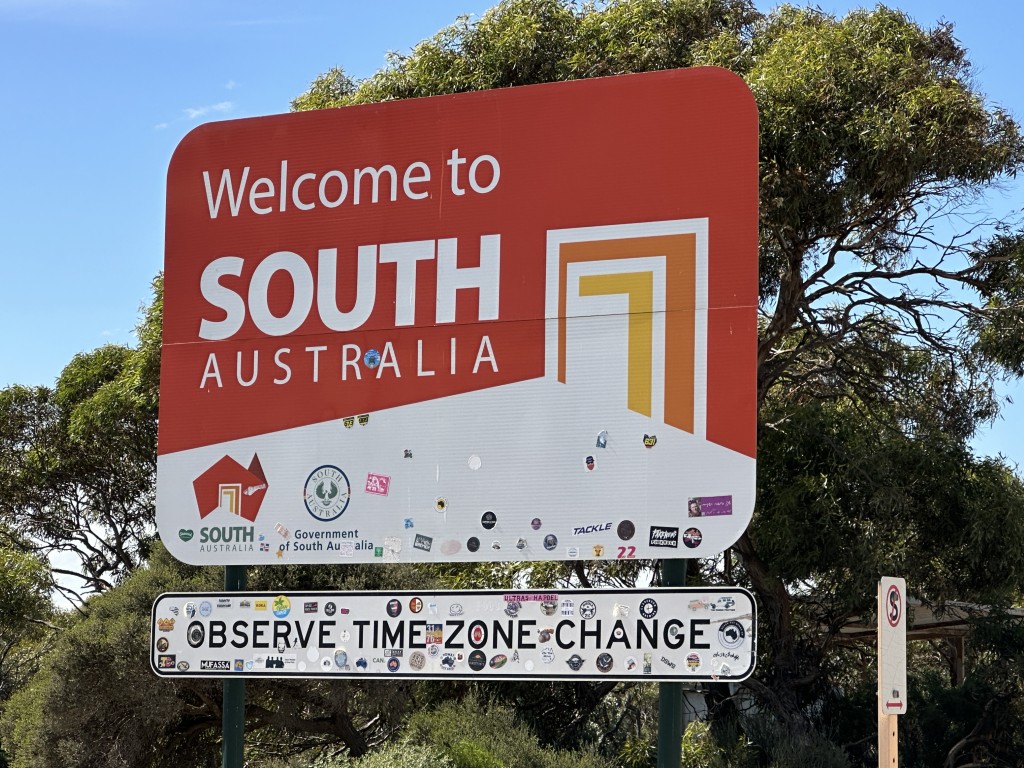
It did not take long before we crossed the first border and the time zones started changing.
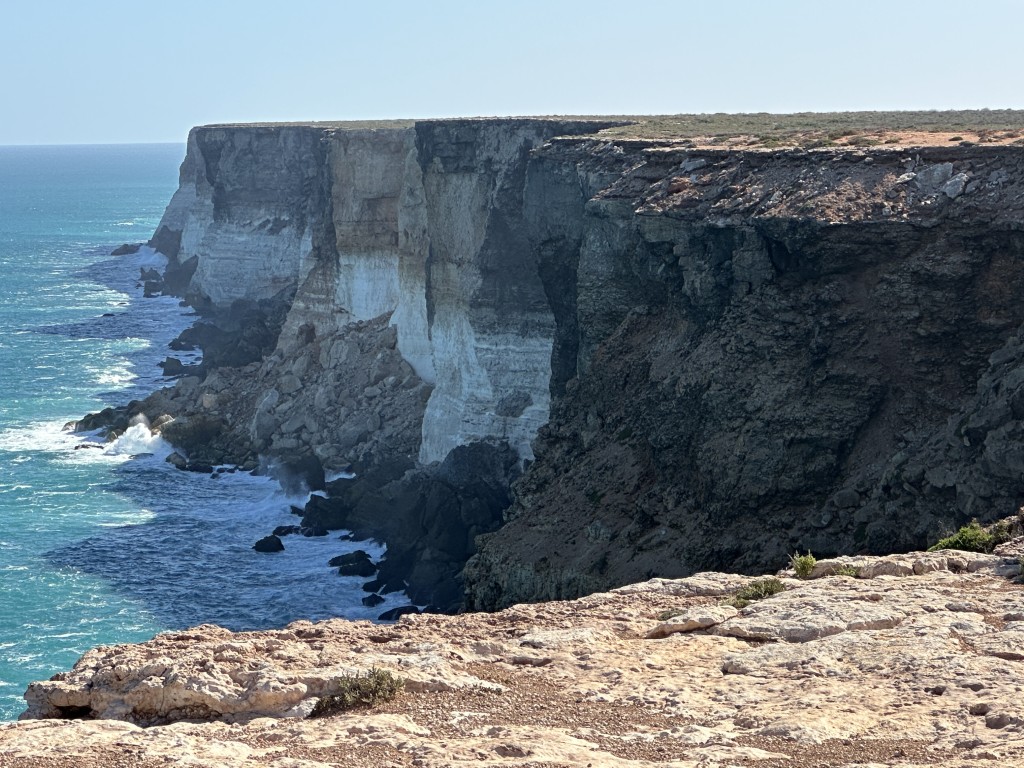
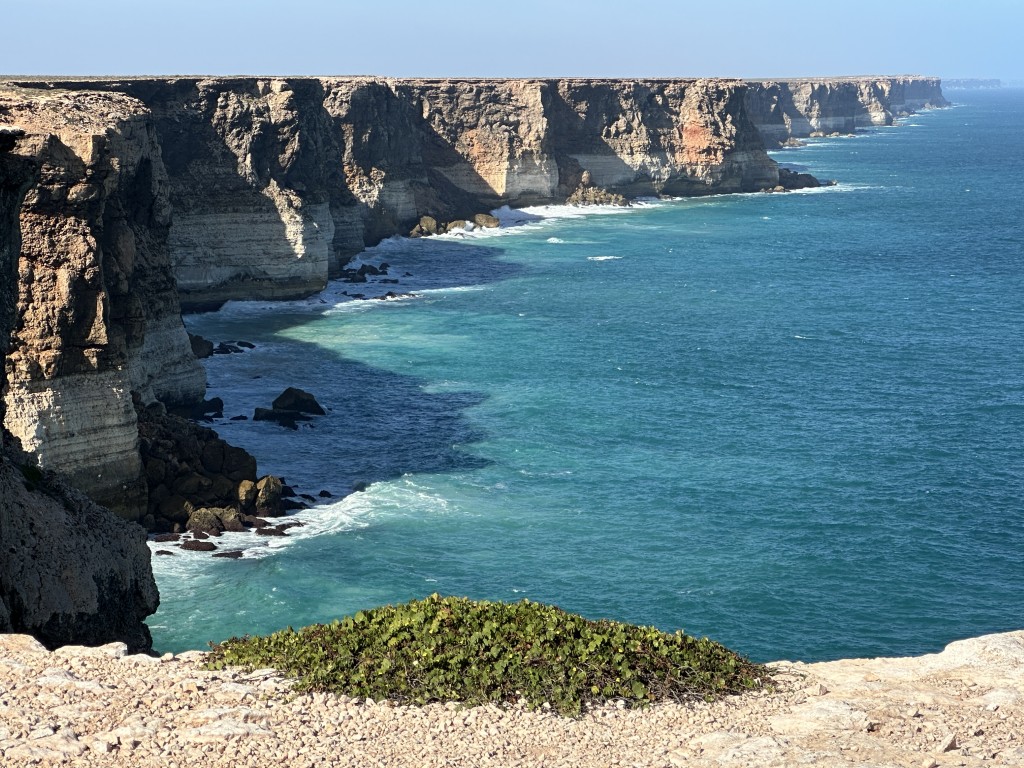
One of the features of the Eyre Highway is the Nullarbor plains. Adjacent to the Nullarbor plains is a 210 km stretch of cliffs known as the Bunda Cliffs. Despite being in a rush, we had to stop at the lookouts. Standing on the edge of a 120 m limestone drop straight into the Southern Ocean takes your breath away.
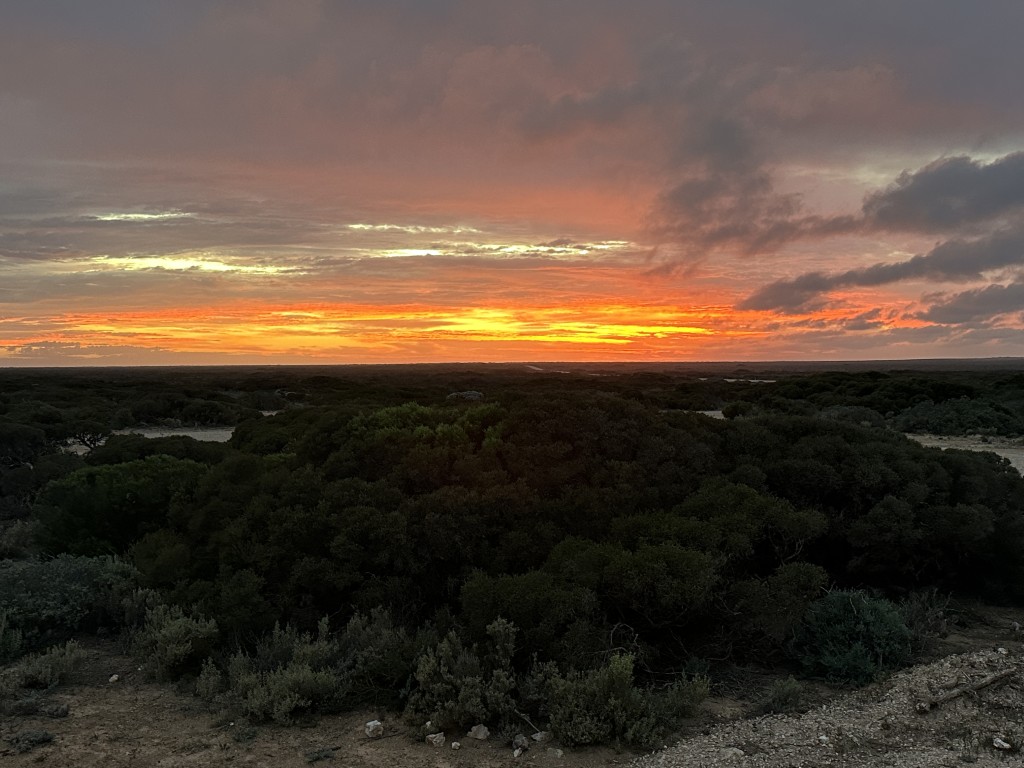
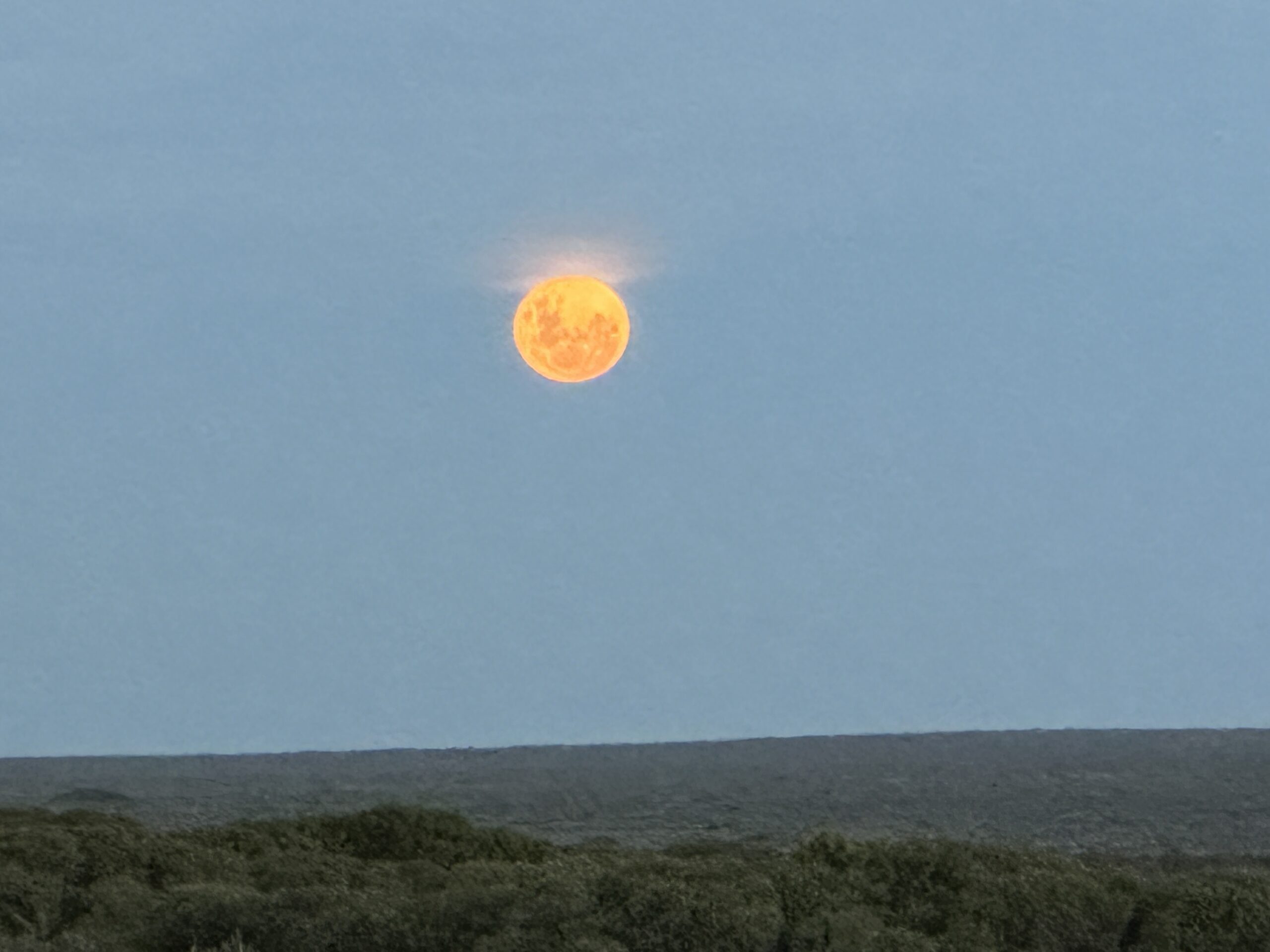
After a long drive the camp along the Nullarbor rewarded us with a great sunset and a glowing full moon.
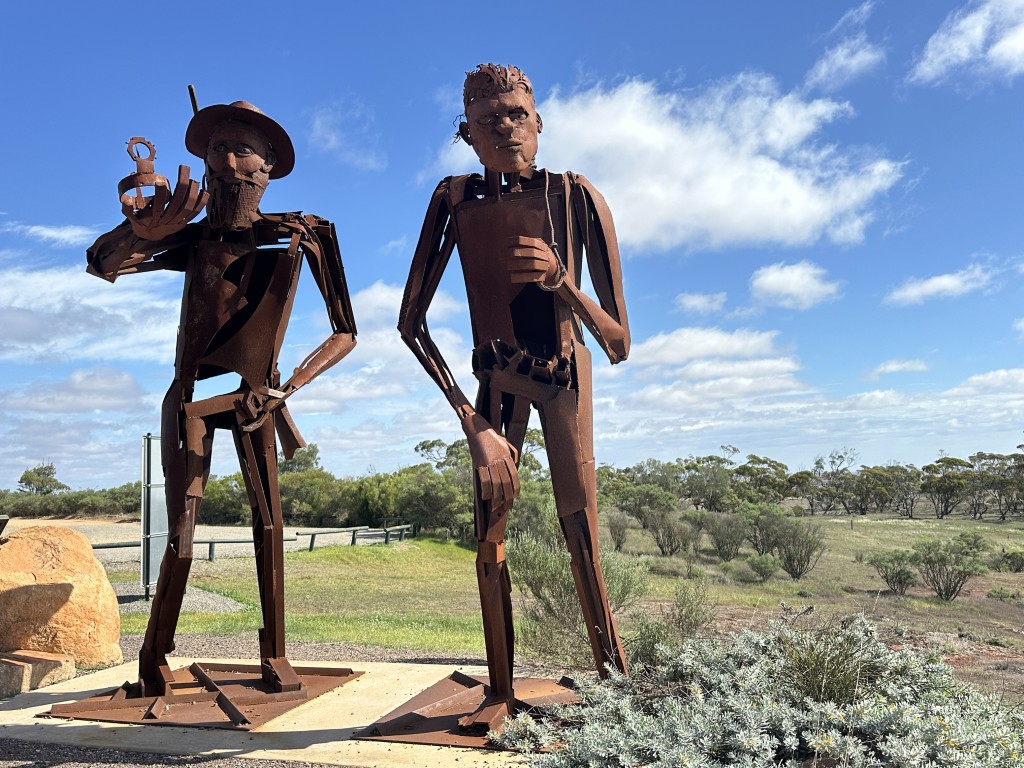
Our next stop was Kimba, the halfway mark if you are crossing Australia. With most of the remote isolated road behind us, we decided to stay a few days in Kimba. Whites Knob Lookout in Kimba has sculptures of Edward John Eyre and his indigenous tracker. The sculptures were the only structures interrupting the 360º views from the lookout.
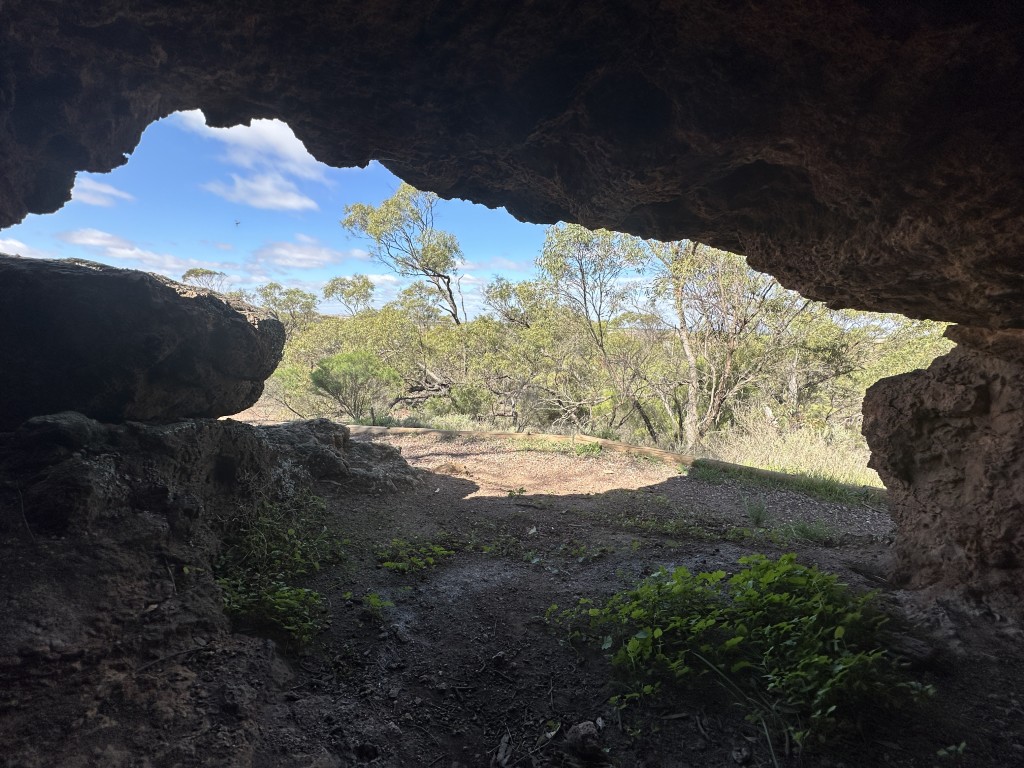
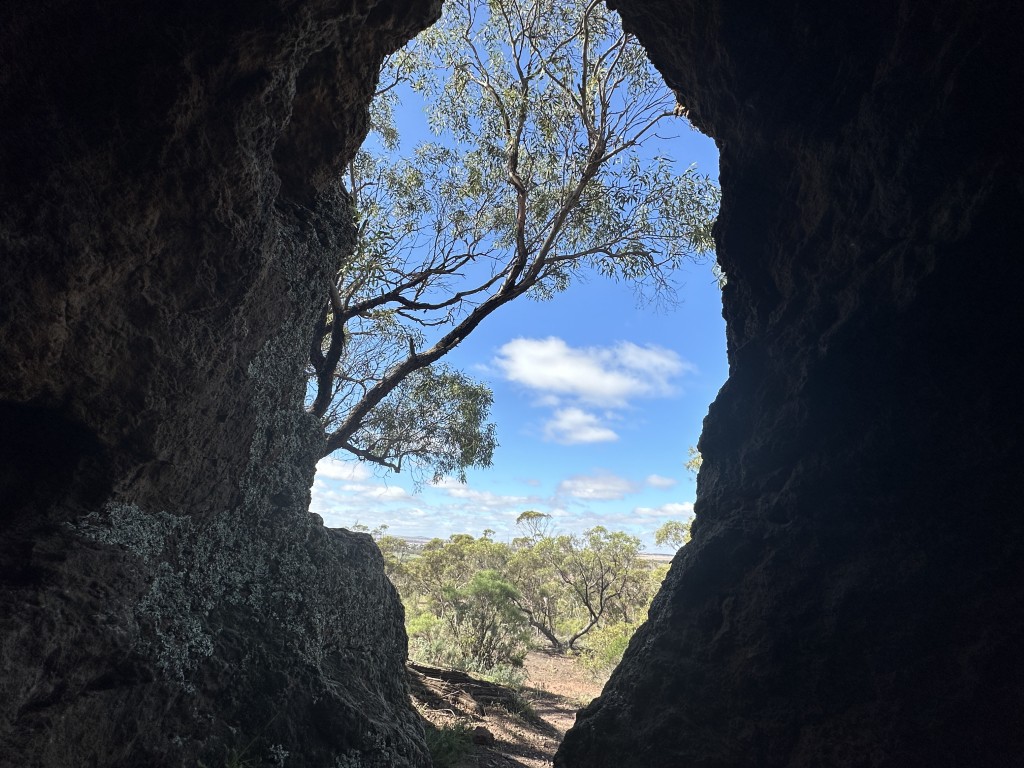
Just below the sculptures are two small caves to explore.
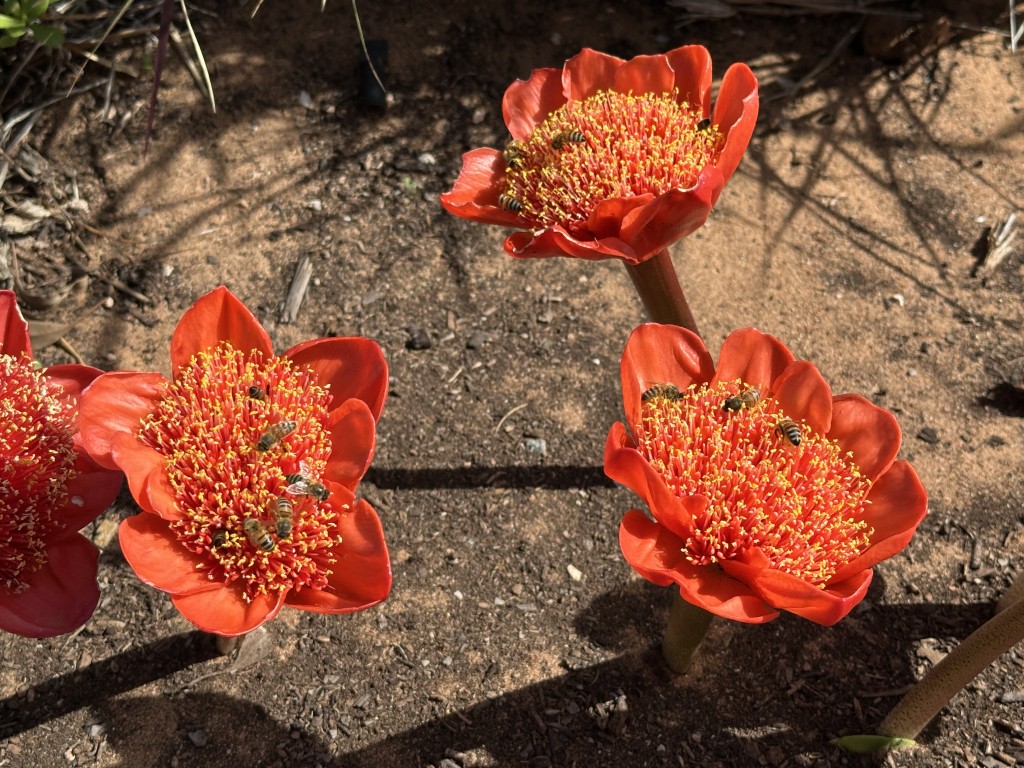
While in Kimba, we saw these fire-red flowers contrasting the arid dirt in the main road. We were convinced they were fake until we saw the bees on them. A quick google confirmed they are blood lilies, commonly referred to as paintbrush lilies.
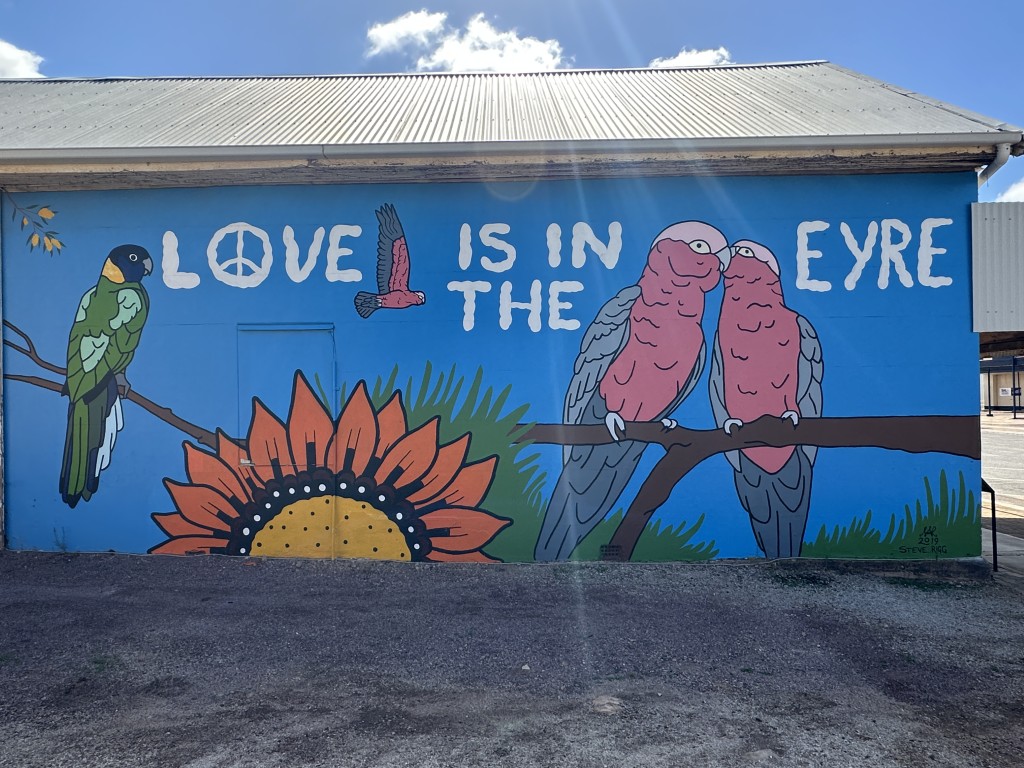
This mural was quite fitting to the Eyre Highway.
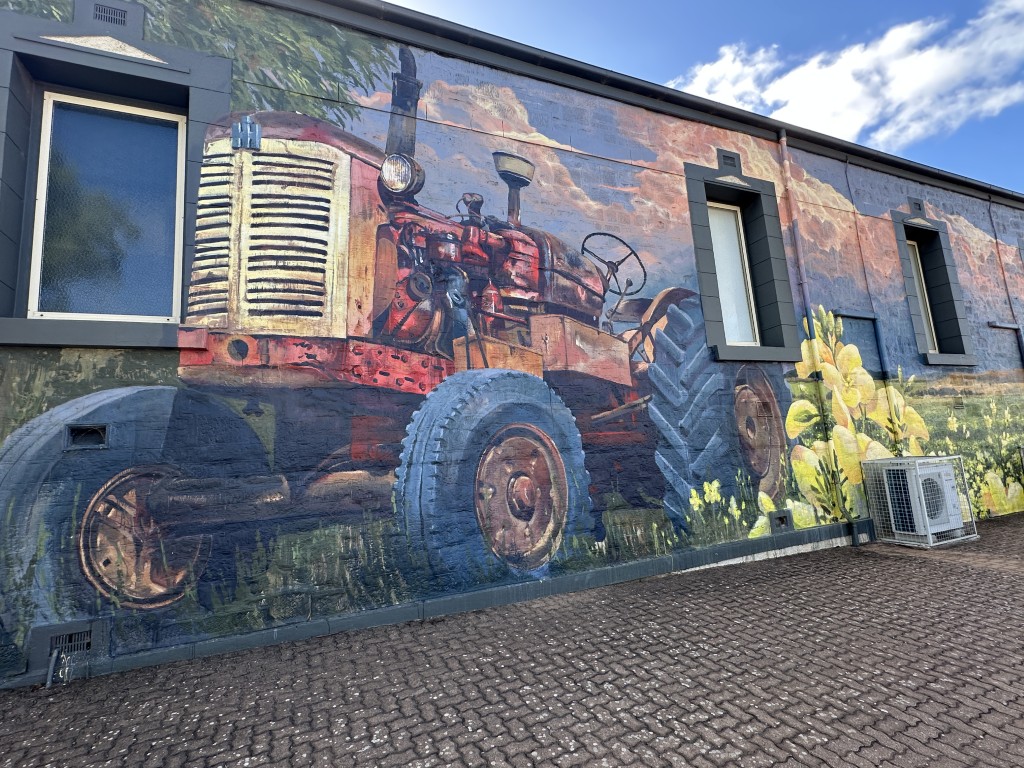
The old International tractor on the mural, celebrates the local farming heritage.
From Kimba we filled up at Port Augusta and crossed the Horrocks Pass to Peterborough. A narrow steep pass took us through the rolling green hills.
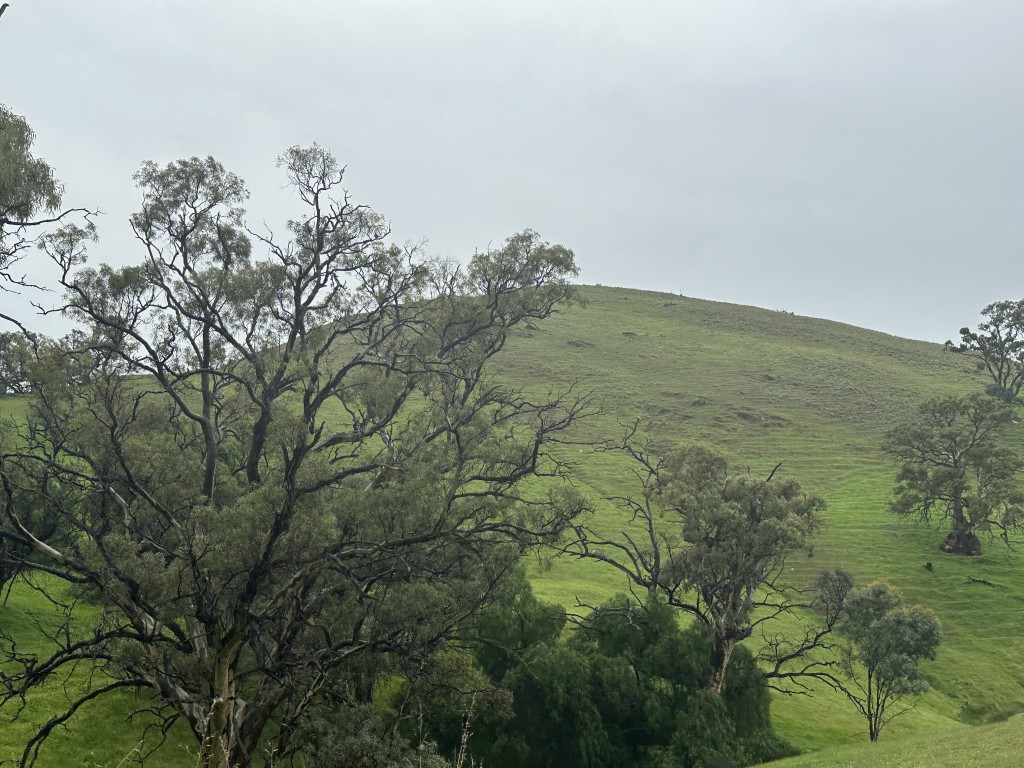
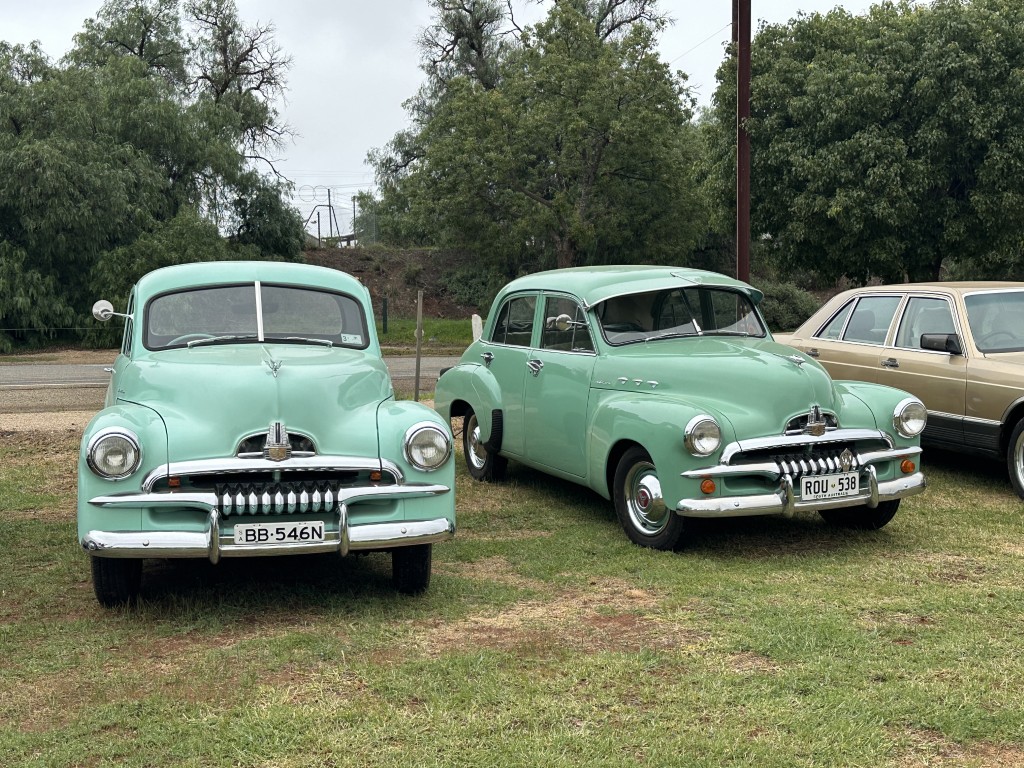
Peterborough is a railway town once known as the busiest single line railway track in the world. While we were there, the Peterborough Miniature Railway Association Incorporated had an open weekend with scale trains taking passengers around the track. A few vintage vehicles were scattered around the station.
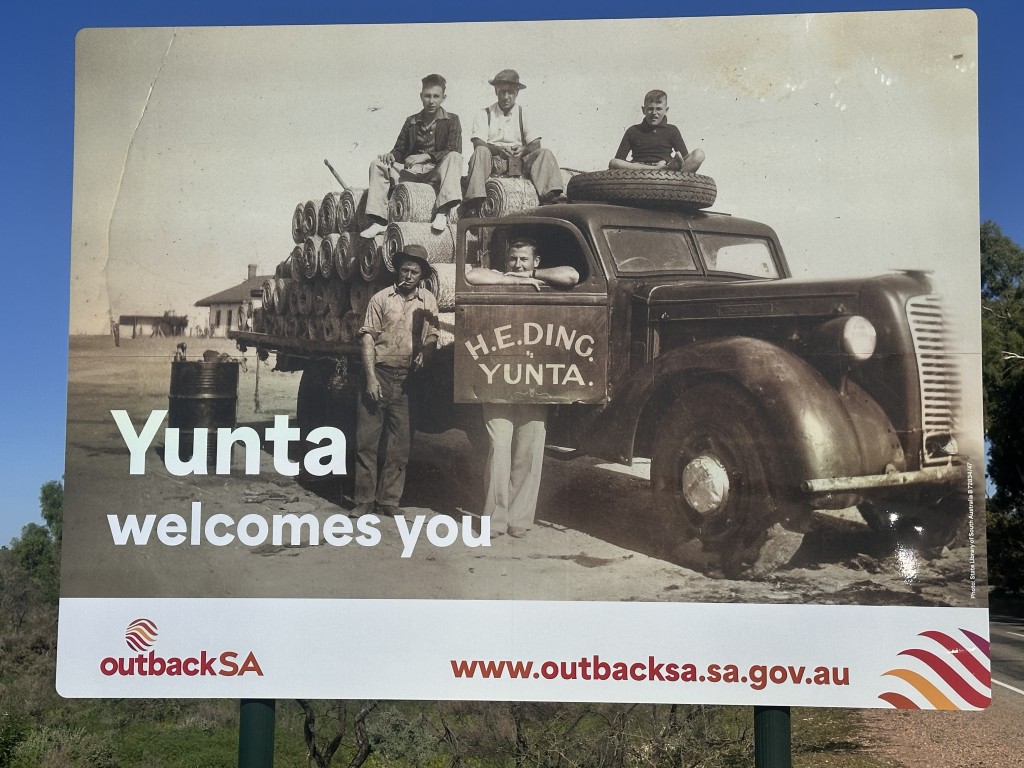
Our next stop after Peterborough was Yunta. Yunta is the kind of town that very few people know of, and even fewer people visit. The town was in the news in 2025 after the sad disappearance of Gus Lamont, a four-year-old boy.
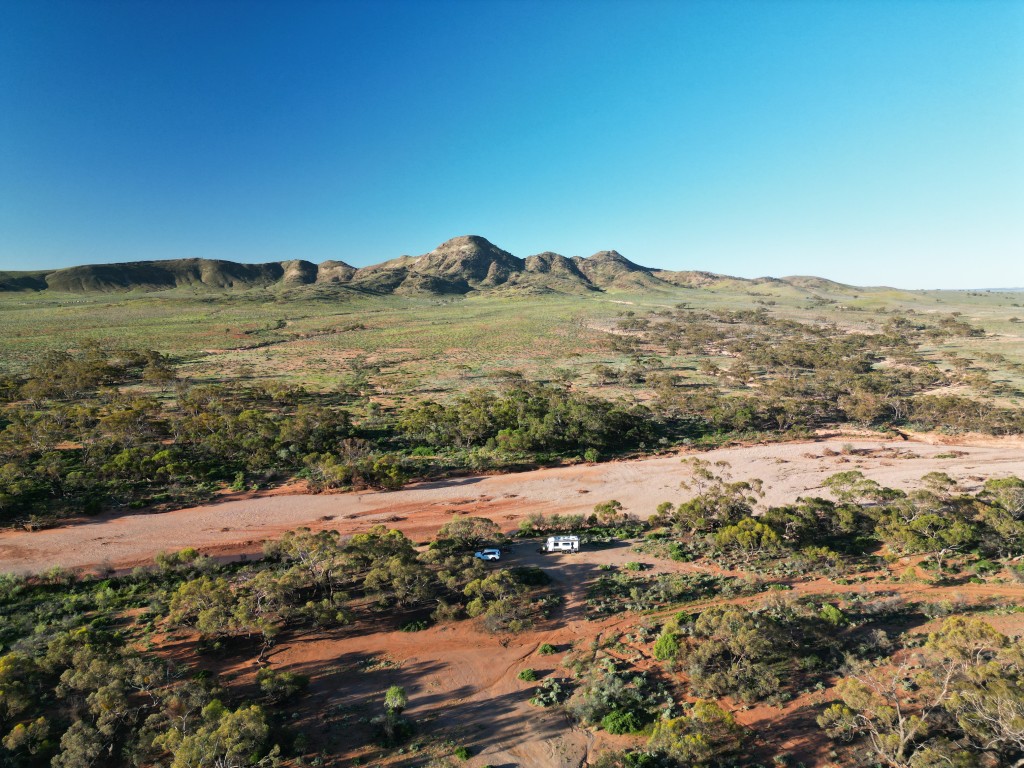
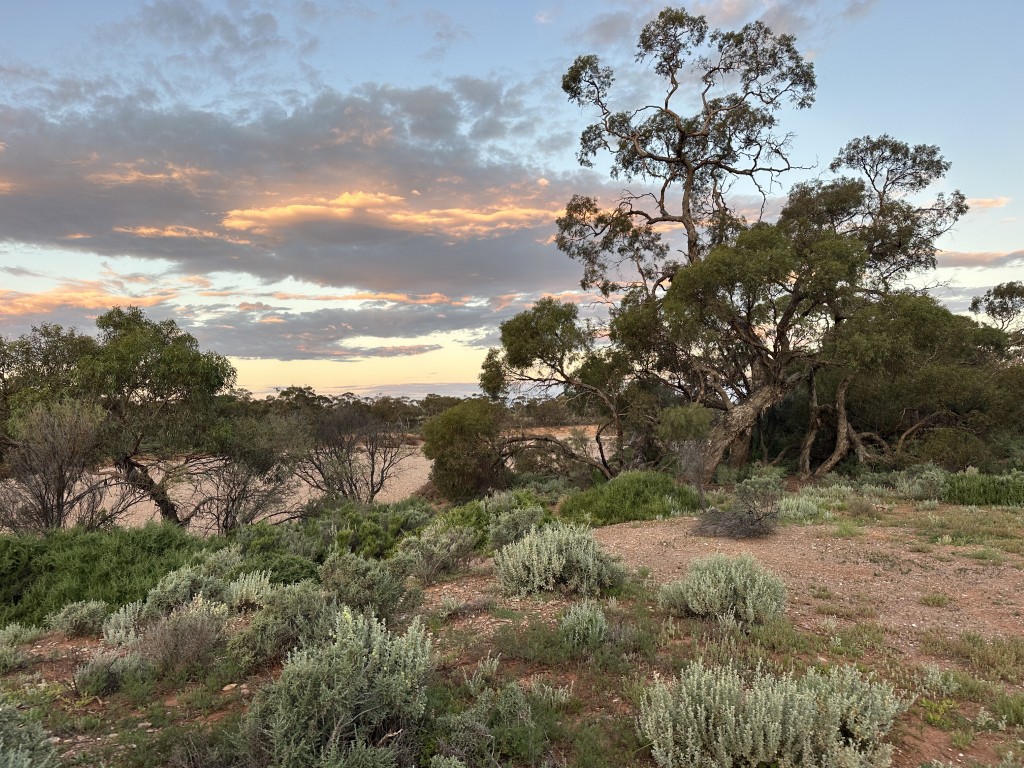
We stopped for a few days at the Tea Tree Bush Road Camp next to a dry river bed.
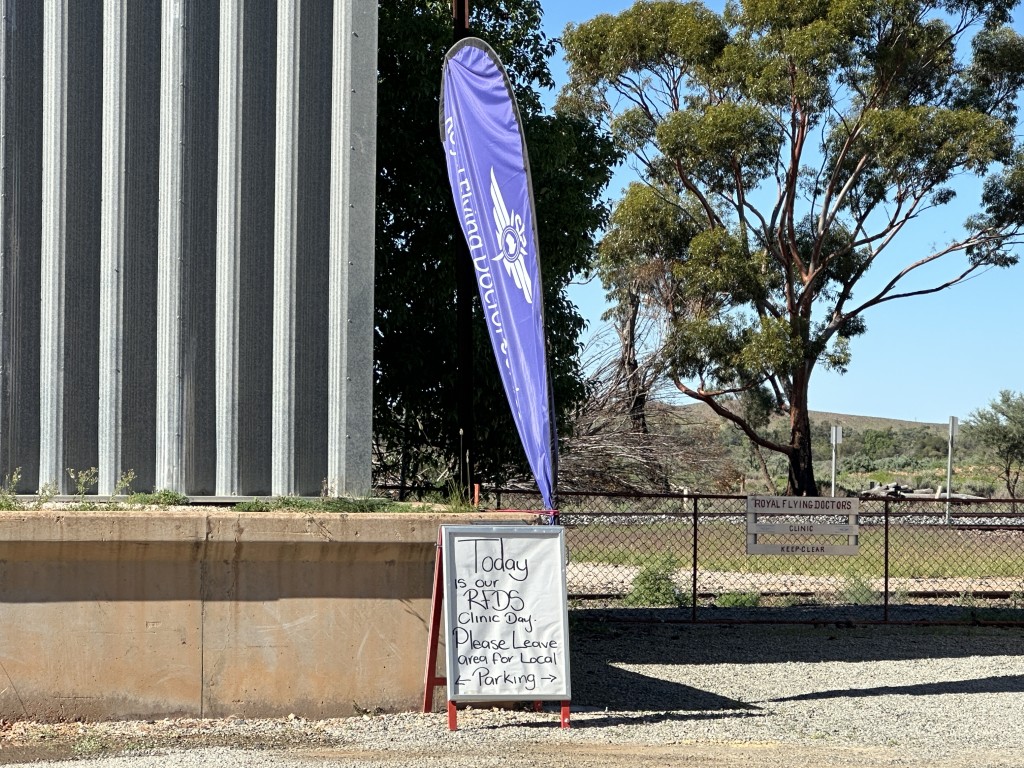
This town is so small and remote that the only medical services provided in the area, is by the Royal Flying Doctors Services.
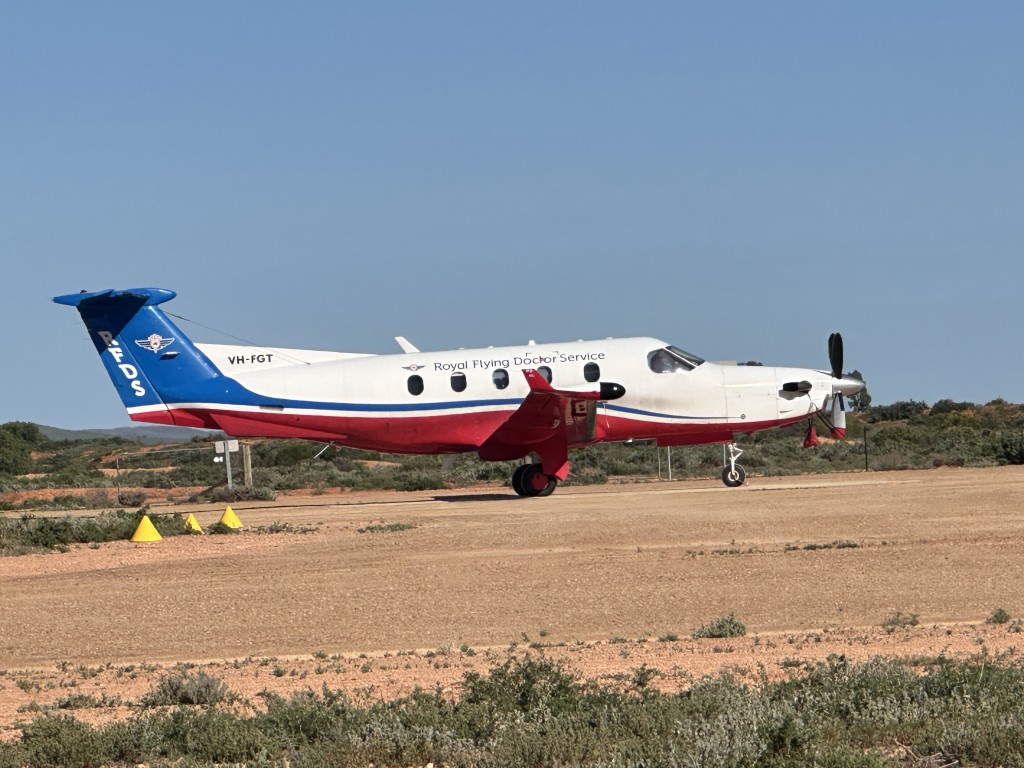
The doctors fly in to provide a clinic service to locals on a scheduled rotation that varies from weekly to monthly depending on the community’s needs.
We stayed a few days longer than planned. Panoramic views, great sunsets, campfire cooking and the solitude was all we needed to extend our stay. It is not often that we stay seven days at the same campsite.
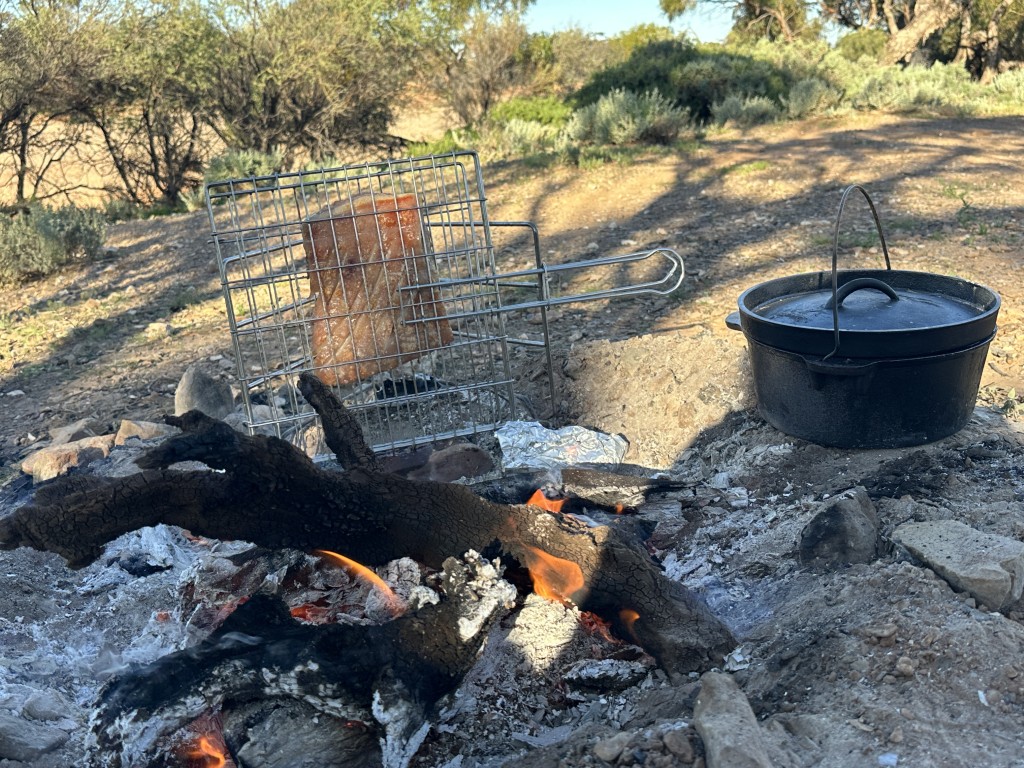
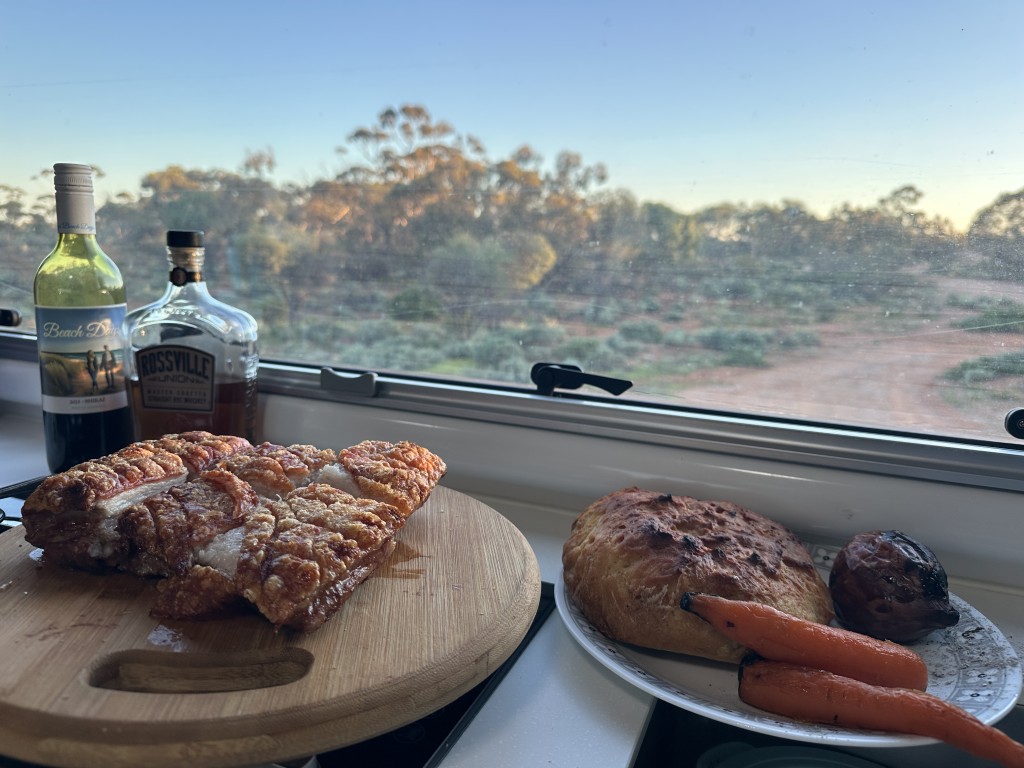
It does not get much better than pork belly in the grill and a fresh bread on the camp fire with unlimited free firewood. These slow days are the best ones when travelling.
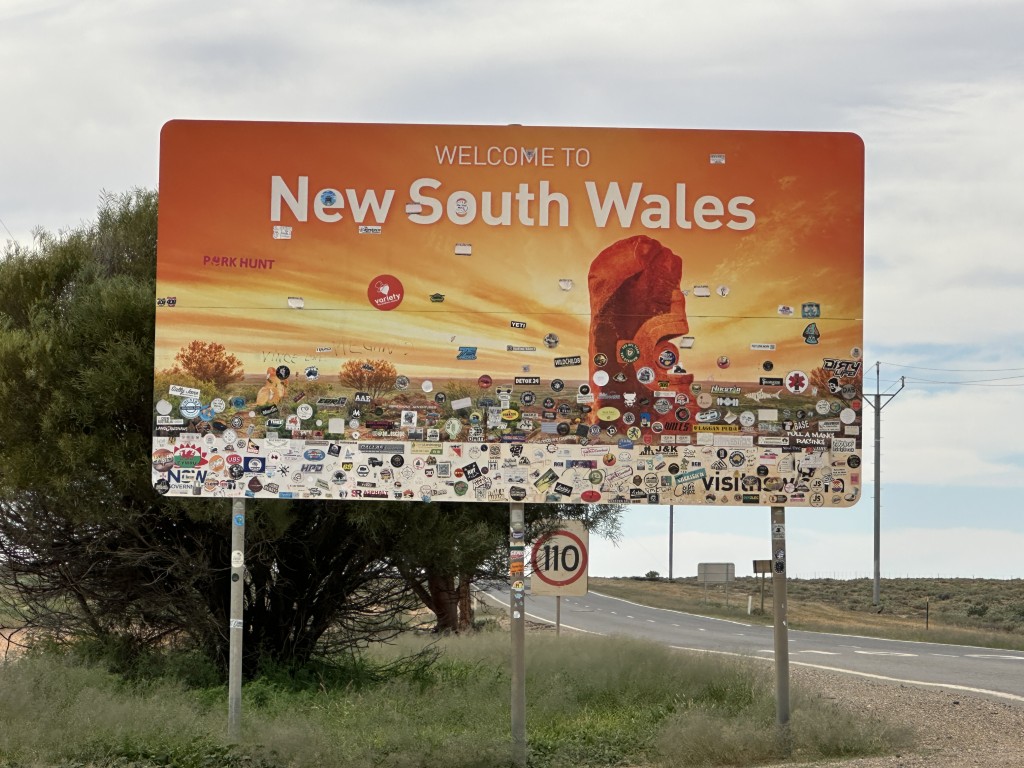
After Yunta we left South Australia to visit Broken Hill, a New South Wales town, which we have missed during our previous travels.
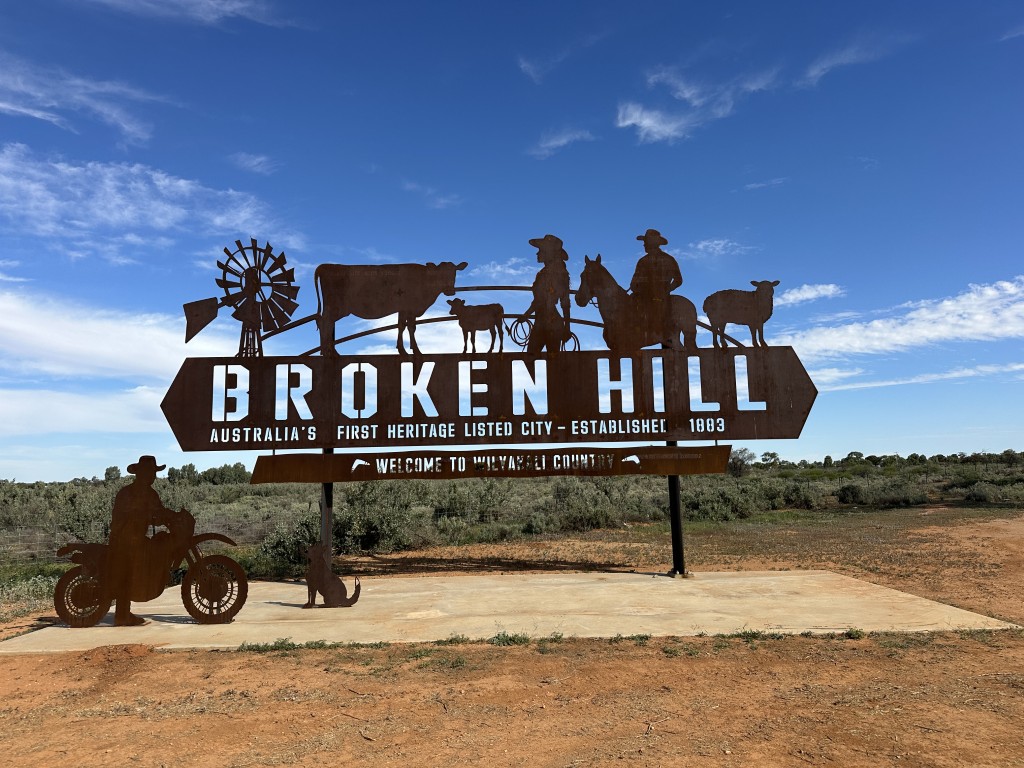
Looking at the laser cut metal sign at the town entrance, you may mistakenly assume Broken Hill is a agricultural town. After we explored the town, we realised this town was built on mining. Broken Hill is home to Broken Hill Propriety (BHP). BHP is still considered the largest mining company in the world, valued at $200 billion.
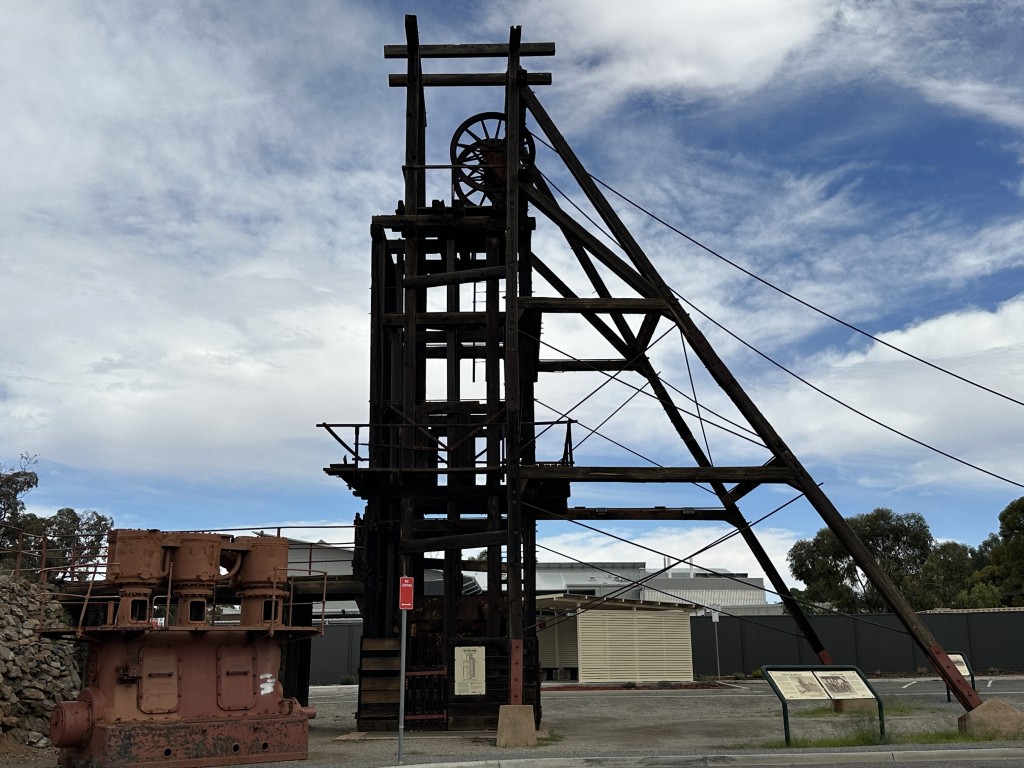
We had a campsite booked on the other side of town and had to fill up with water before setting up camp. At the water fill point we started seeing the mining artifacts including an 1903 Oregon wood Kintore Headframe.
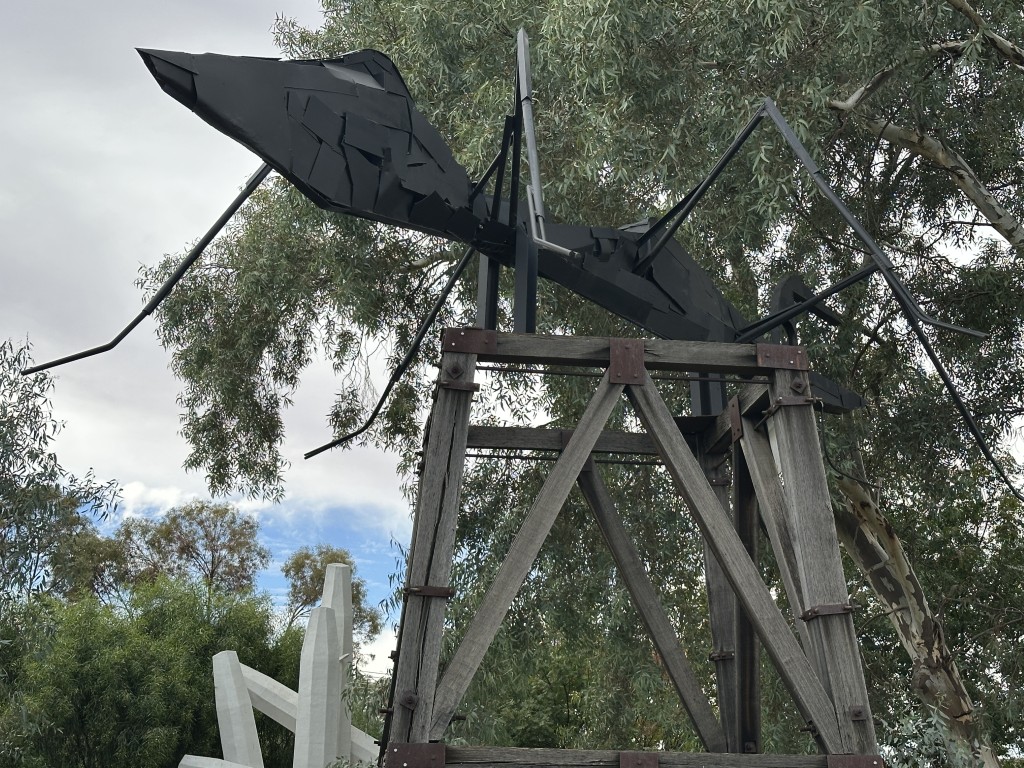
The Big Ant sculpture created by the famous Pro Hart was also overlooking the water fill point. This sculpture represents the hard working miners where team work is essential.
As the day was getting on, we left town to the Valley Campground, where we were booked in. We dedicated the next day to explore the town.
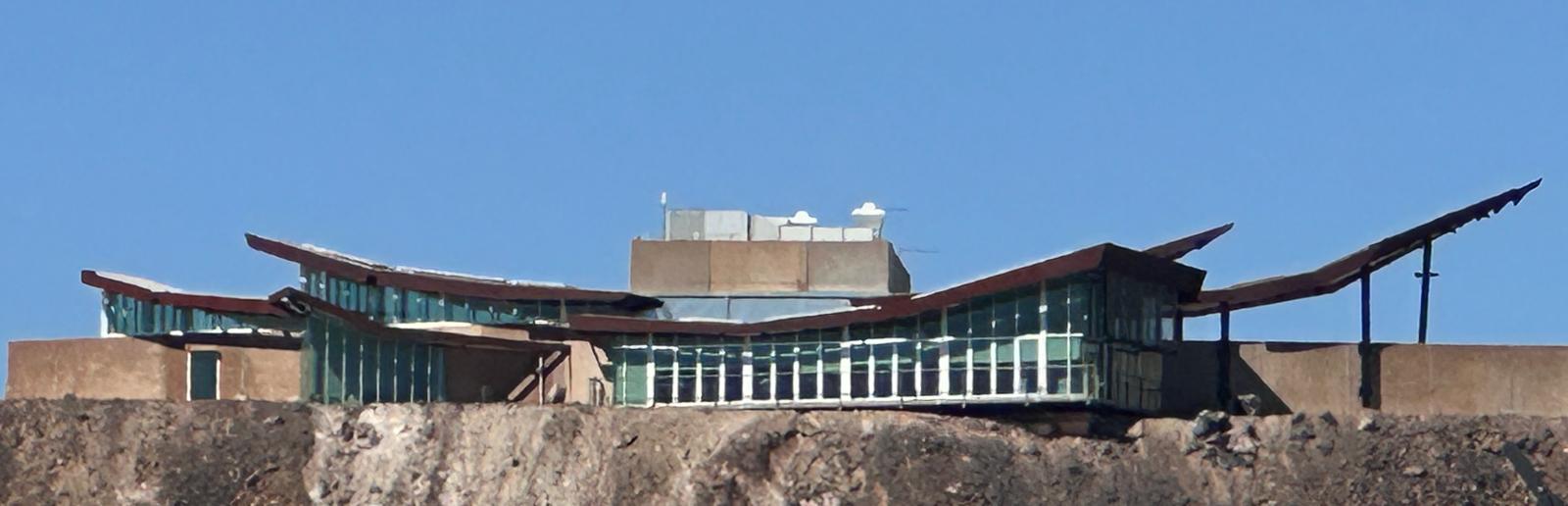
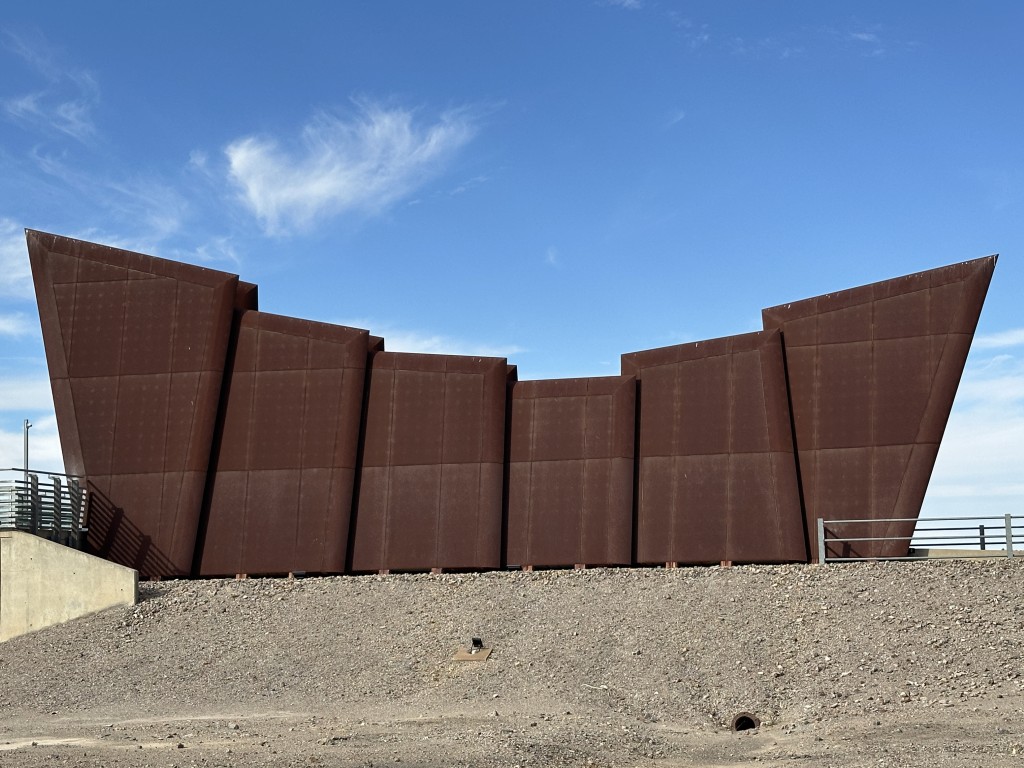
We started our day by visiting the BHP Line of Lode Miners Memorial and Visitor Centre overlooking the town from a massive mining tailing pile. There was not much in this massive building. Inside was a small café and information centre and mostly open spaces.
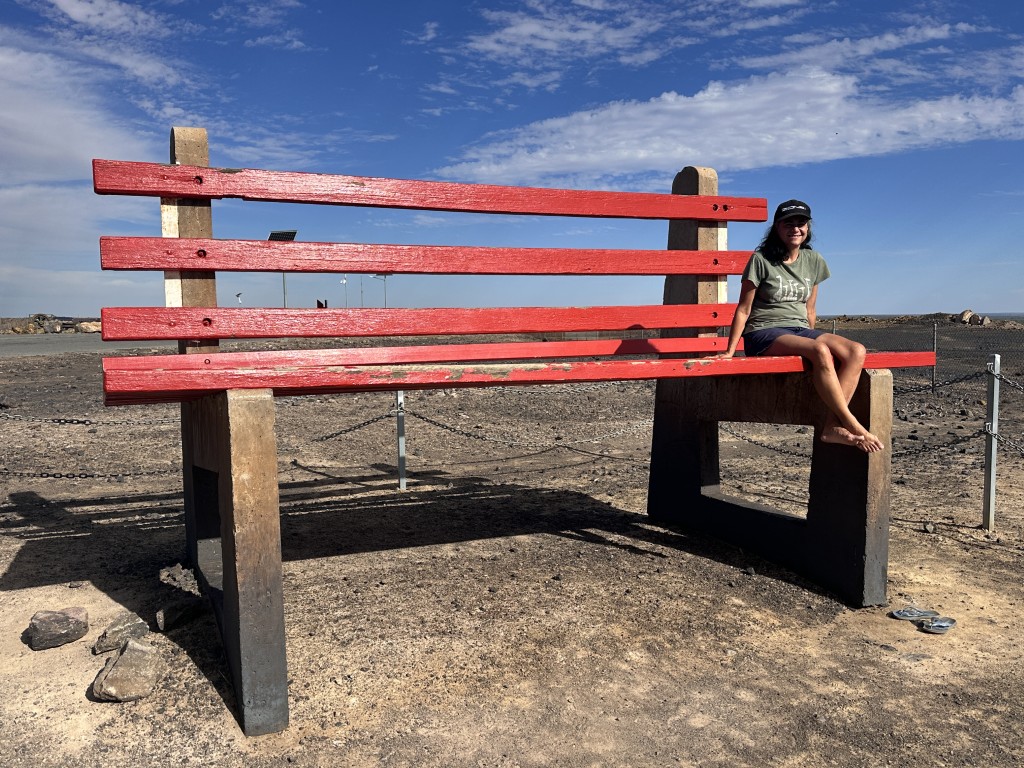
Outside the main building is the Big Bench and once you scaled the enclosure, you can take a photo on the bench. 😉
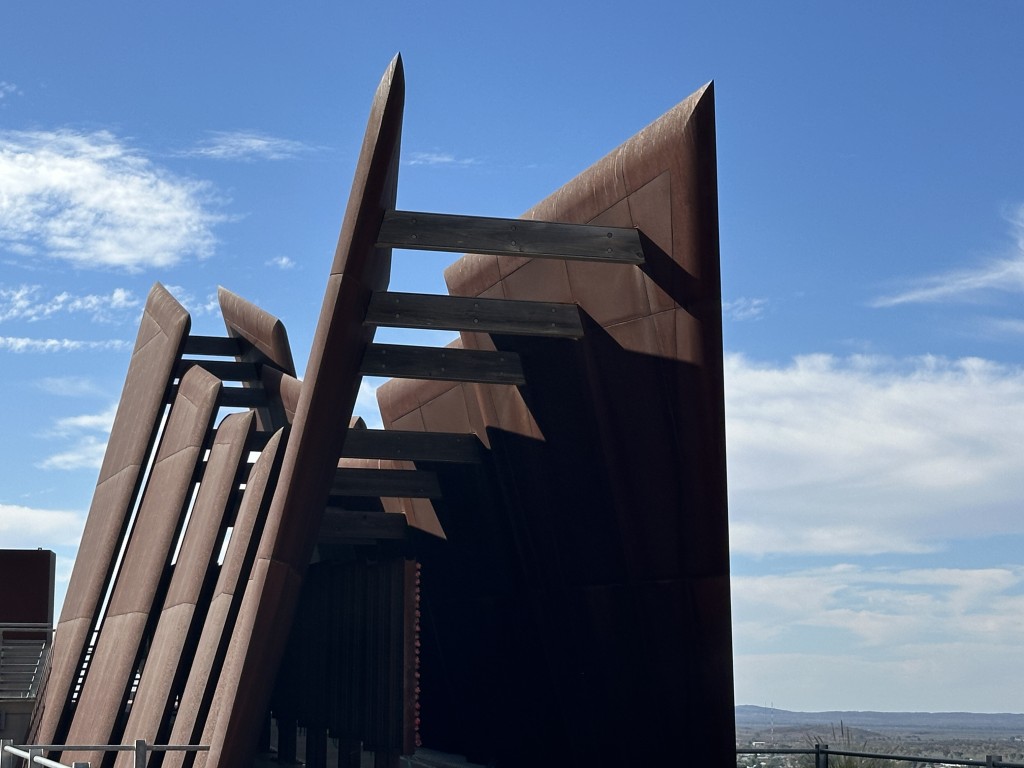
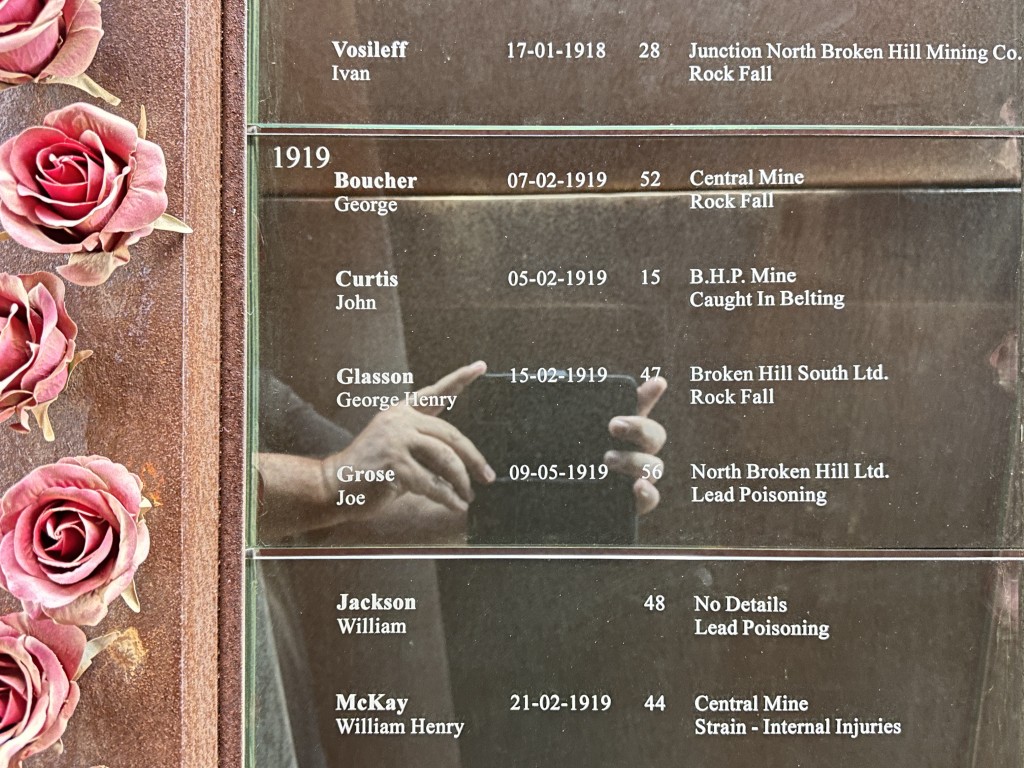
There is also a memorial on site for fallen miners. Fittingly the steel ore structure was built in honour of more than 800 fallen miners in the Broken Hill area.
Walking through the structure is a solemn experience as you read the names, dates and details of their passing through the glass panels.
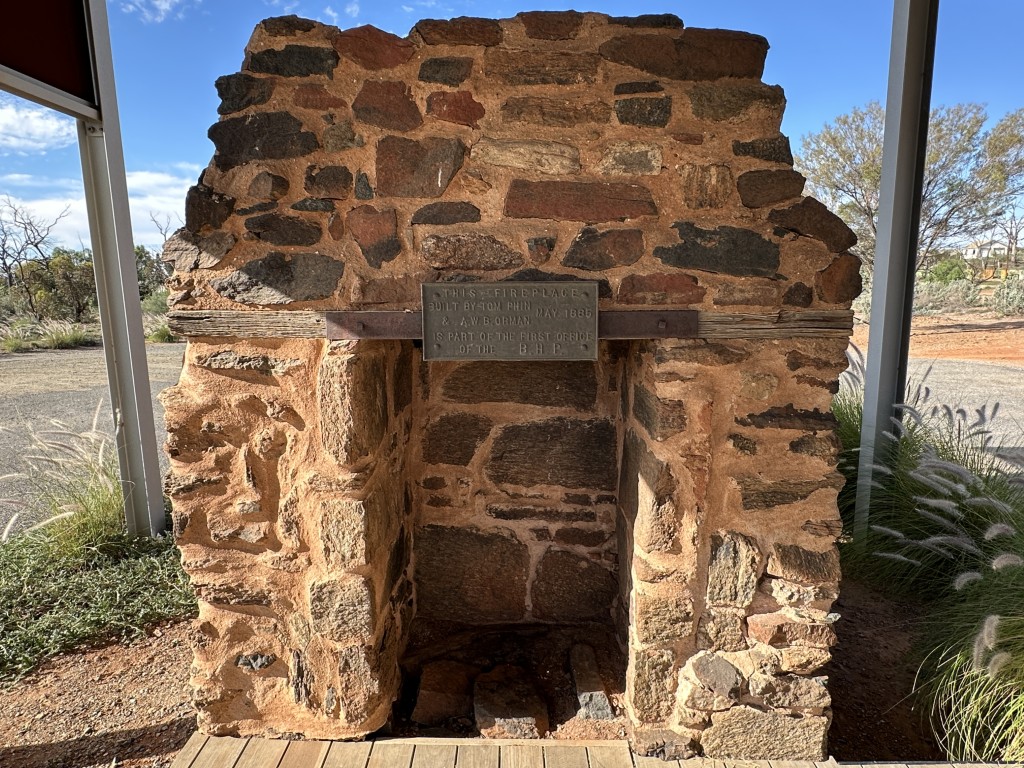
Broken Hill was Australia’s first heritage listed city. After we descended the mullock heap, we got to the original fireplace that was part of the first 1885 BHP office.
The streets are lined with historic buildings, like the Broken Hill Trades Hall.
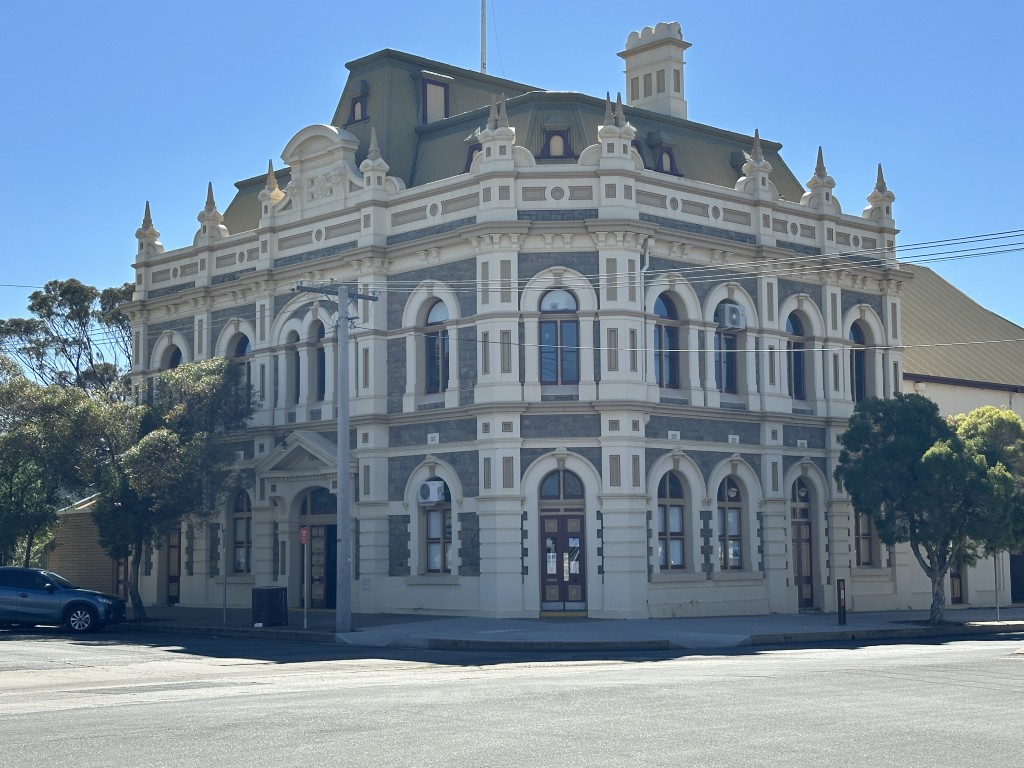
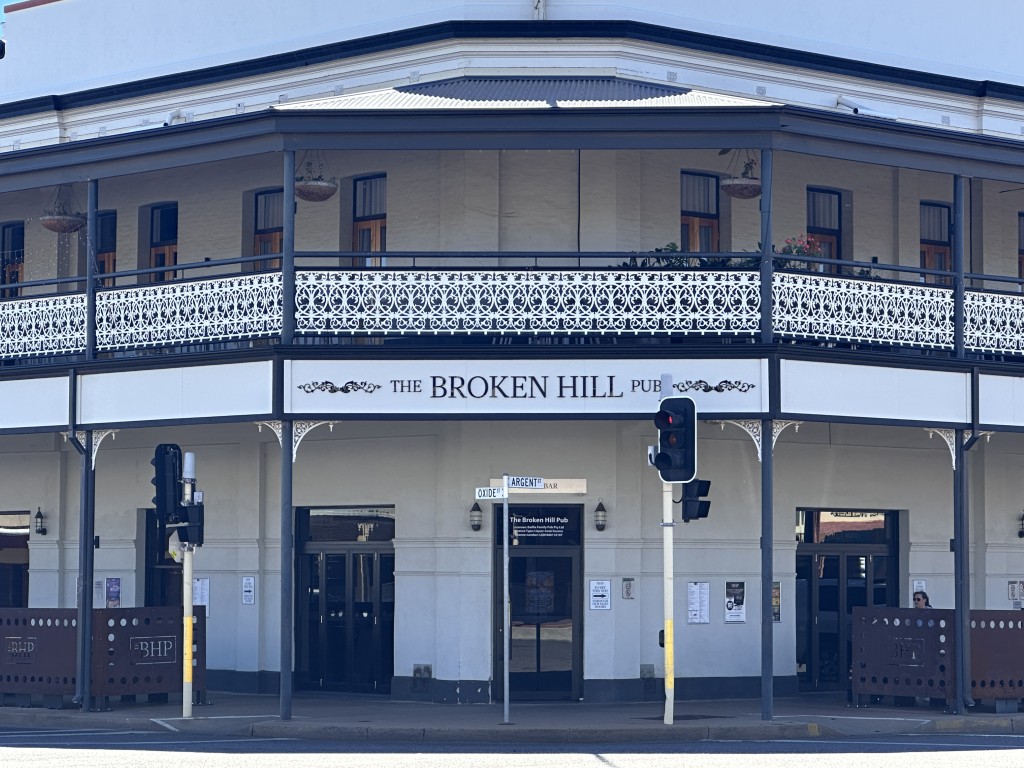
The Broken Hill Pub coincidentally share the same abbreviation as BHP.
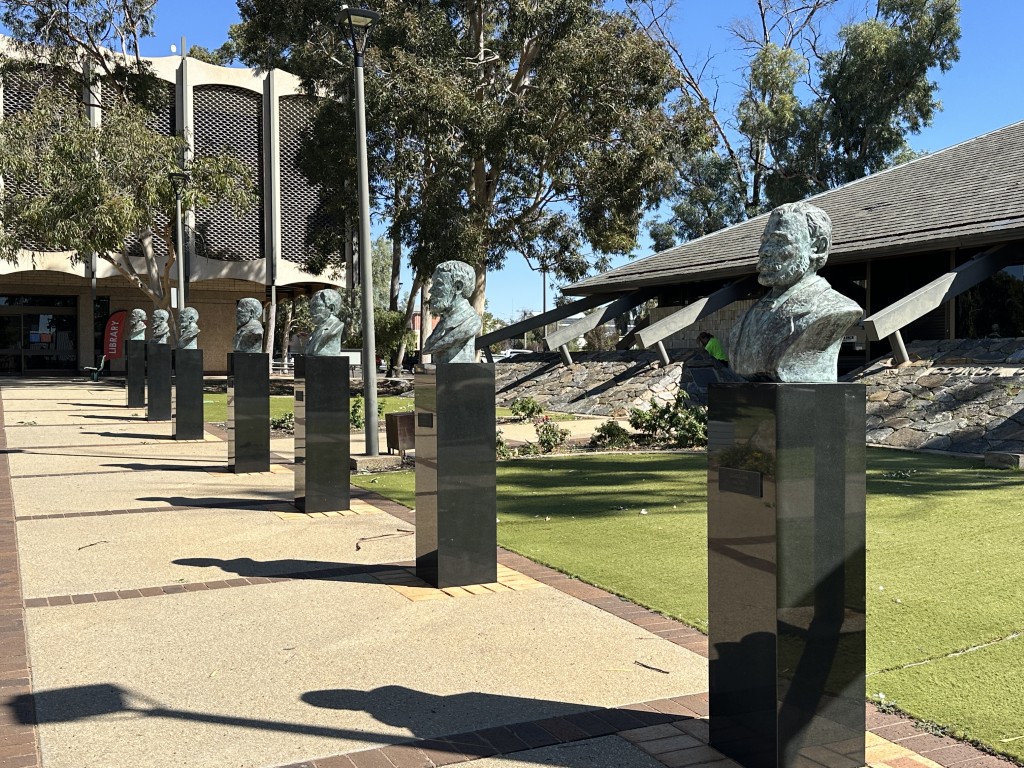
The original 7 directors of BHP were known as the Syndicate of Seven. These pioneers were immortalised with bronze busts leading into the Broken Hill Council Chambers. Some referred to them as the heroes, larrikins and visionaries of Broken Hill.
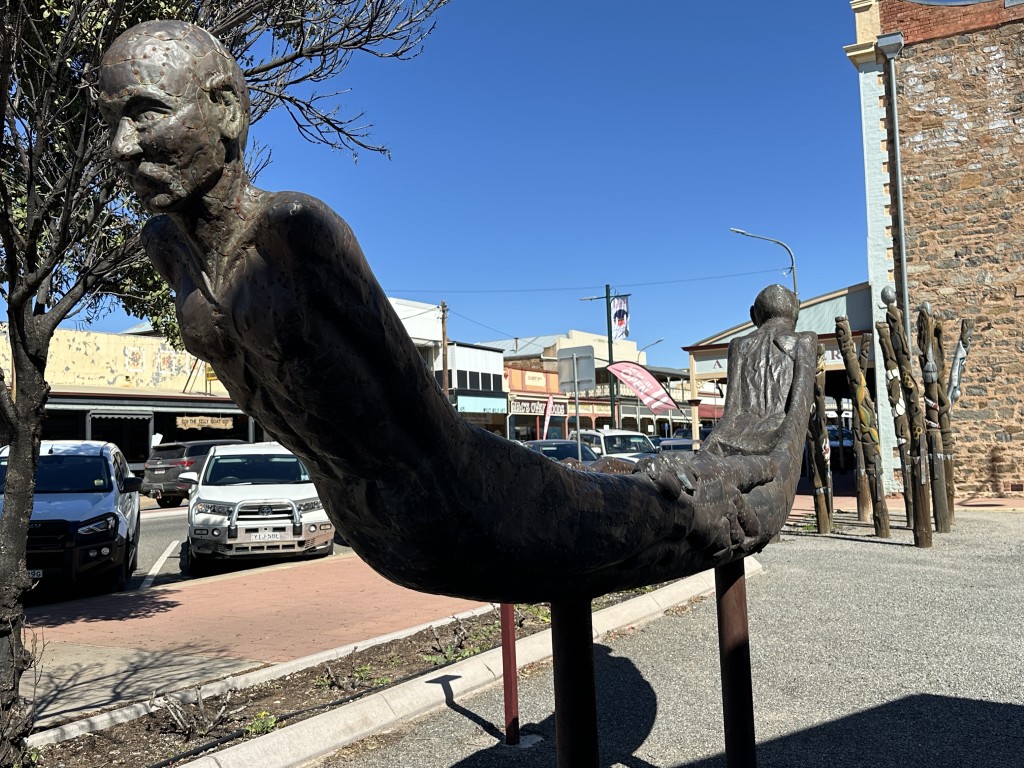
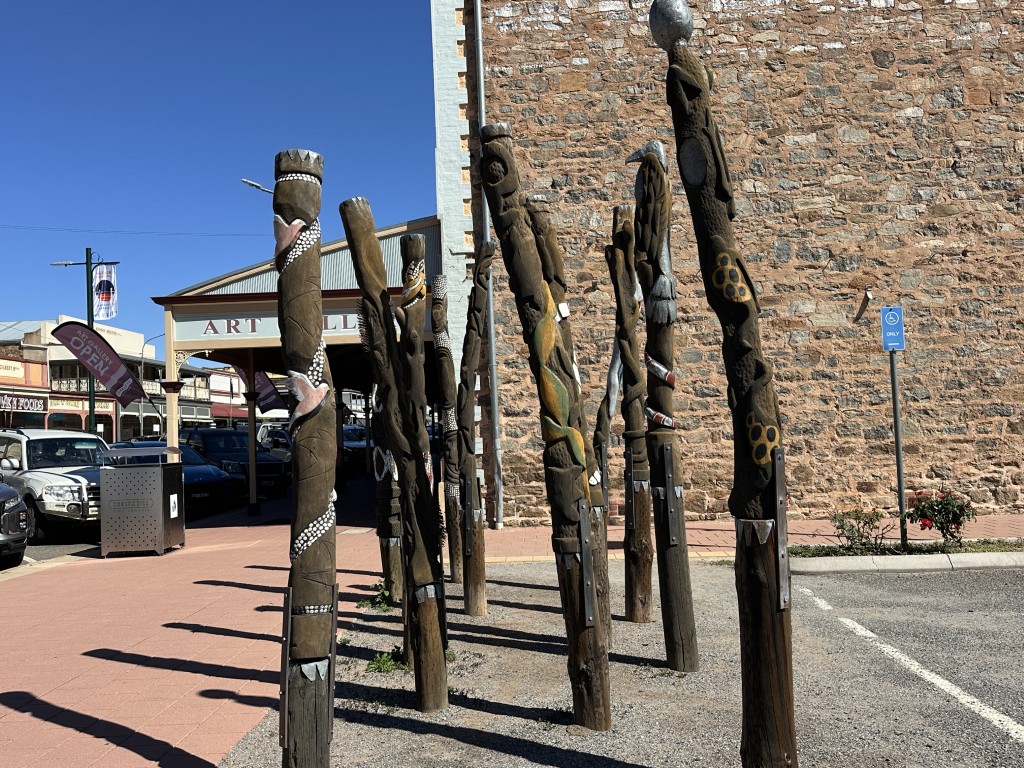
The street around the Art Museum was lined with outdoor artwork including The Canoe, by Geoff DeMain and the Aboriginal Story Poles.
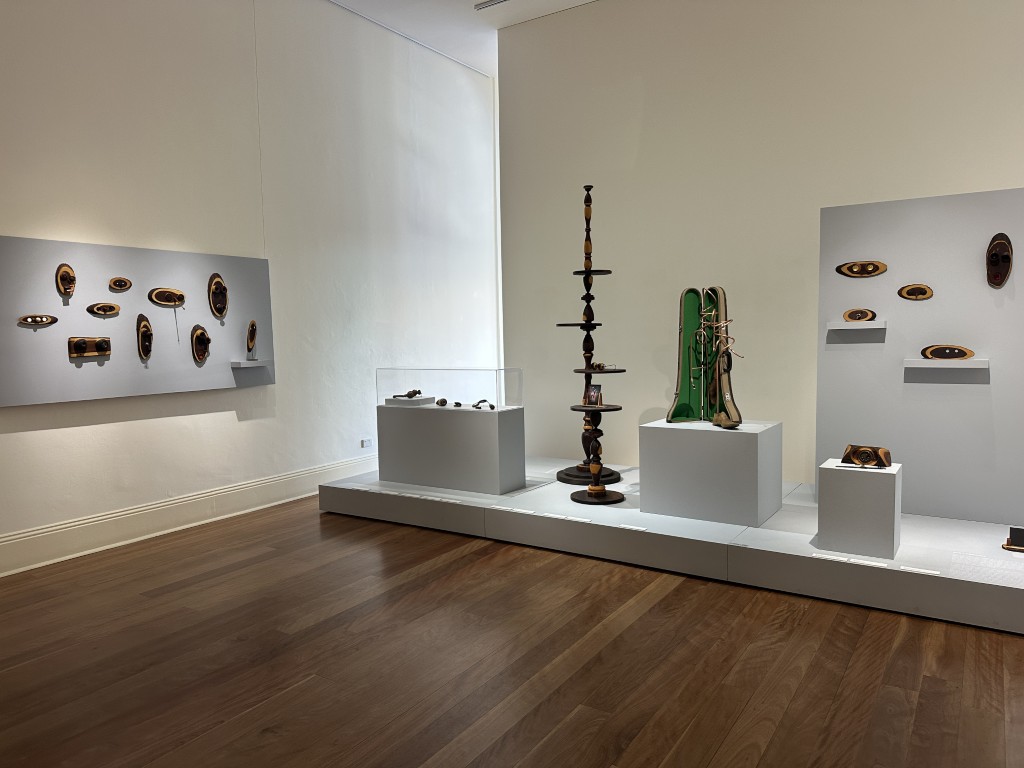
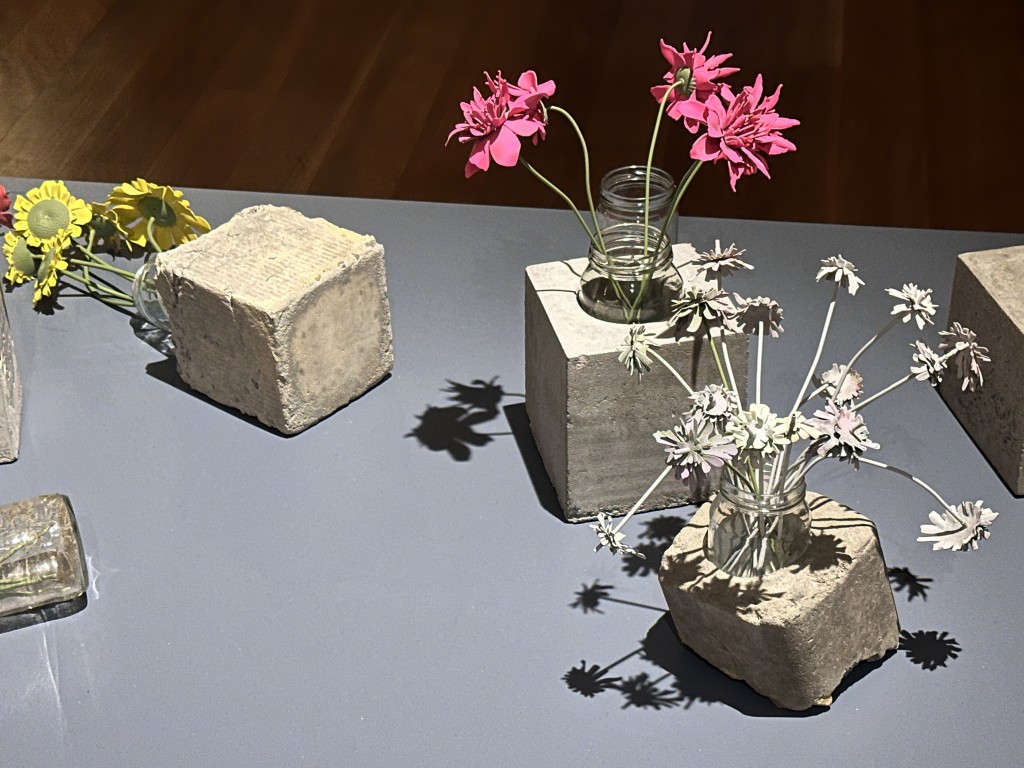
Inside the gallery was an exhibition of repurposed wood art by Sue Lorrane and a few still flower displays.
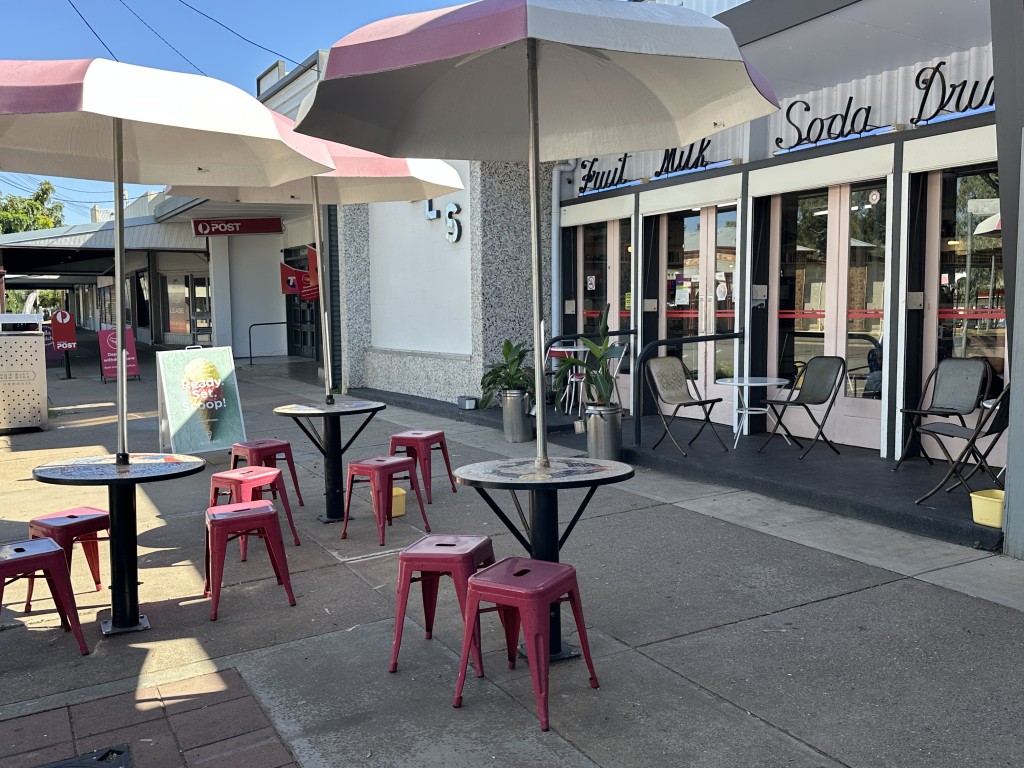
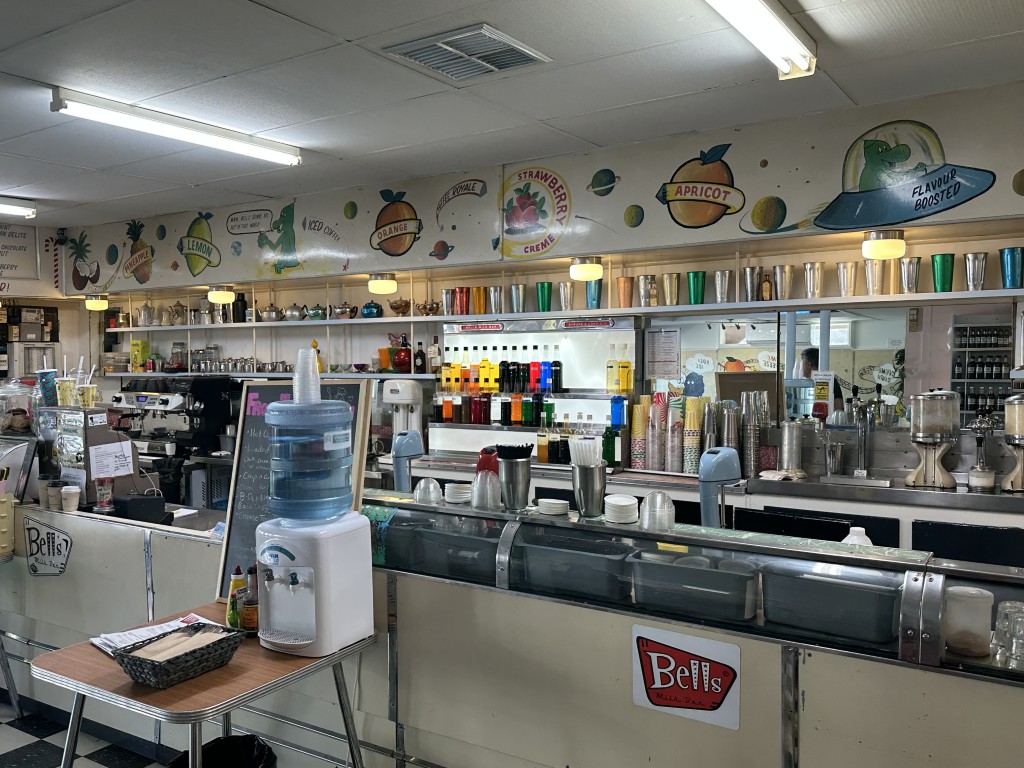
The history of the Bells Milk Bar in Broken Hill dates back to 1892 but the interior feels like a 1950s time capsule.
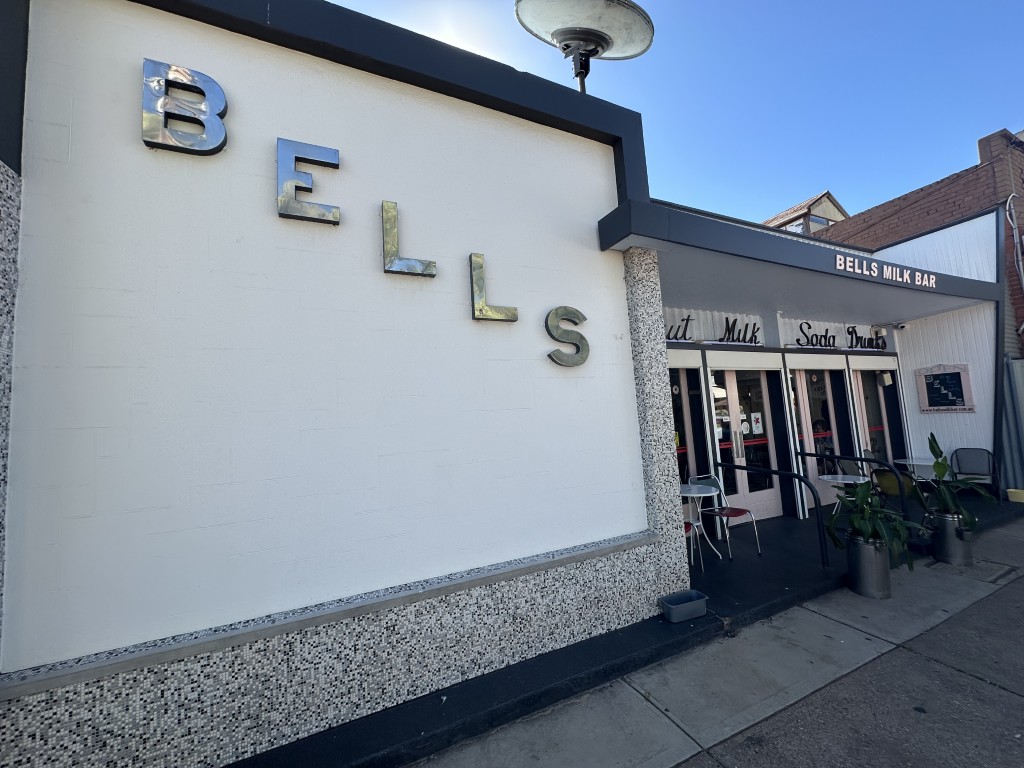
We had to go for lunch and the obligatory milkshake at the milk bar.
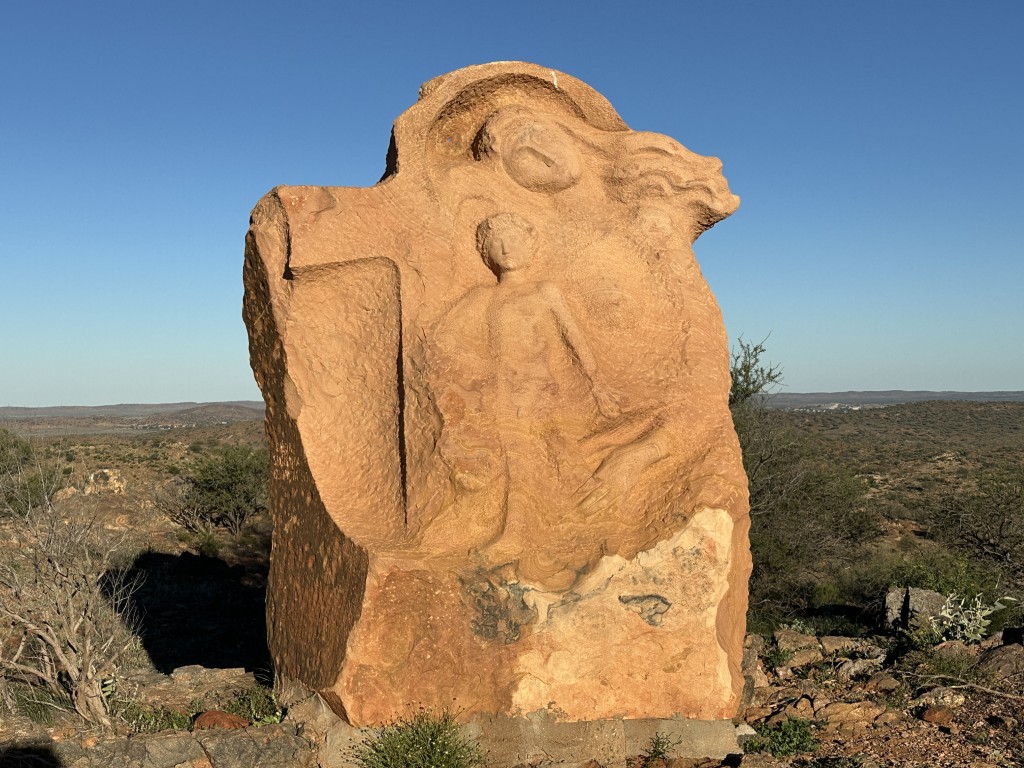
For sunset, we visited the The Living Desert State Park Sculptures. When we arrived late afternoon we were the only ones in the park. You have 360° sweeping views with Broken Hill on the horizon.
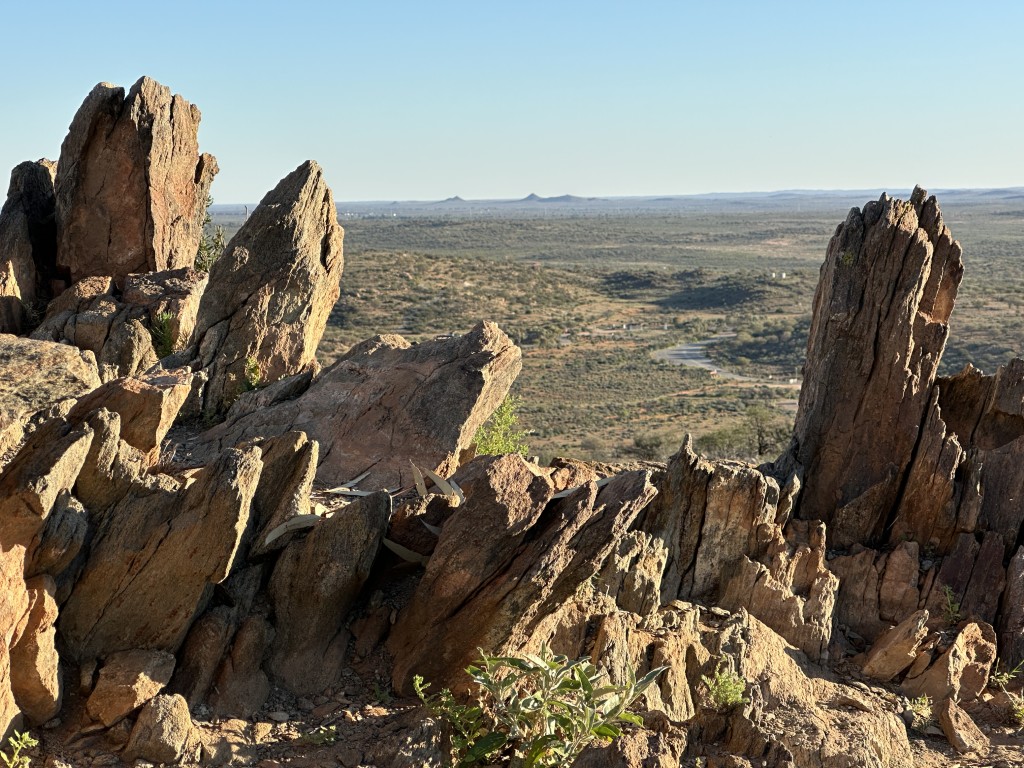
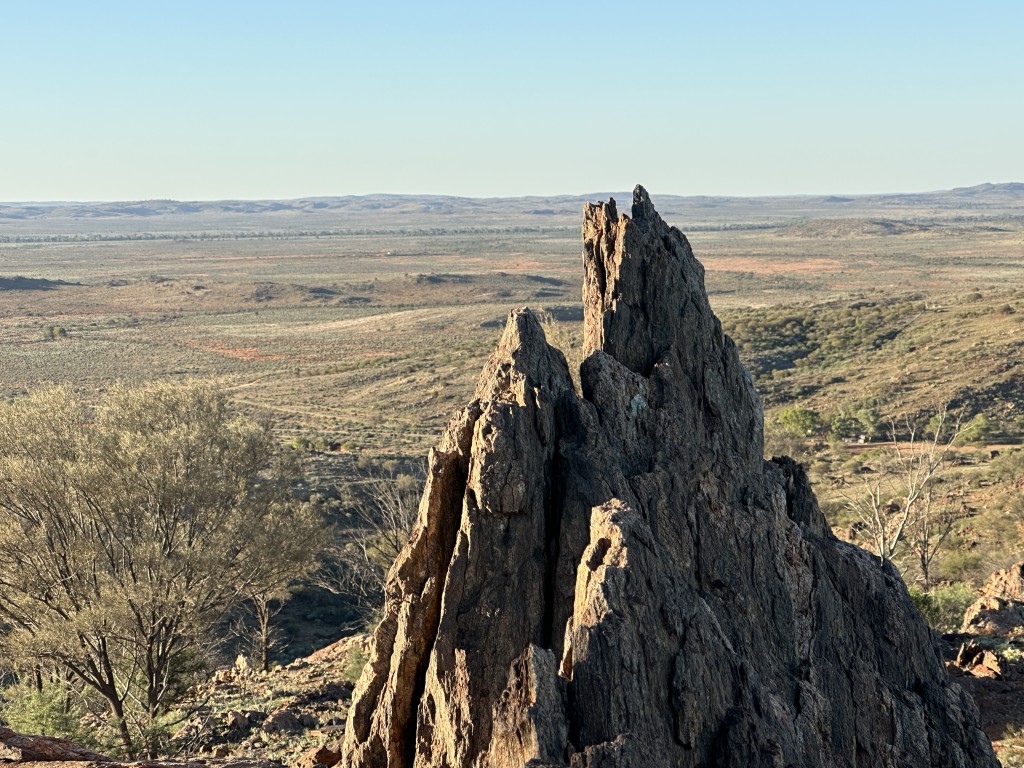
There are only a few places where you take too many photos. The Great Ocean Road in Victoria, the Pinnacles in Western Australia and the Living Desert State Park Sculptures in New South Wales are among those places.
Twelve giant sandstone sculptures break the natural skyline. Different sculptures were done by different local and international artists. This project was coordinated by Australian sculptor Lawrence Beck.
The Mood Goddess sculpture was carved by Australian artist Conrad Clark.
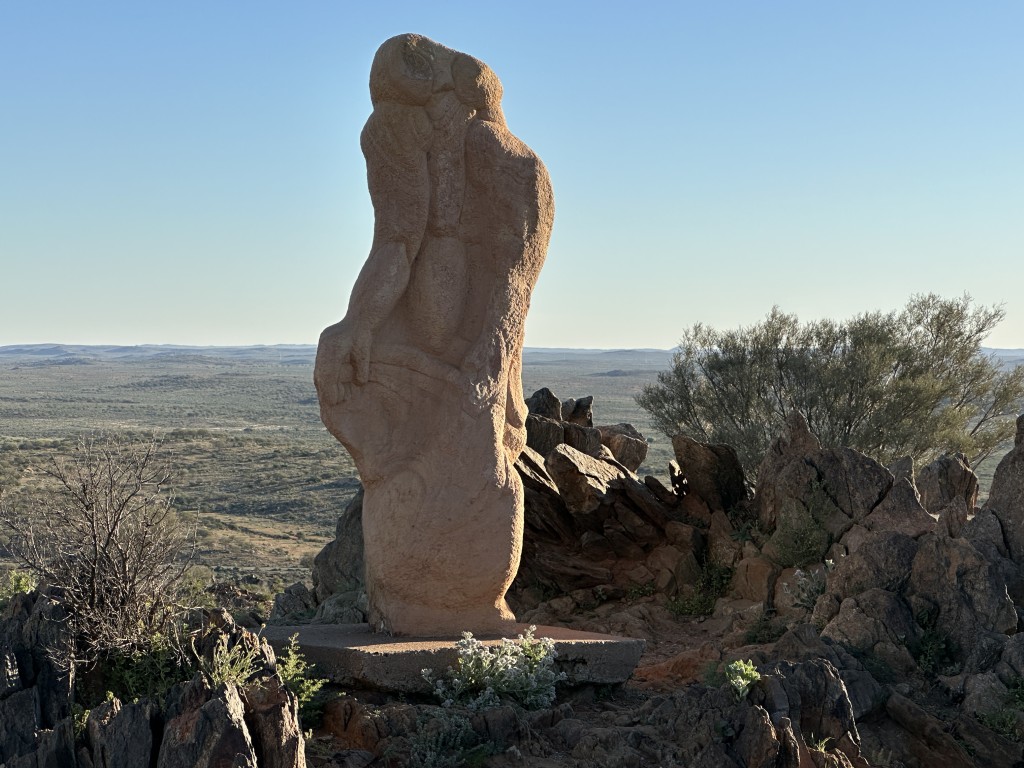
This sculpture is named Angels of the Sun and Moon by Valetian Jikiya.
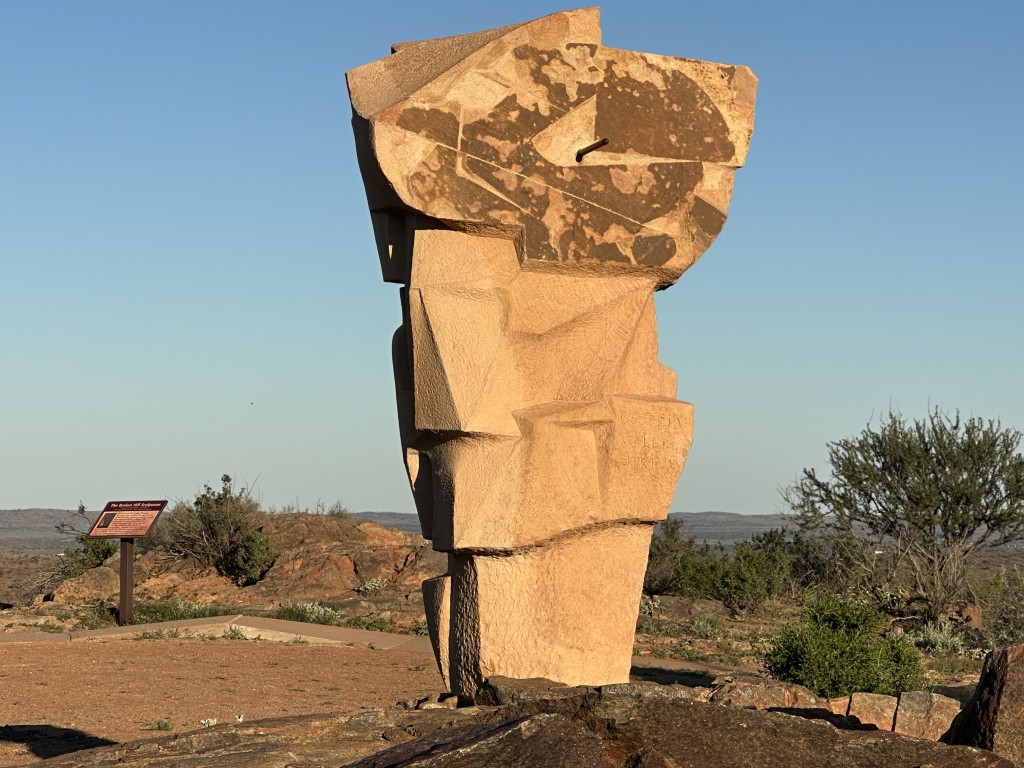
Bajo El Sol Jaguar (Under the Jaguar Sun) was done by Mexican artist Antonio Nava Tirado.
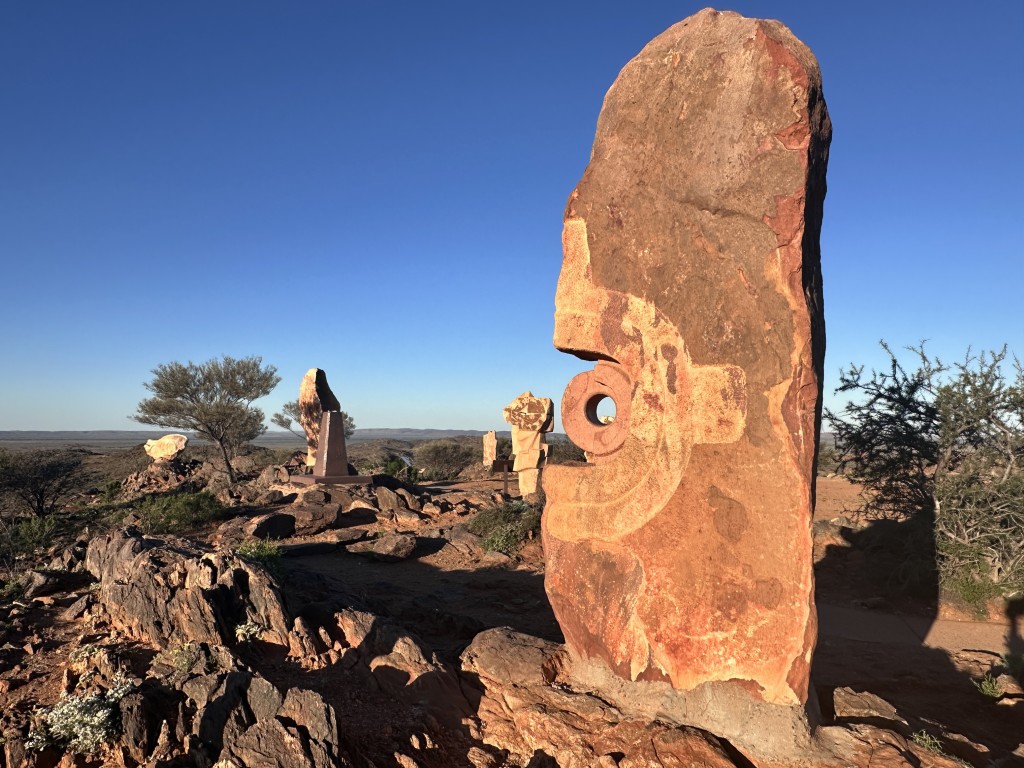
The Motherhood Sculpture was carved by artist Badri Salushia from Georgia.
As the sun started to set, people arrived in droves. Bus loads of tourists, rolling out sunset nibbles and drinks.
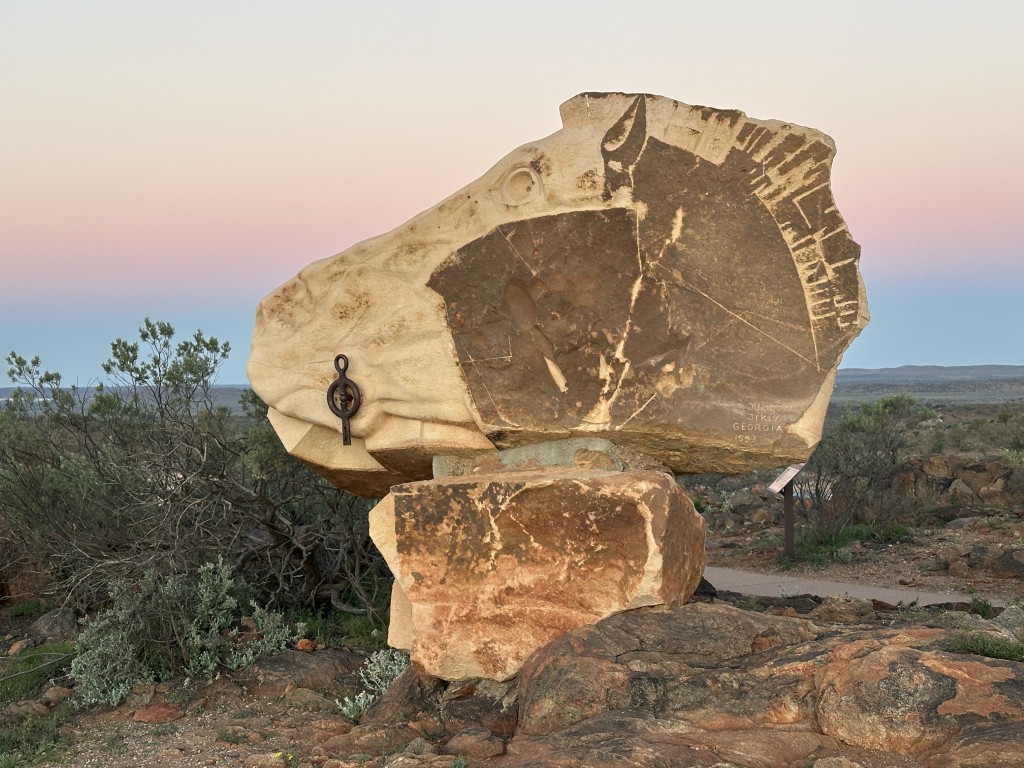
The Horse below was done by Jumber Jikiya.
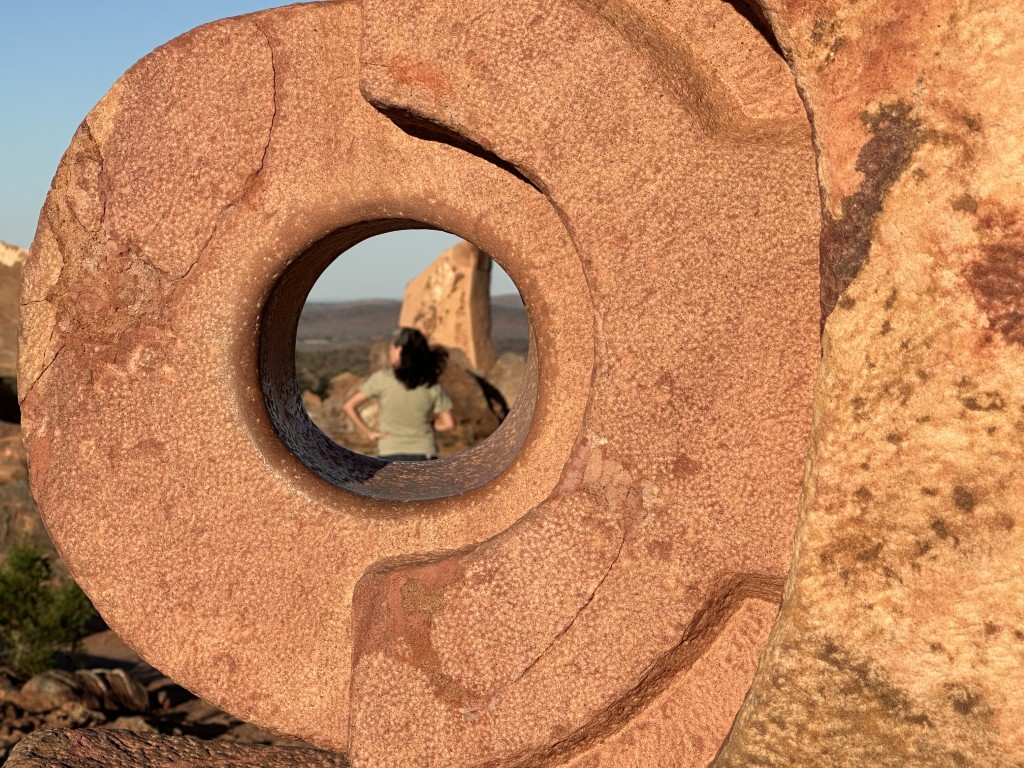
The most popular sculpture was Bajo El Sol Jaguar.
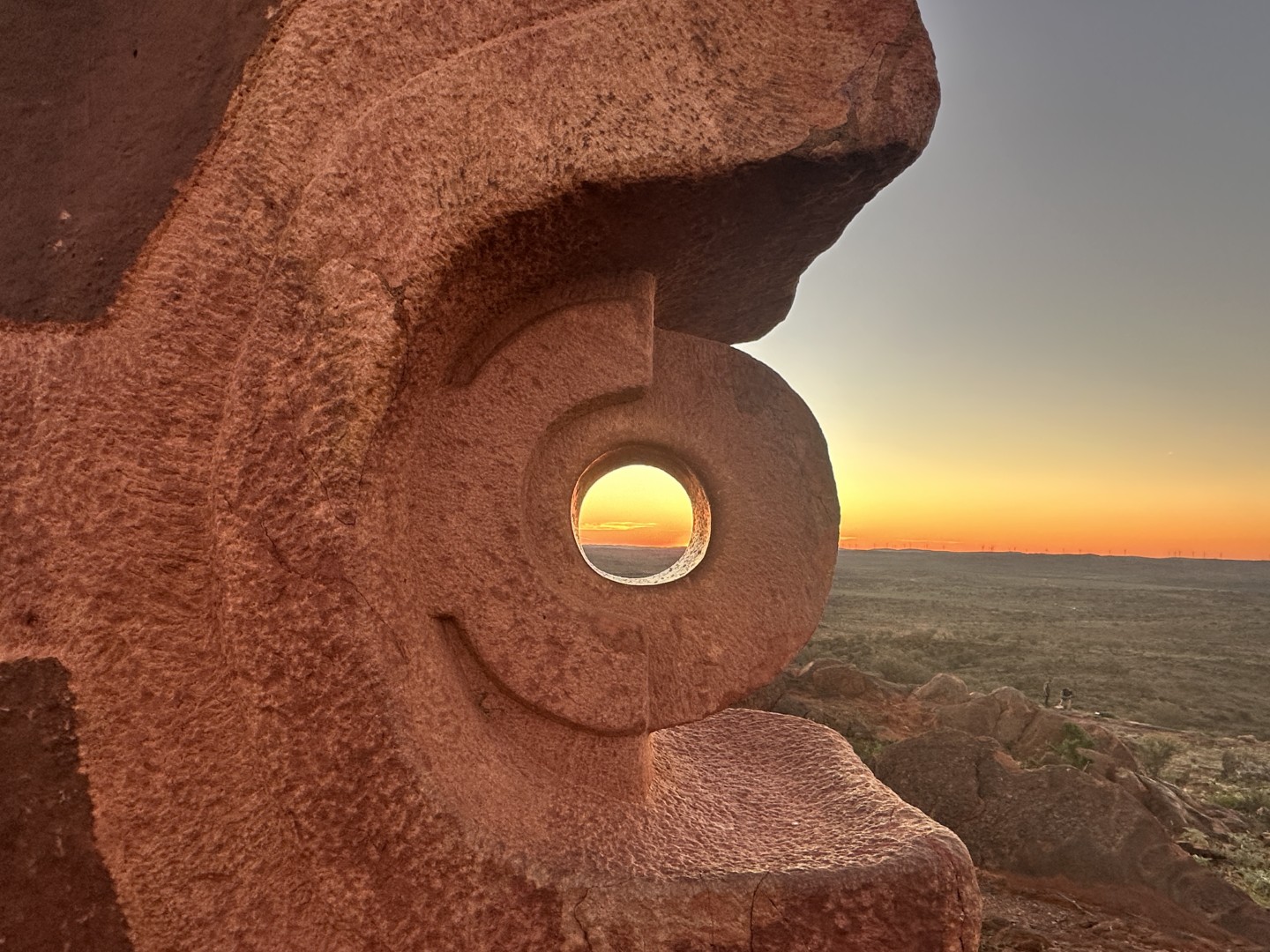
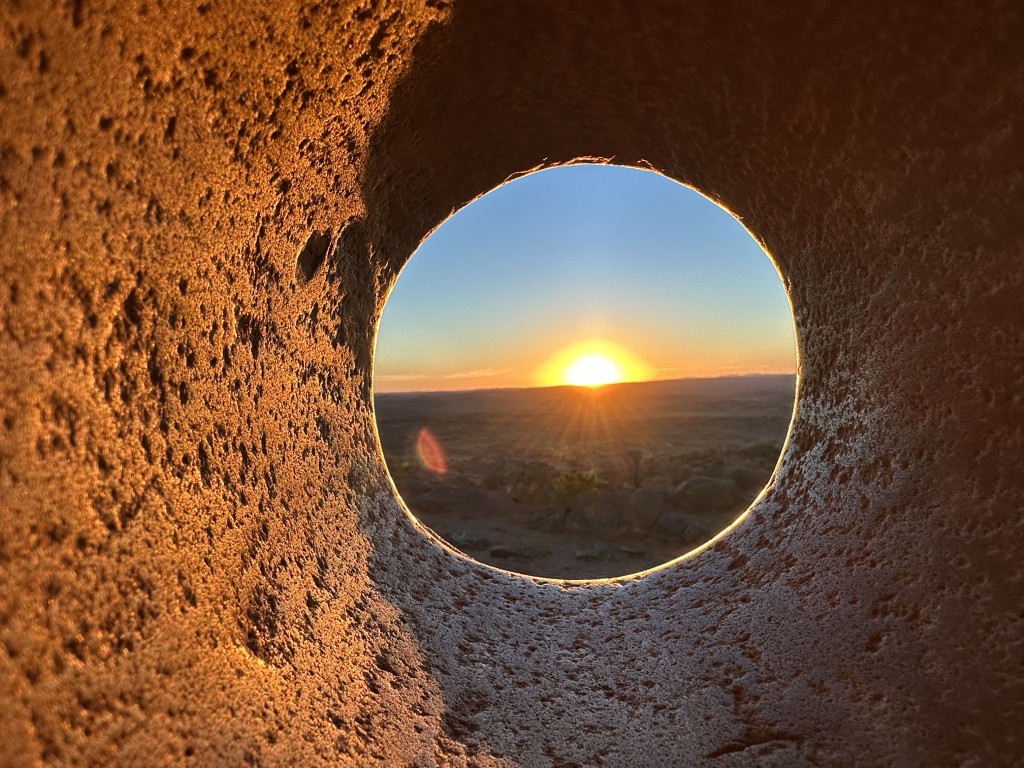
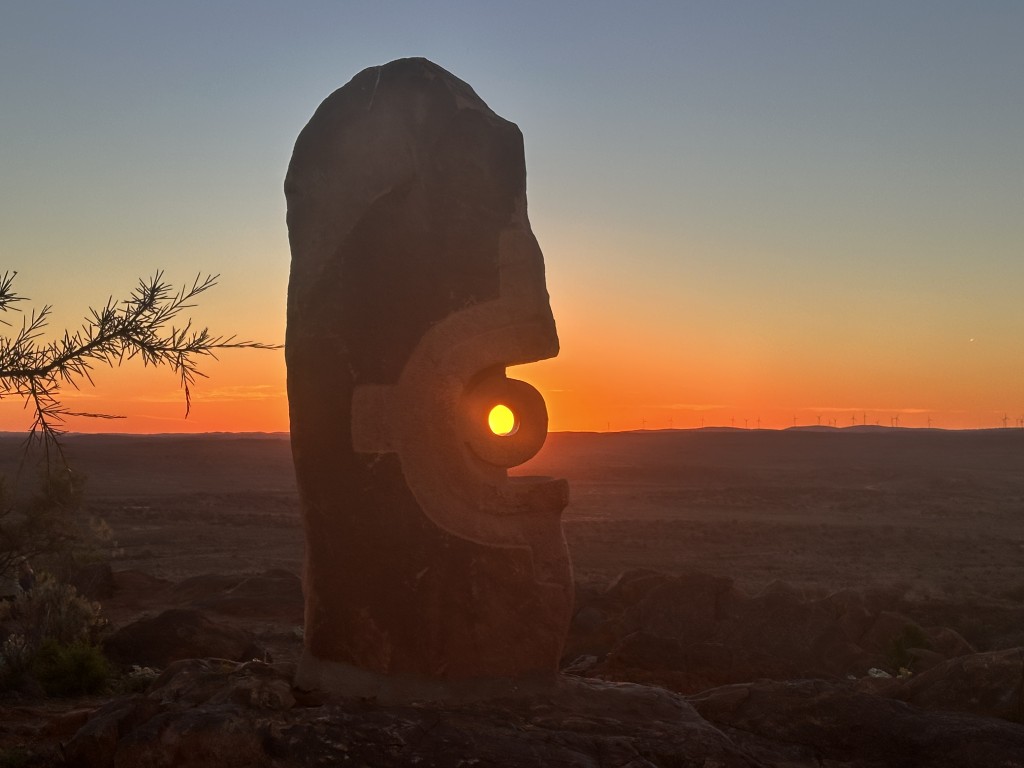
And then, the shot everyone was waiting for – The sunset through the eye of Bajo El Sol Jaguar.
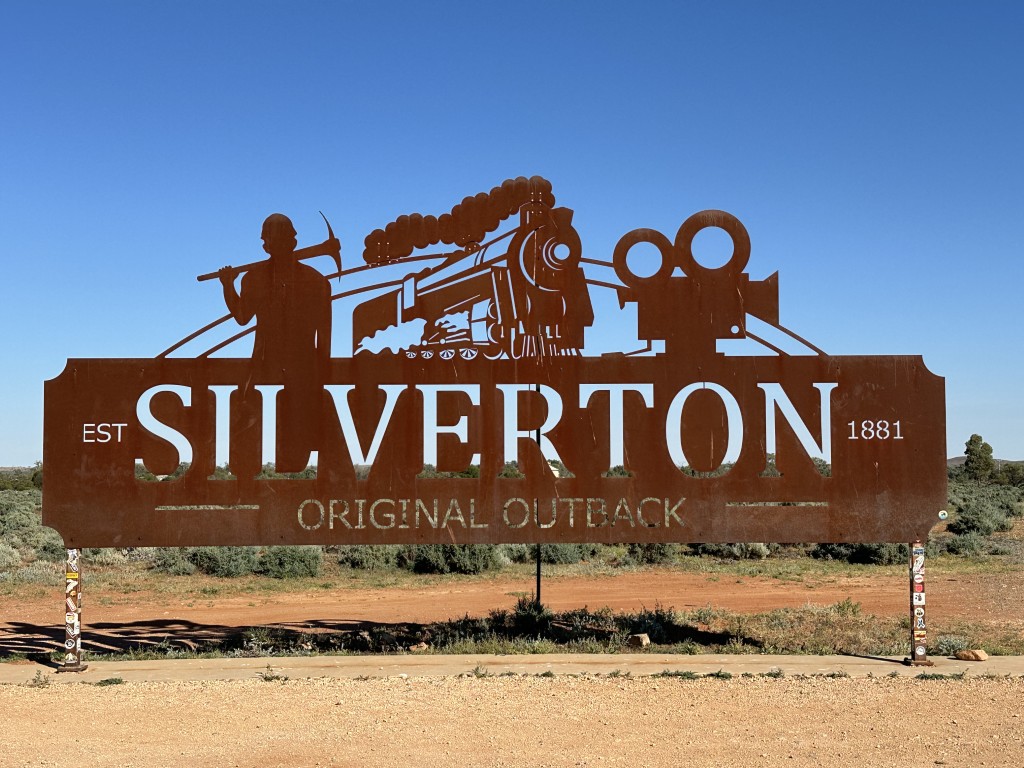
The next day we did a daytrip to the west of Broken Hill to the small town of Silverton.
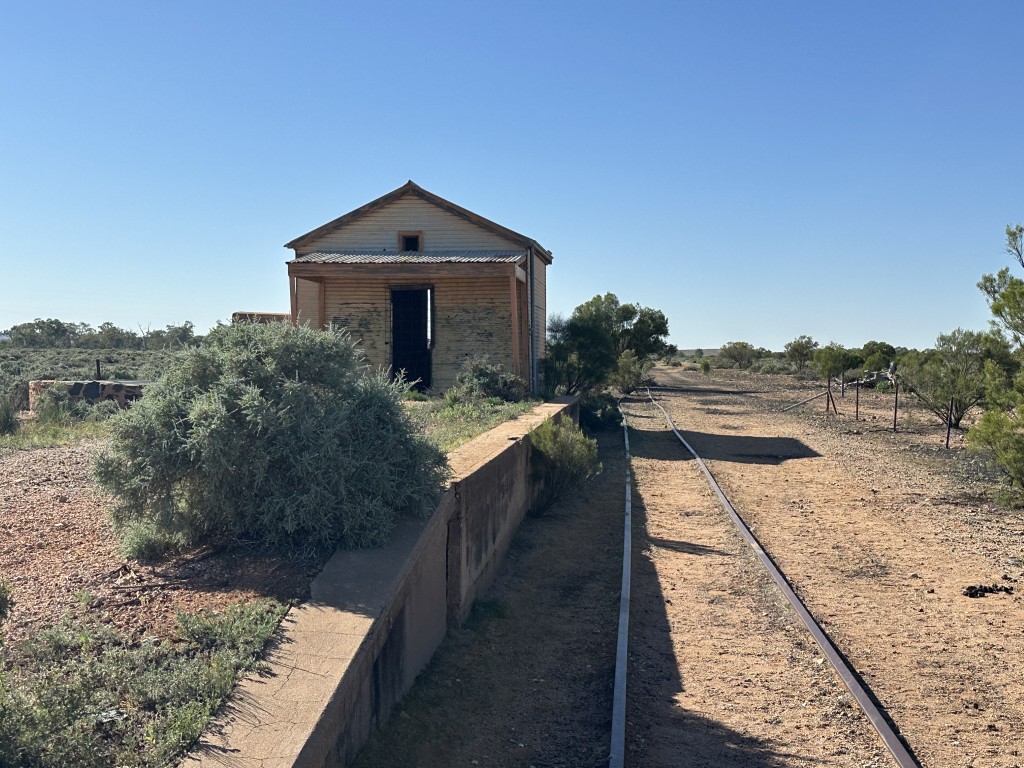
Predominantly a small mining town, Silverton had a tramway connection with Cockburn in the west and Broken Hill in the east. The old station and tramline operated between 1888 and 1970.
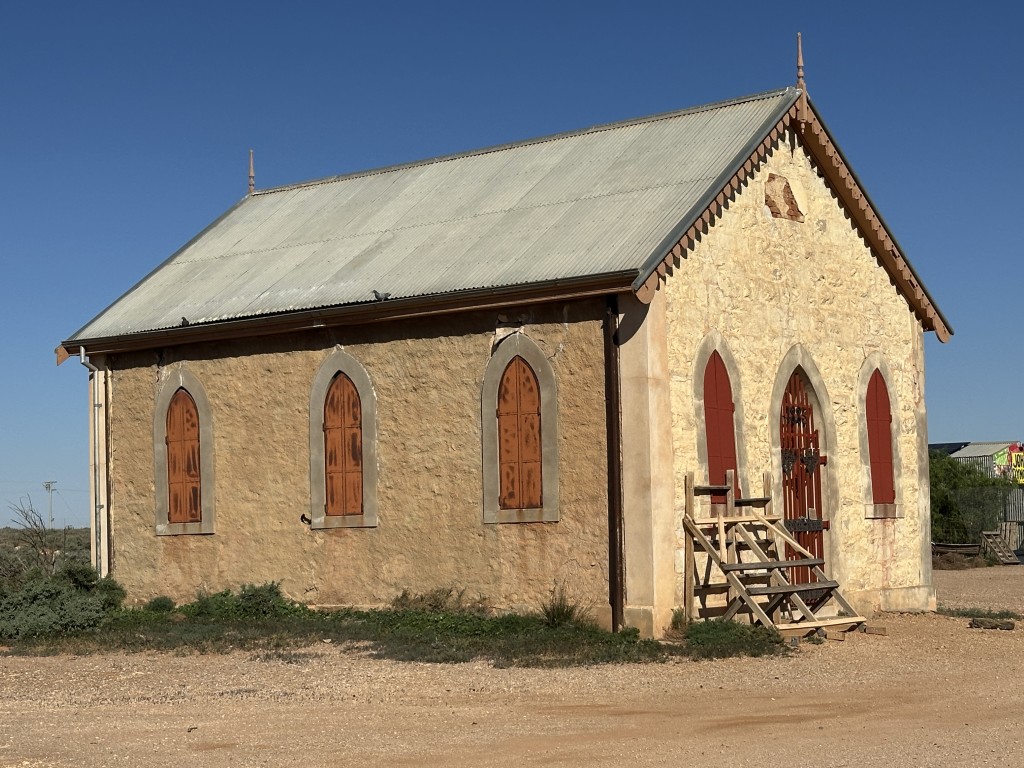
This little town is the epiphany of quirkiness. A few of the old buildings were renovated like the Silverton Wesleyan Methodist Church.
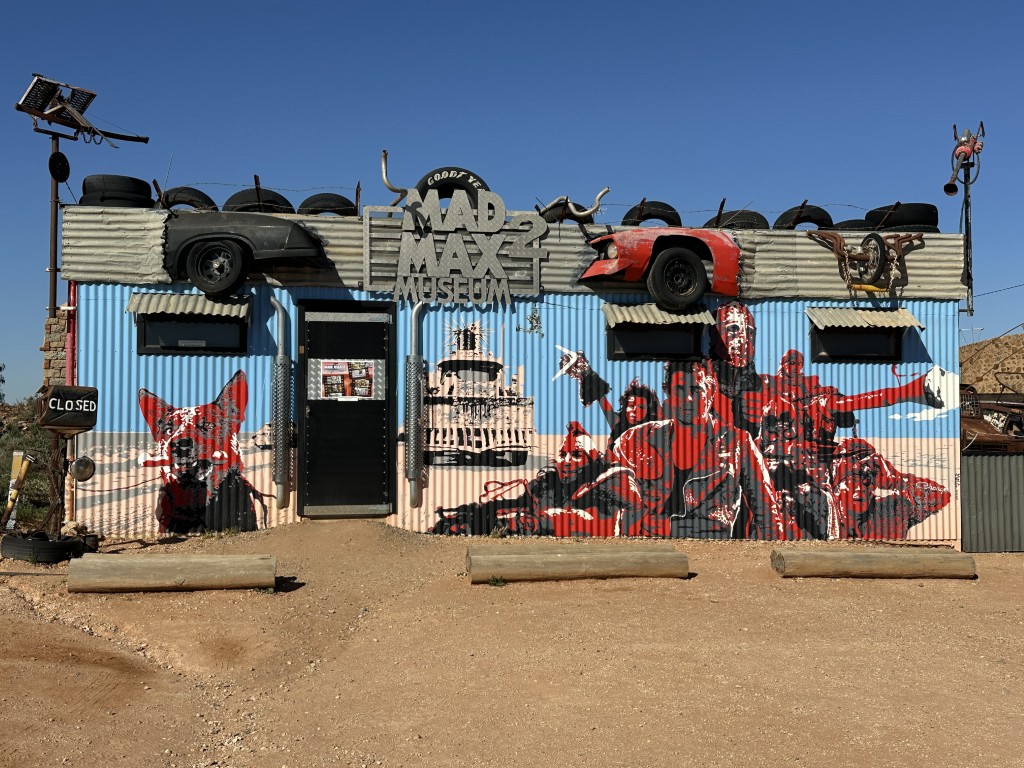
The 1982 movie Mad Max 2 was shot on the open landscapes around Silverton. This is still the most popular drawcard of the little town. The Mad Max 2 museum was closed when we were there.
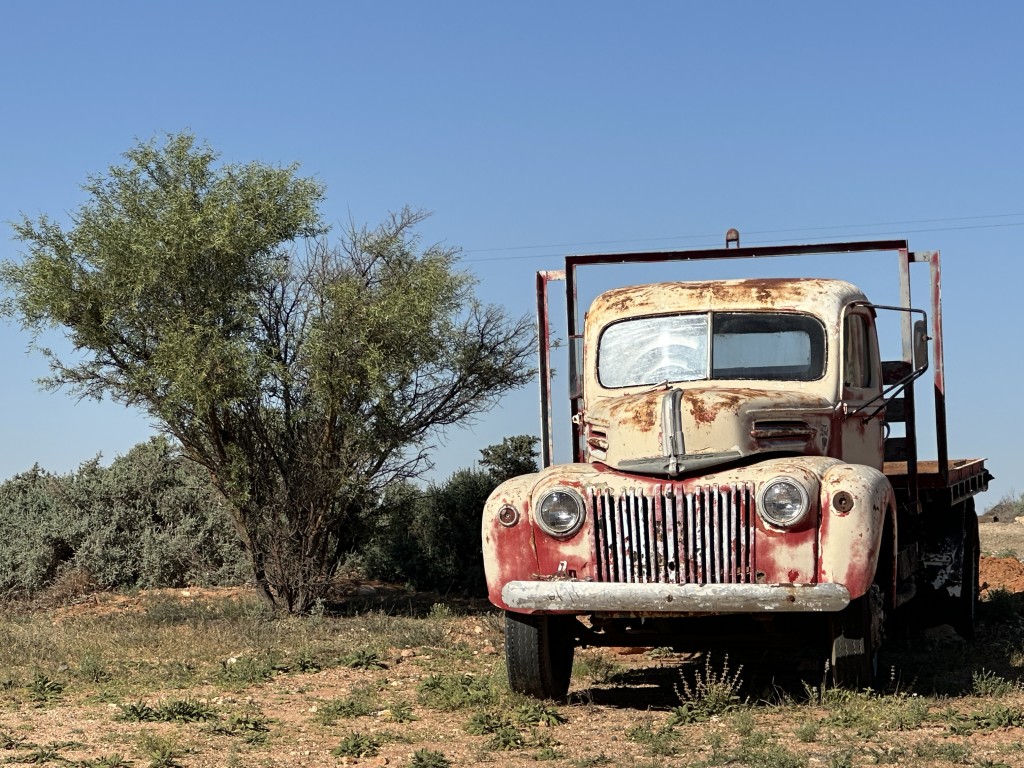
How could you not take a photo of this 1940s Ford “jailbar” flatbed truck.
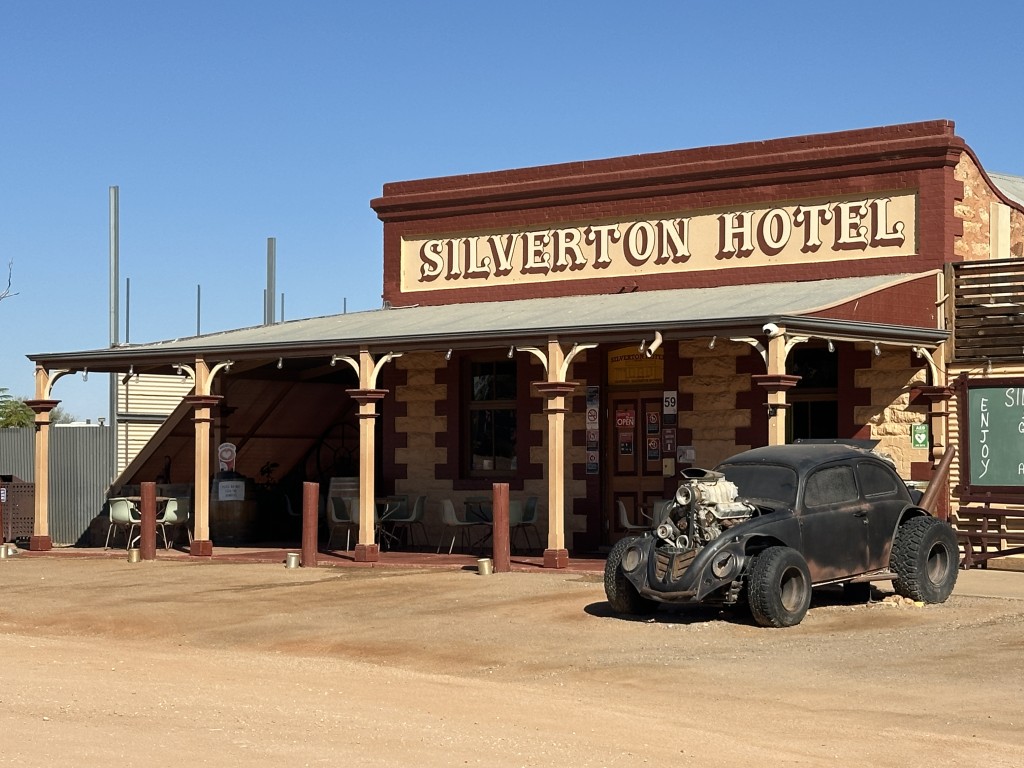
The hotel is still in operation and there were more donkeys than patrons around when we were in town,
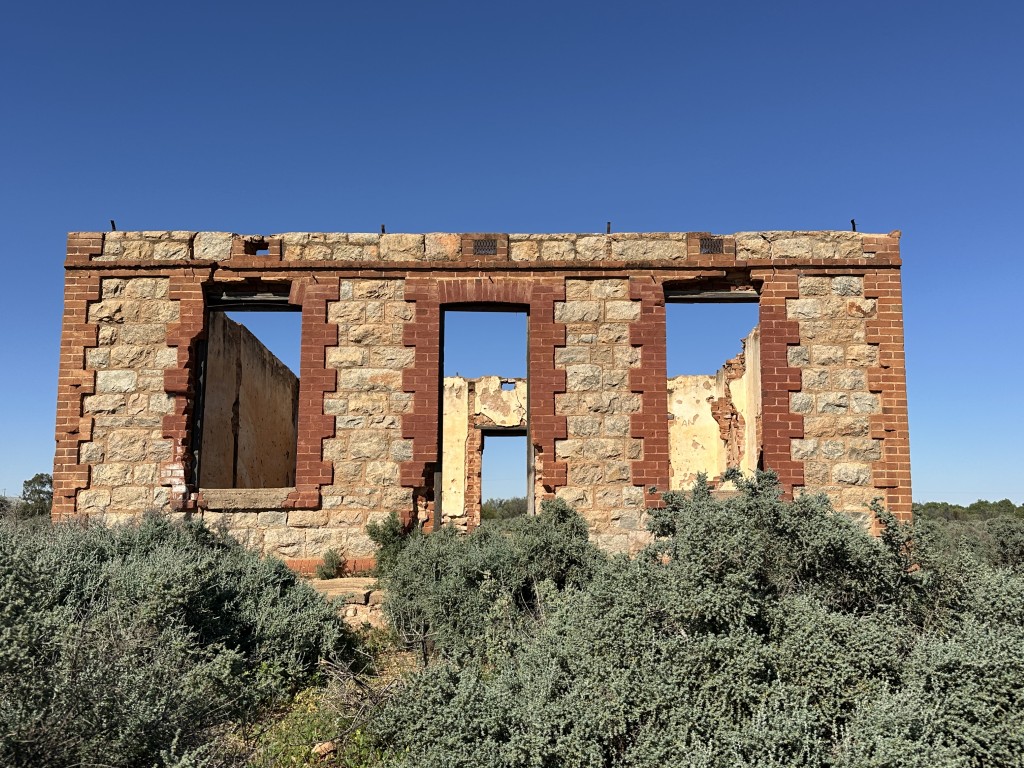
Throughout the town is evidence of decline. A town slowly dying.
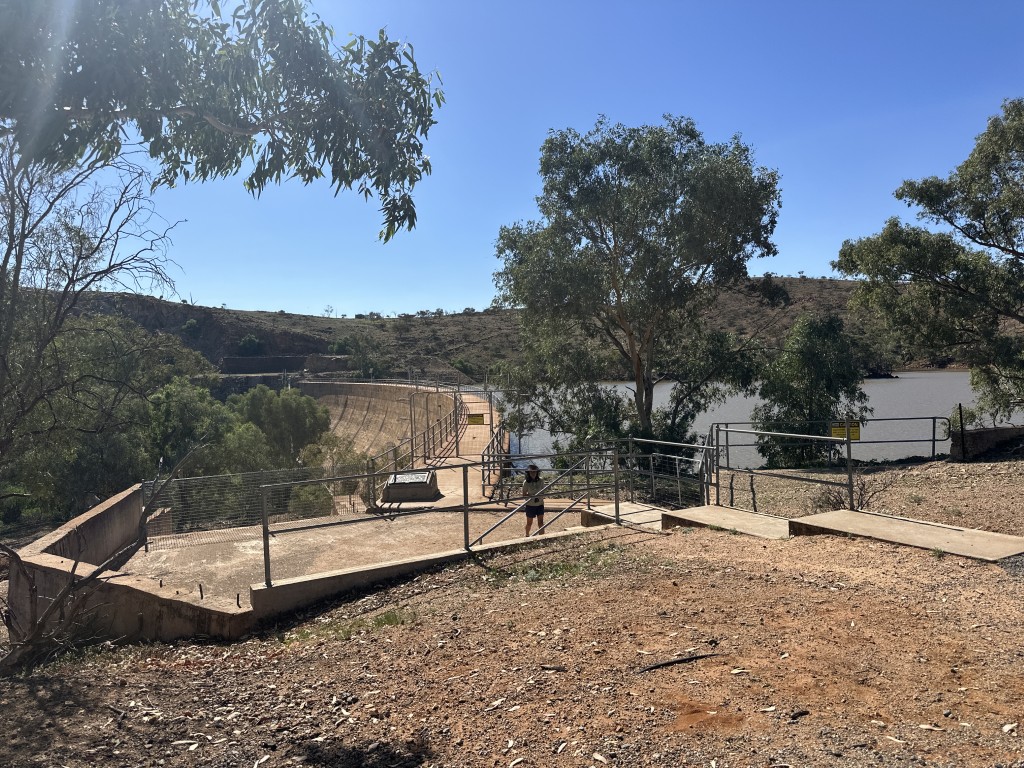
Our last stop outside Silverton was the Umberumberka Reservoir. The reservoir overlooks the plains were Mad Max 2 was filmed and also the site where the annual Mundi Mundi bash takes place. The Mundi Mundi Bash is an iconic outback musical festival for campers attracting around 15,000 attendees annually.
The long awaited visit to Broken Hill did not disappoint and we could have spent more time in the area.
After Broken Hill, we headed further north following the Darling River.