
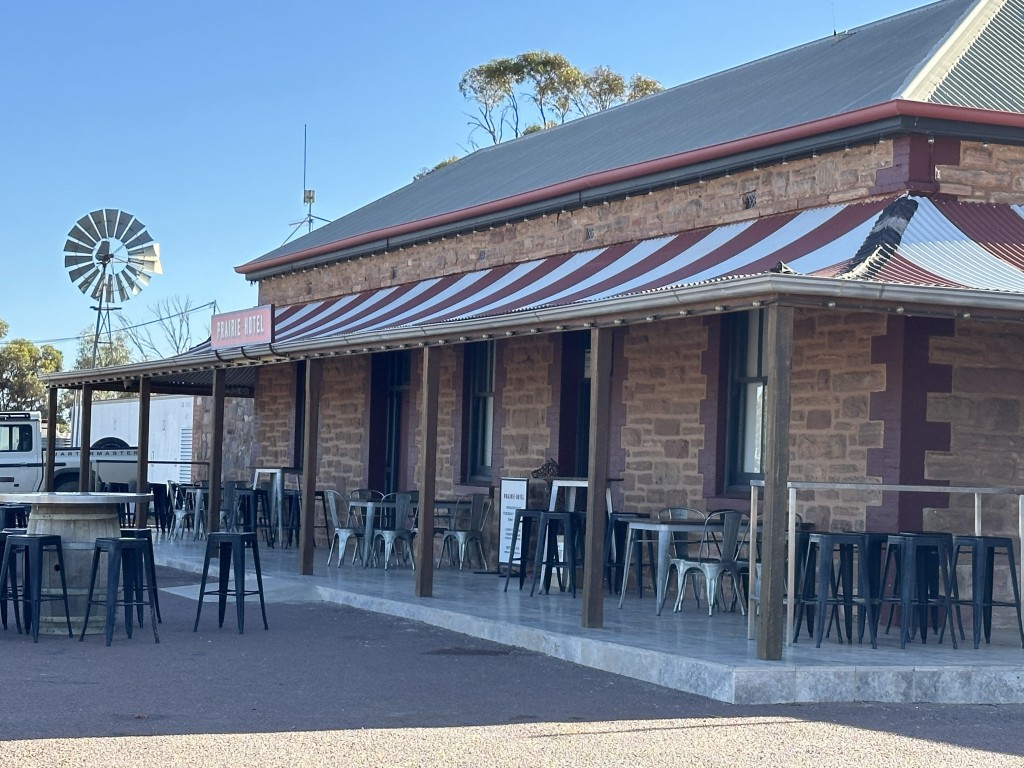
After completing our travels through the Flinders Ranges, there was only one more attraction in the area to visit, the Prairie Hotel in Parachilna. In 1881 the old town of Parachilna was moved 10km to be closer to the railway station. At the time the passenger train linking Adelaide with Maree, stopped at Parachilna. Today only coal trains pass by the old historical pub. The pub was meticulously restored and remains a popular watering hole amongst locals and tourists.
We visited the settlement early in the morning when the pub was still closed.
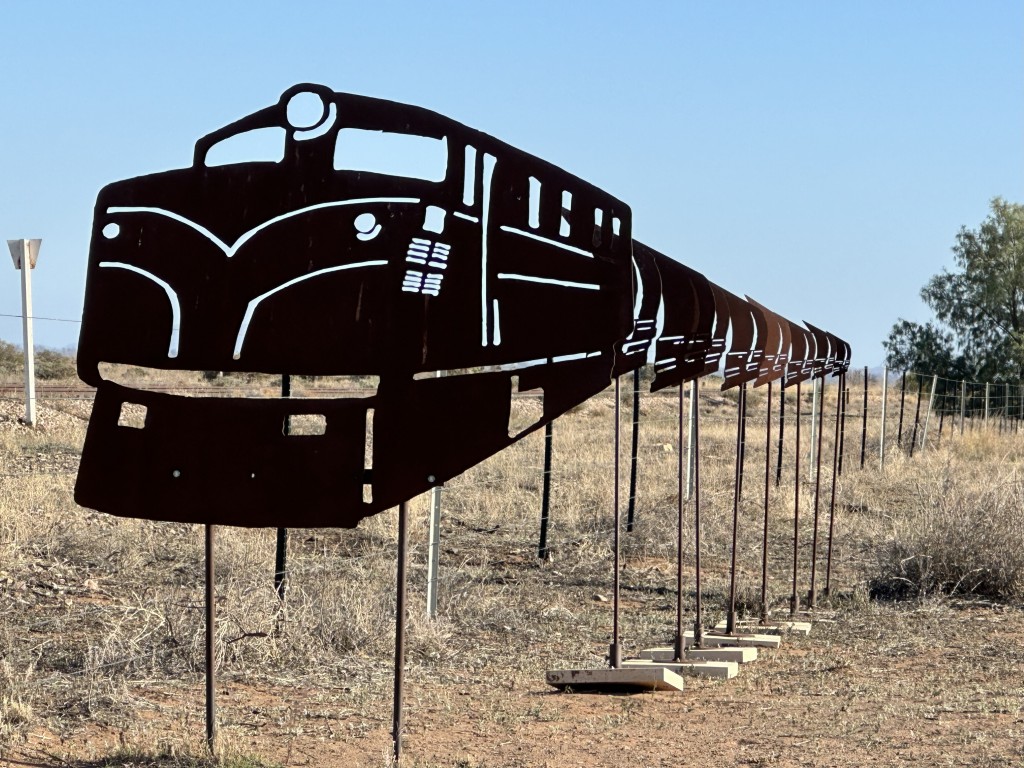
As a tribute to the Gahn train, a wrought iron sculpture was installed between the pub and the Parachilna railway station.
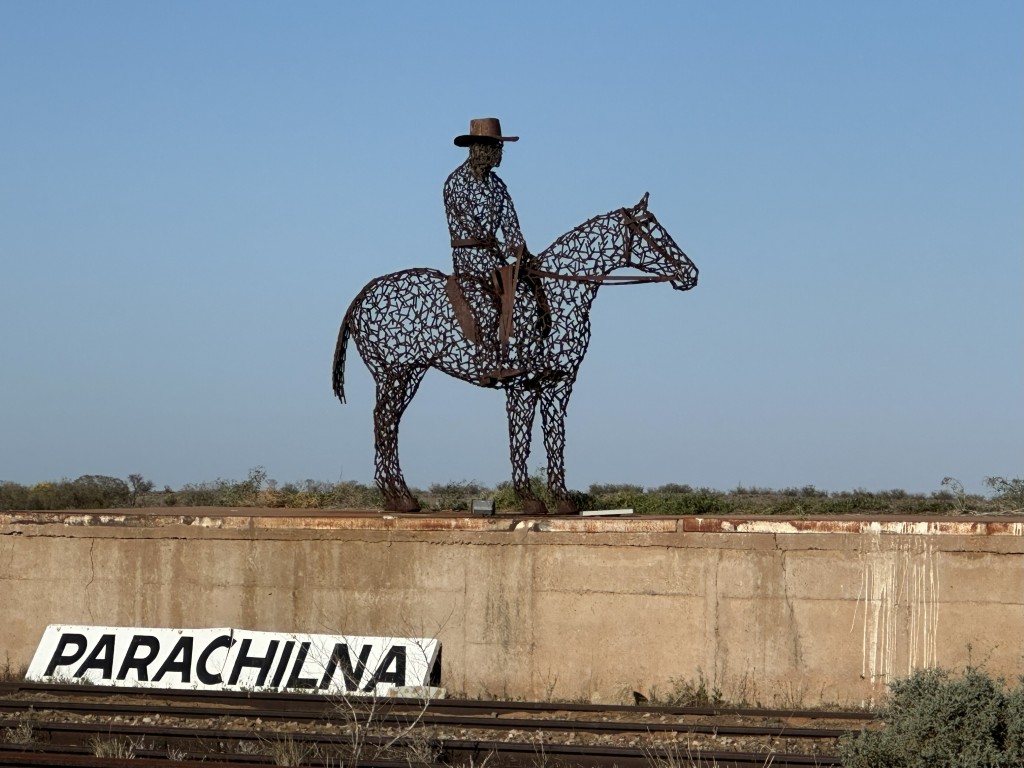
On the old railway platform an iron horseman sculpture was installed, redefining the skyline. With the sun setting directly behind the horseman, this sculpture attracts photographers from far and wide.
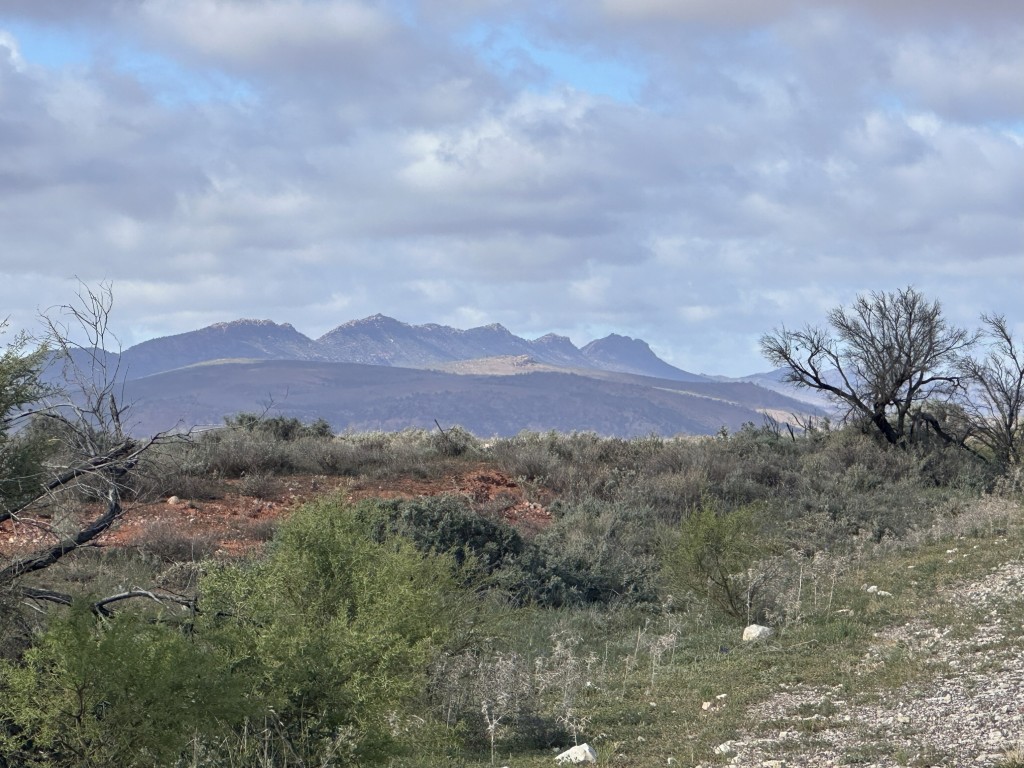
As we started heading south, we had our last glimpses of the western aspect of the Flinders Ranges.
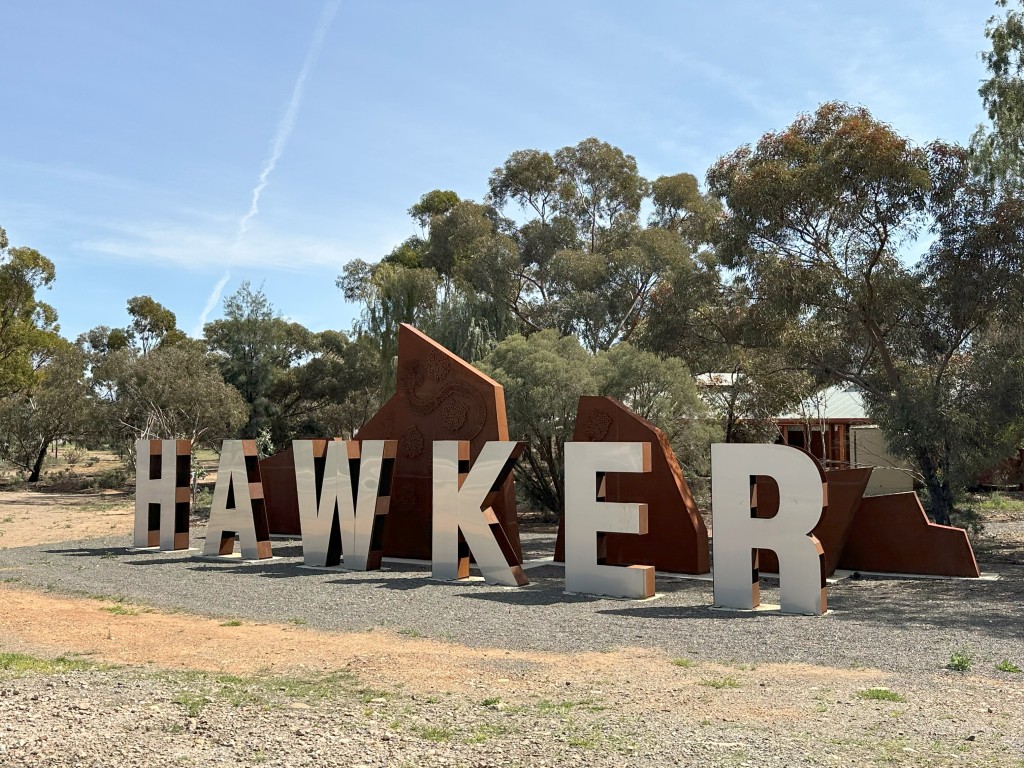
After almost a week with no power or water hook-up, the caravan was bone dry and we stopped at Hawker to fill our 300l tanks. Just behind the entrance sign to Hawker, is a RV friendly rest area with a water filling station.
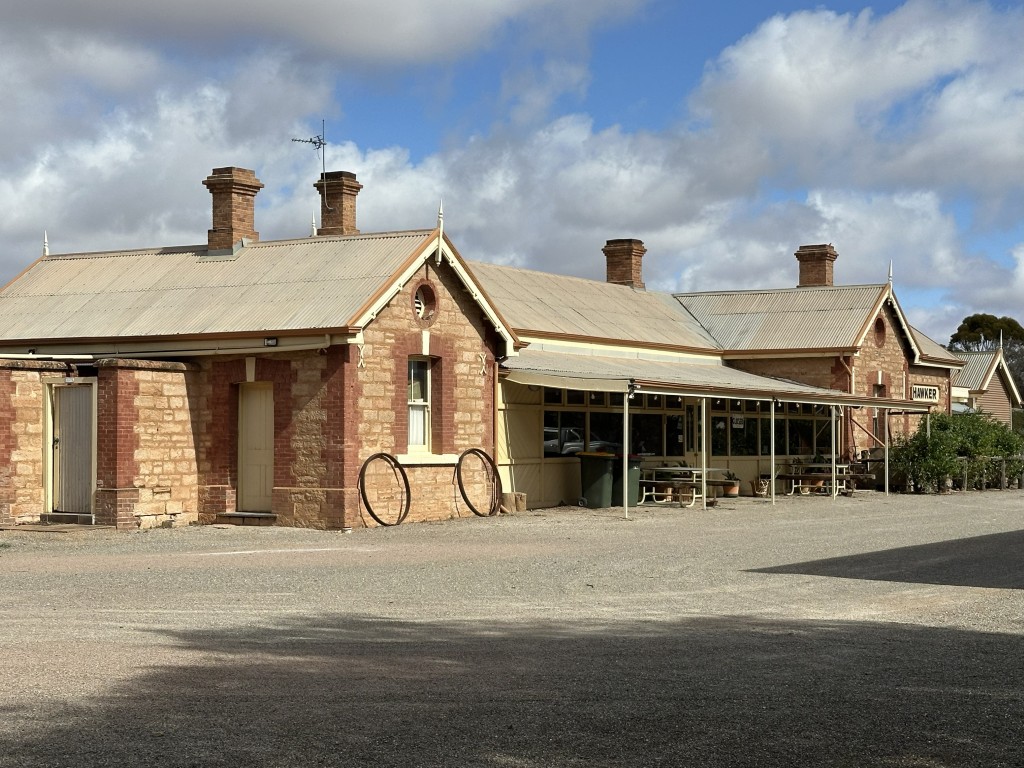
One of the attractions in Hawker we were keen to visit was the Jeff Morgan Gallery. Jeff is a world renown artist calling Hawker home. In his gallery is a 3.5m high by 33m wide panoramic painting of the Flinders Ranges. As we were way too early for the gallery, we visited the historic Gahn railway station instead.
The next small town on our way, was Quorn.
Quorn has a free public weighbridge. Seeing we just filled the car with diesel and the caravan with water, it was an opportune time for a quick weigh. With a total weight of 6.7 tonnes for the fully loaded car and caravan, we were 100kgs below our legal limit.
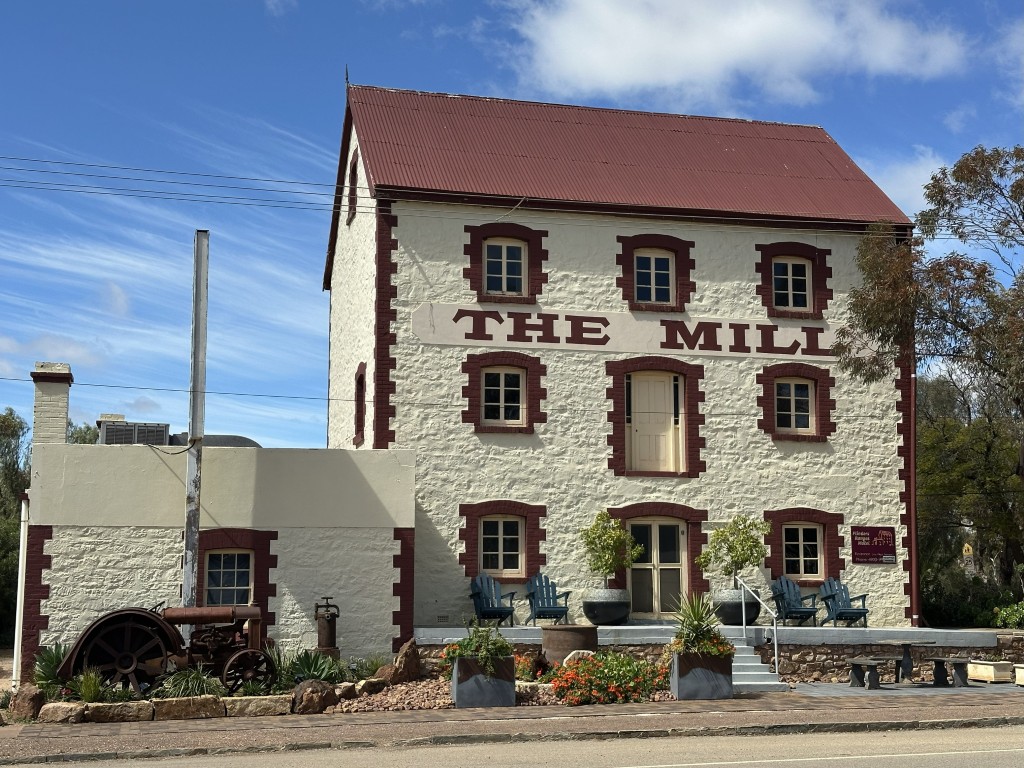
As we left Quorn, we passed the 1879 Quorn mill building. The production of the mill was short lived as the area went through a drought, just after the mill was completed.
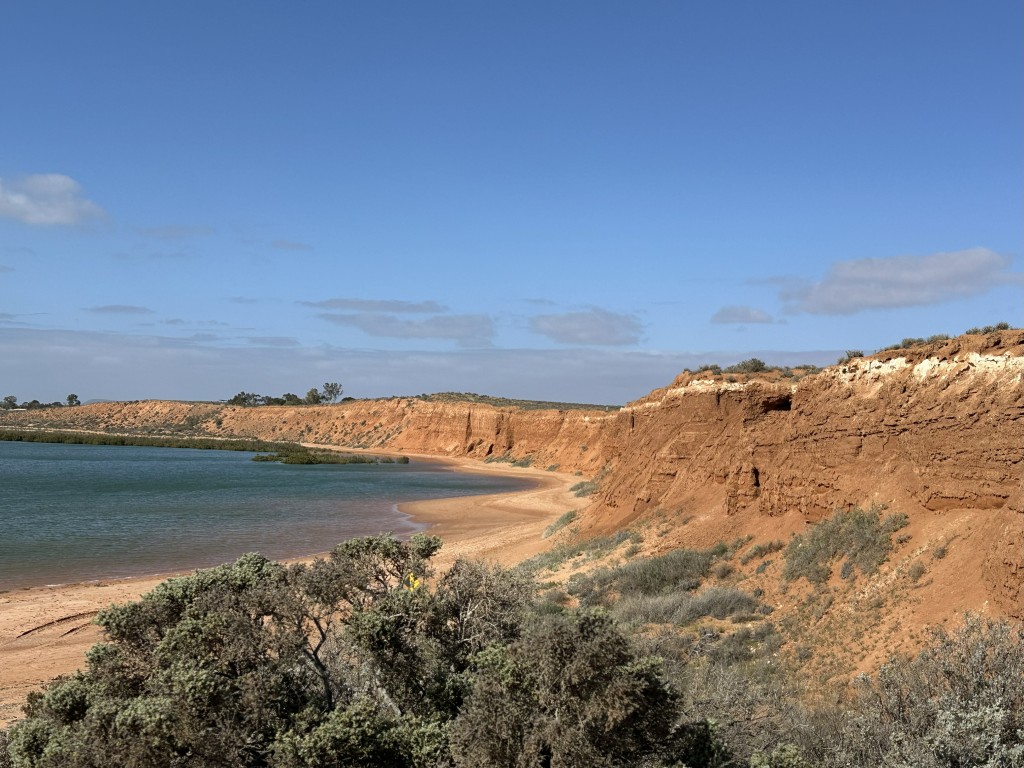
Our next stop was Port Augusta. We stayed in Port Augusta for a few days to stock up on groceries and visit a few places of interest. The Matthew Flinders Red Cliff Lookout was our first stop on the way to the botanical garden.
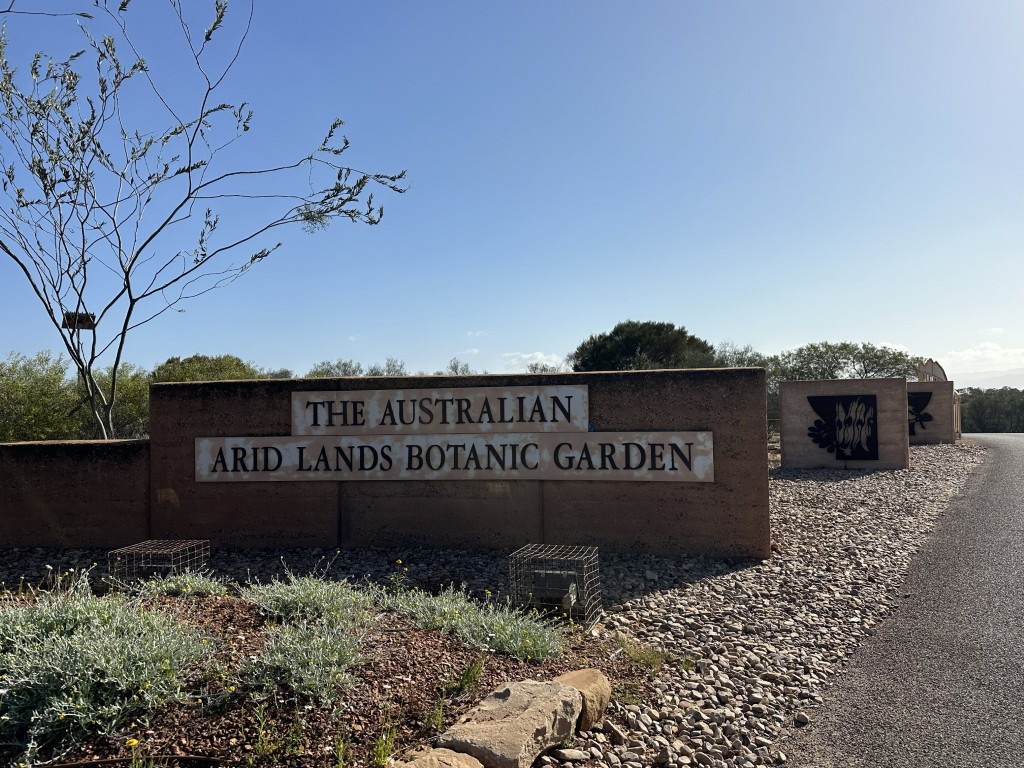
The Australian Arid Lands Botanic Garden is just north of Port Augusta. The gardens provide a great insight in the vegetation of the area.
The lookout on the northern side of the gardens provides a panoramic view.

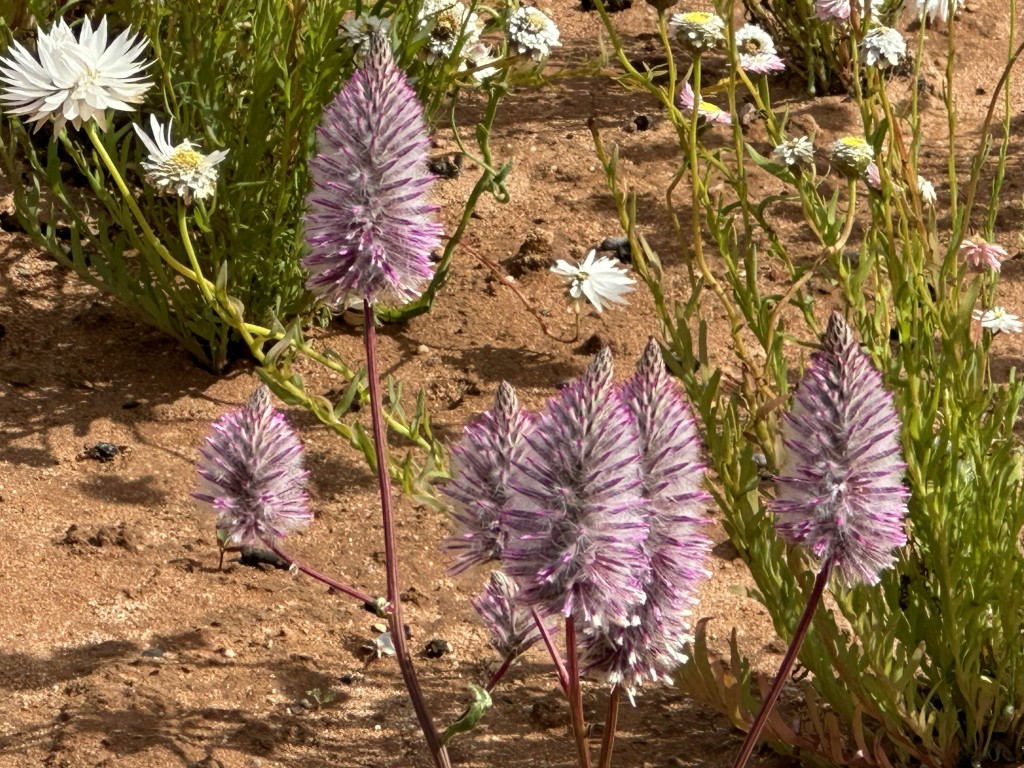
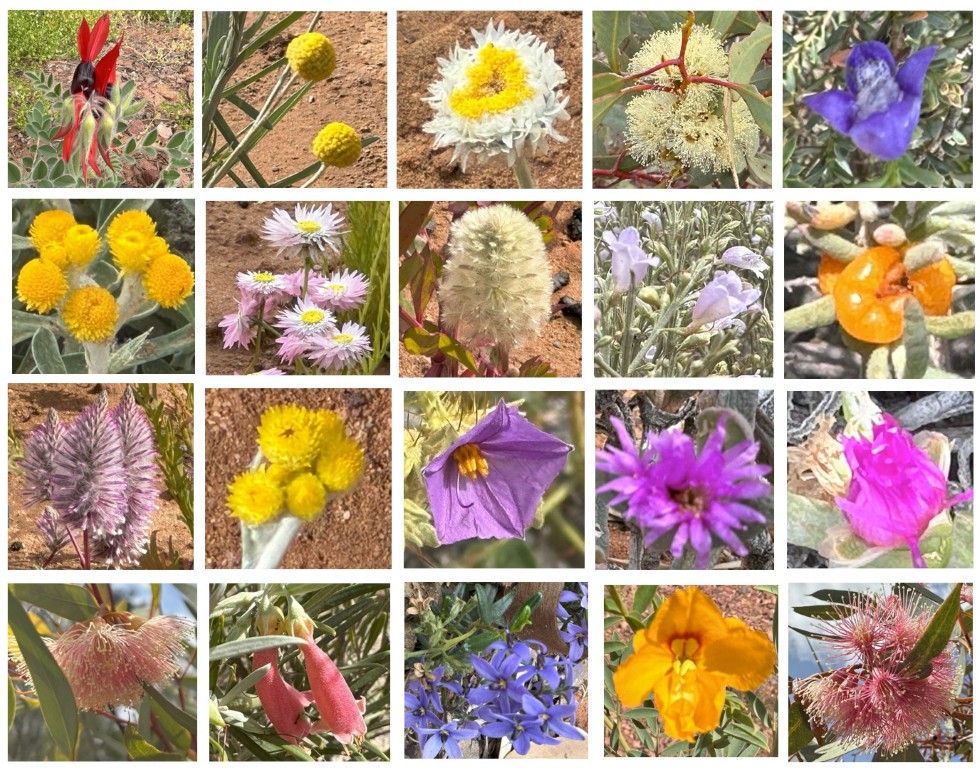
Because of the late rainfall, the pink Mulla Mulla and many other wild flowers were still in bloom when we visited the Australian Arid Lands Botanical Garden.
After Port Augusta we headed to Wudinna. Wudinna is the gateway to the Gawler Ranges and also home to a few significant rock formations. The Polda Rock was our first stop. Many of these massive rock formations have manmade walls to channel the rainfall into storage reservoirs.
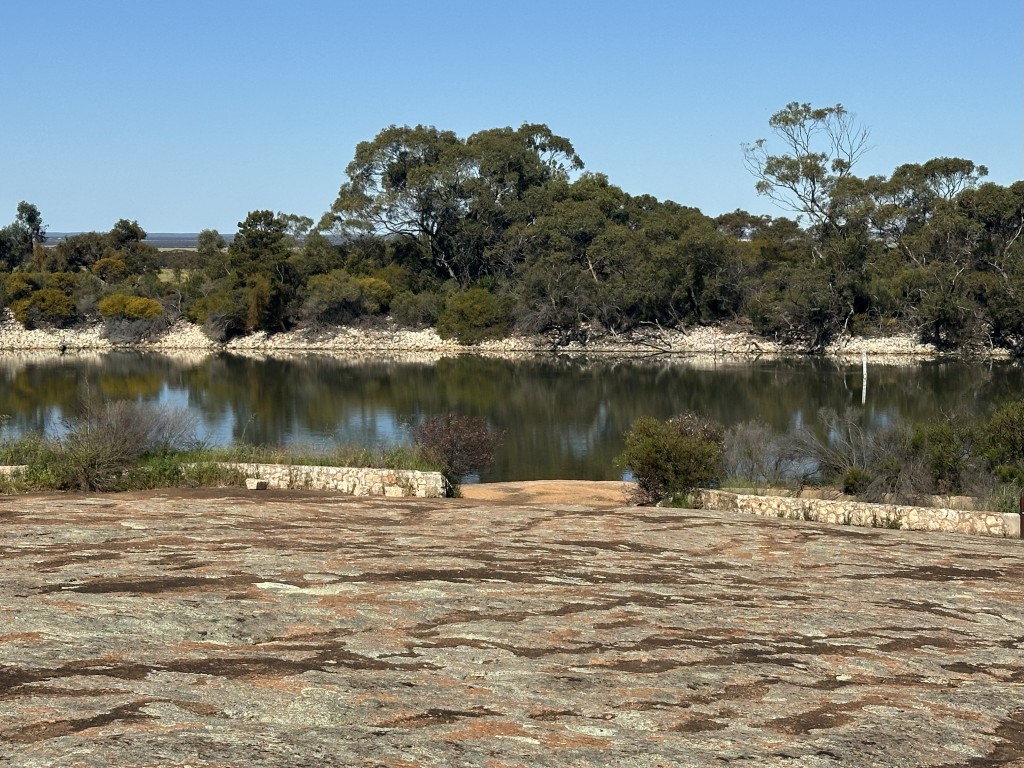
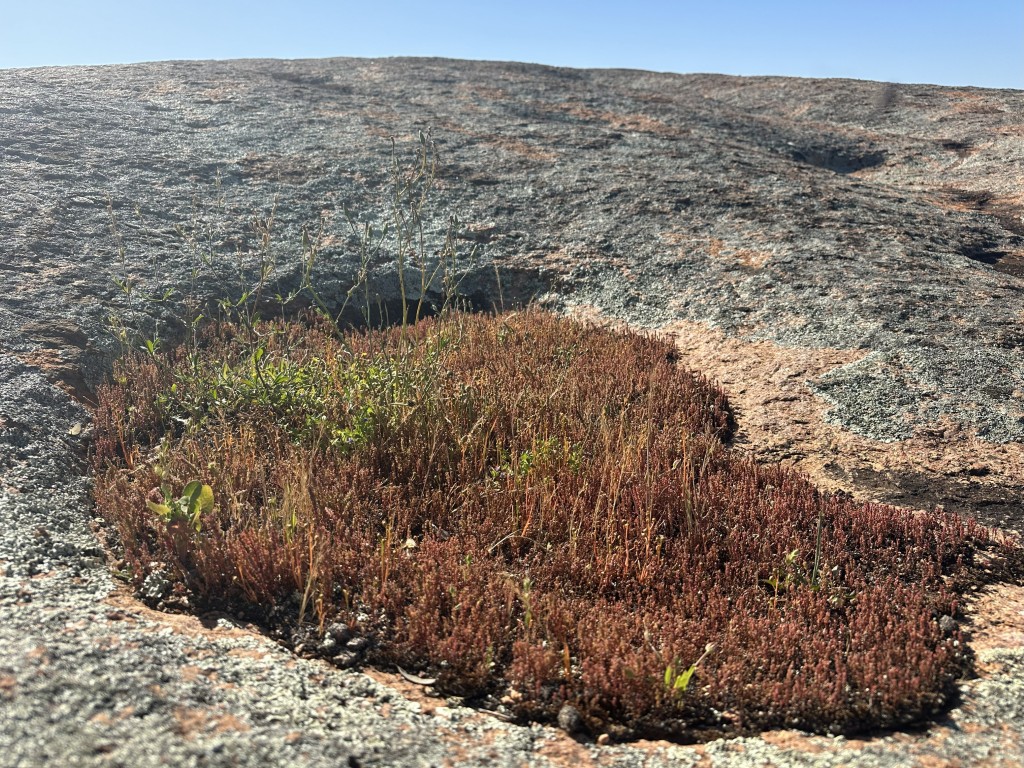
The rocks are mostly bald with a few wild flowers and reptiles calling it home.
From Polda rock you can see Mount Wudinna in the background. After Uluru, Mount Wudinna is one of three contenders for the second largest monolith rock in Australia.

We drove around Mount Wudinna, before walking onto the rock following one of it’s marked tracks.
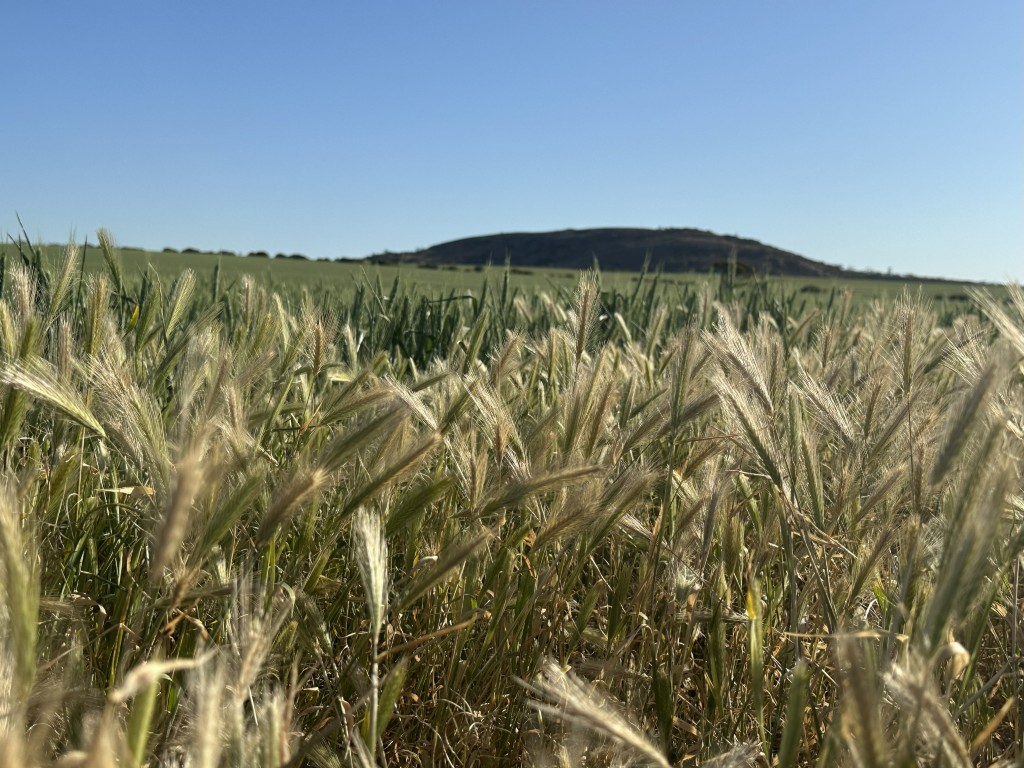
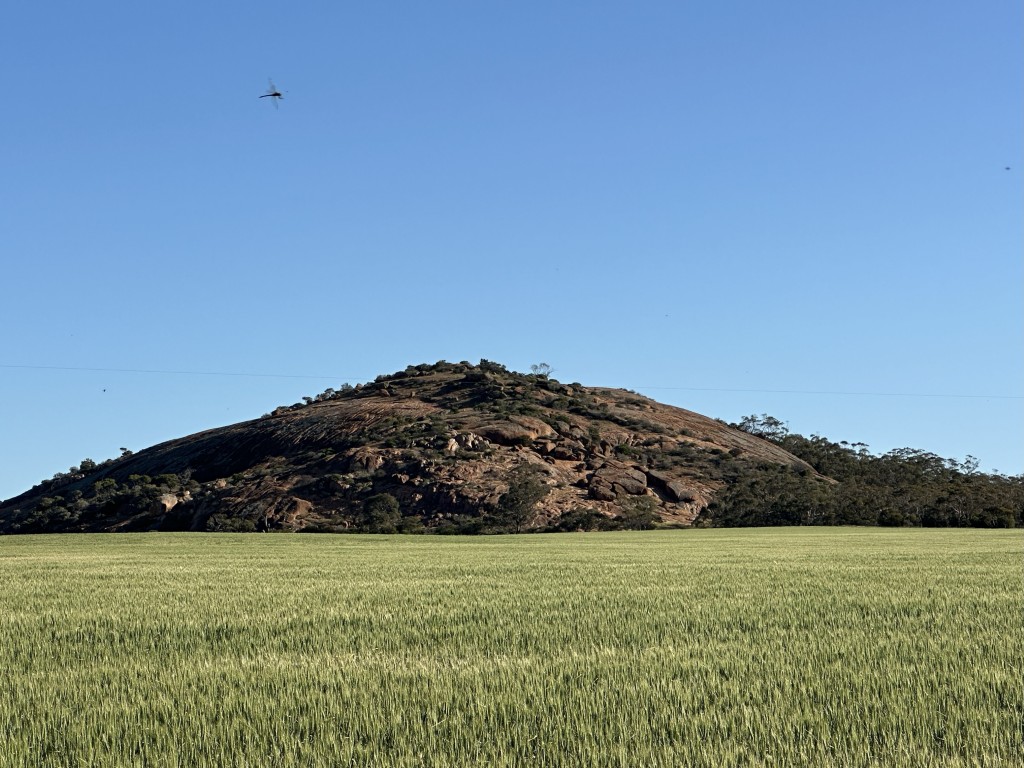
Of the three walking trails on the rock, we did Mount Wudinna Nature Trail.
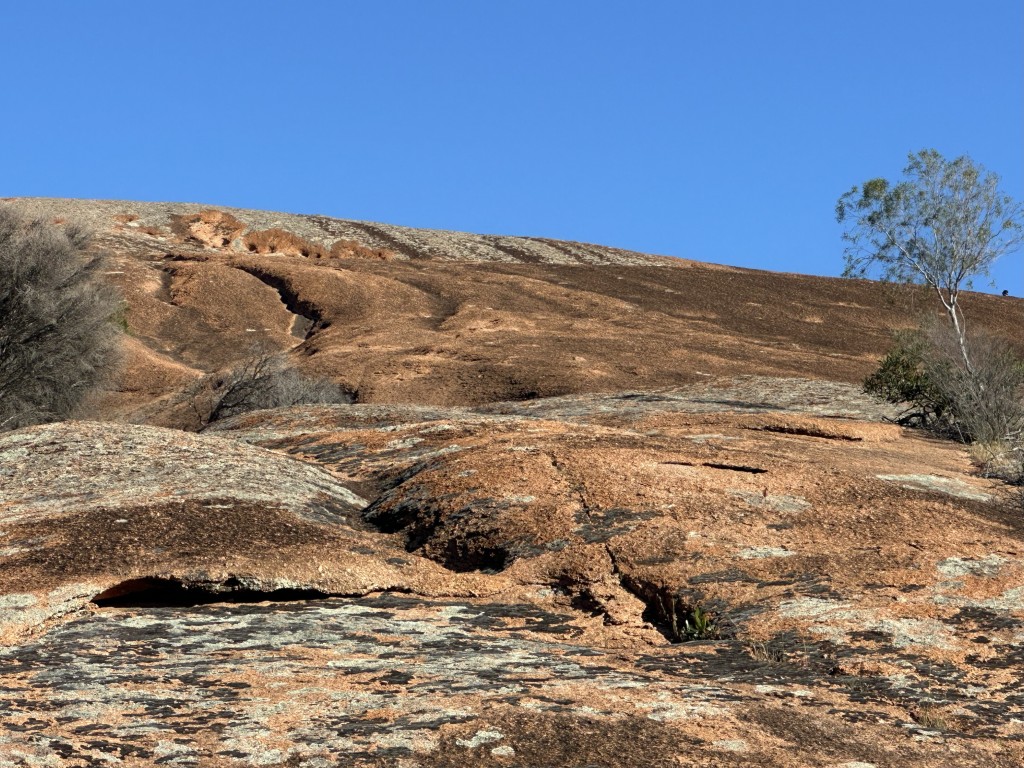
From Wudinna we took the dirt road to the Gawler Ranges National Park.
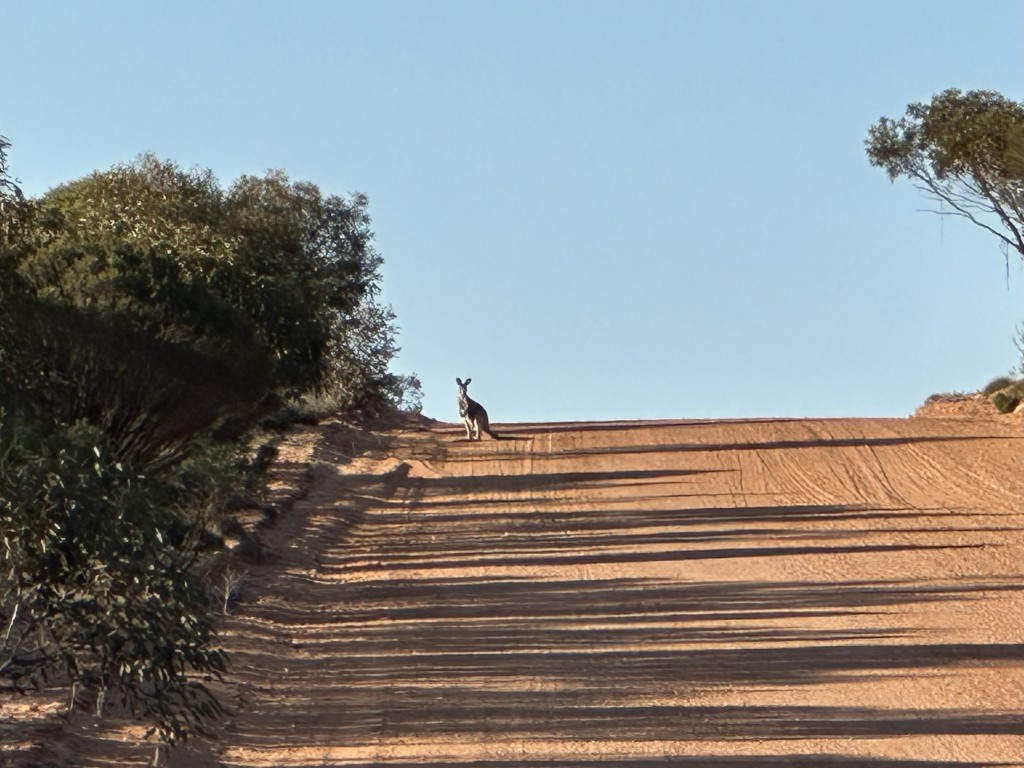
After completing the Finders Ranges, the Gawler Ranges were less impressive and much smaller. The organ pipes must be the geological feature the ranges are best known for. The organ pipes are vertical columns formed by crystallized lava.

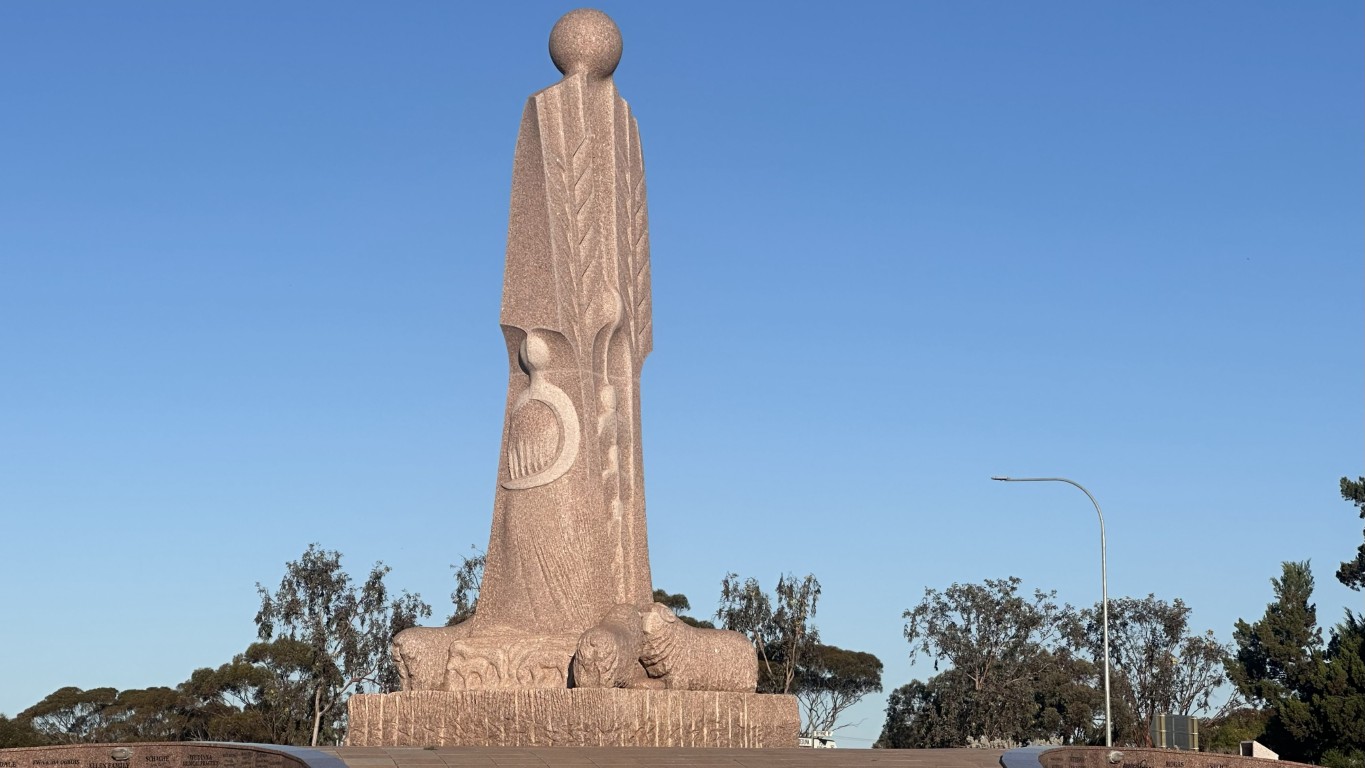
Wudinna is in the midst of a wheat growing region. It is no wonder the Big Australian Farmer was commissioned for the centre of town. This structure is 8 meters tall and weighs 70 tonnes. It took two Croatian artists two years to carve the statue from local granite.
From Wudinna, our next challenge was crossing the Nullarbor. Before leaving Wudinna we filled all our water tanks on the caravan as well as a bladder in the back of the car, extending our water capacity to 430l.
Before fuelling up at Ceduna we stopped at Pinky Point Lookout in Thevenard. The lookout has a memorial for people who lost their lives at sea.
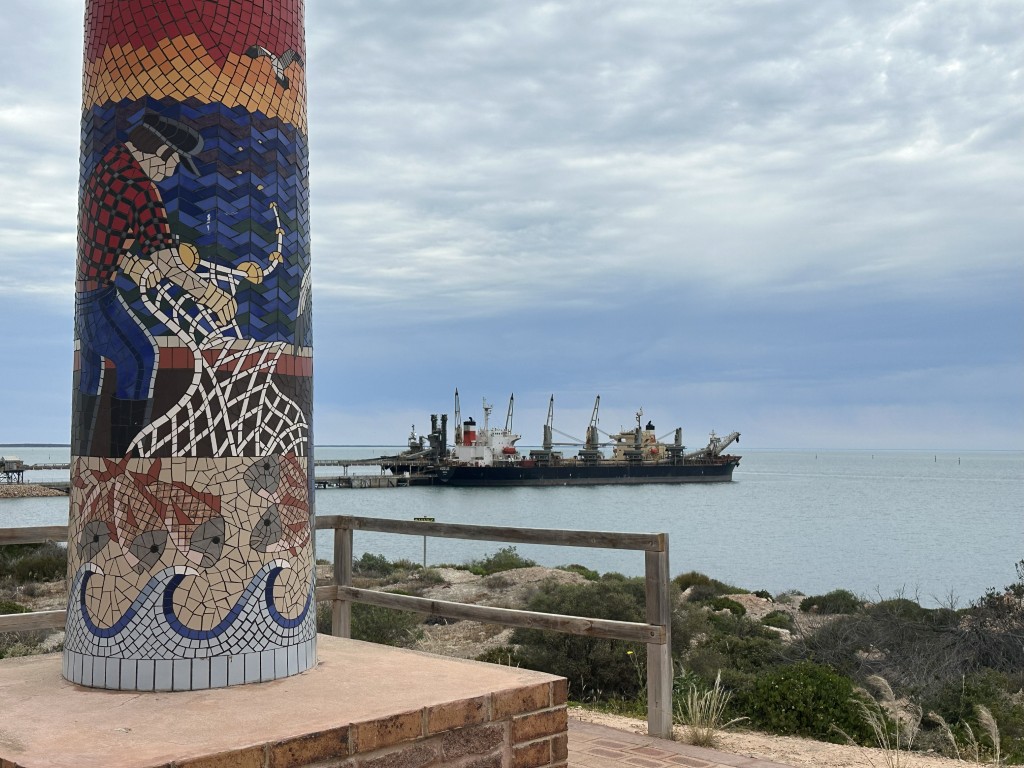
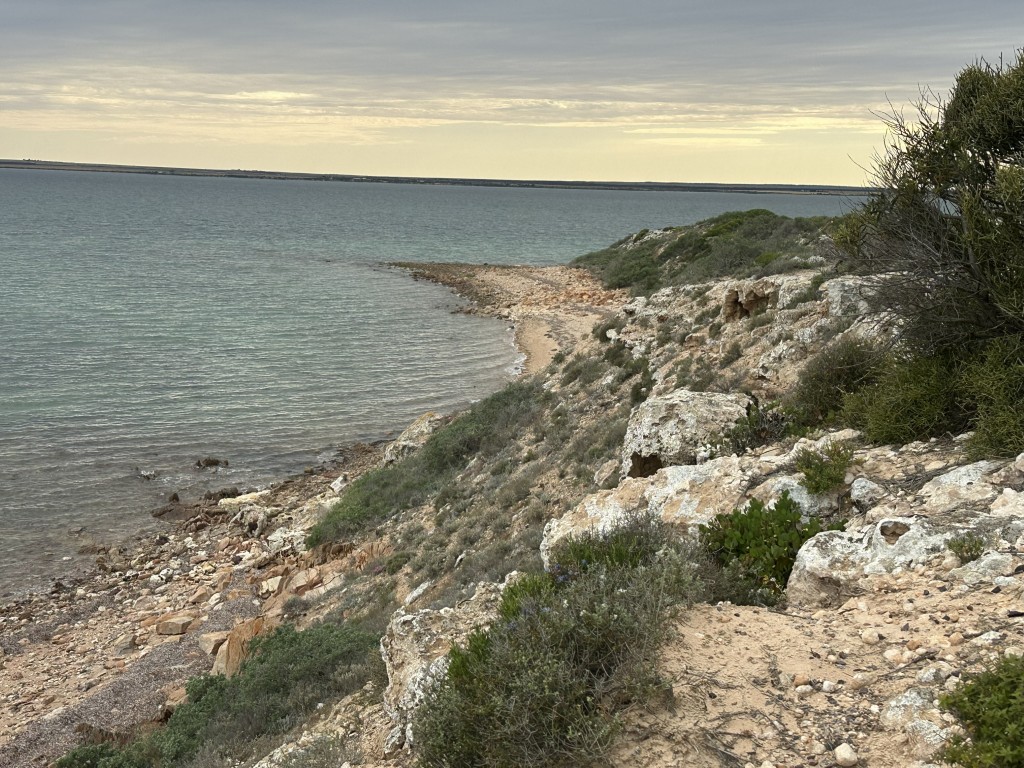
A rugged coastline links Pinky Point and Ceduna.
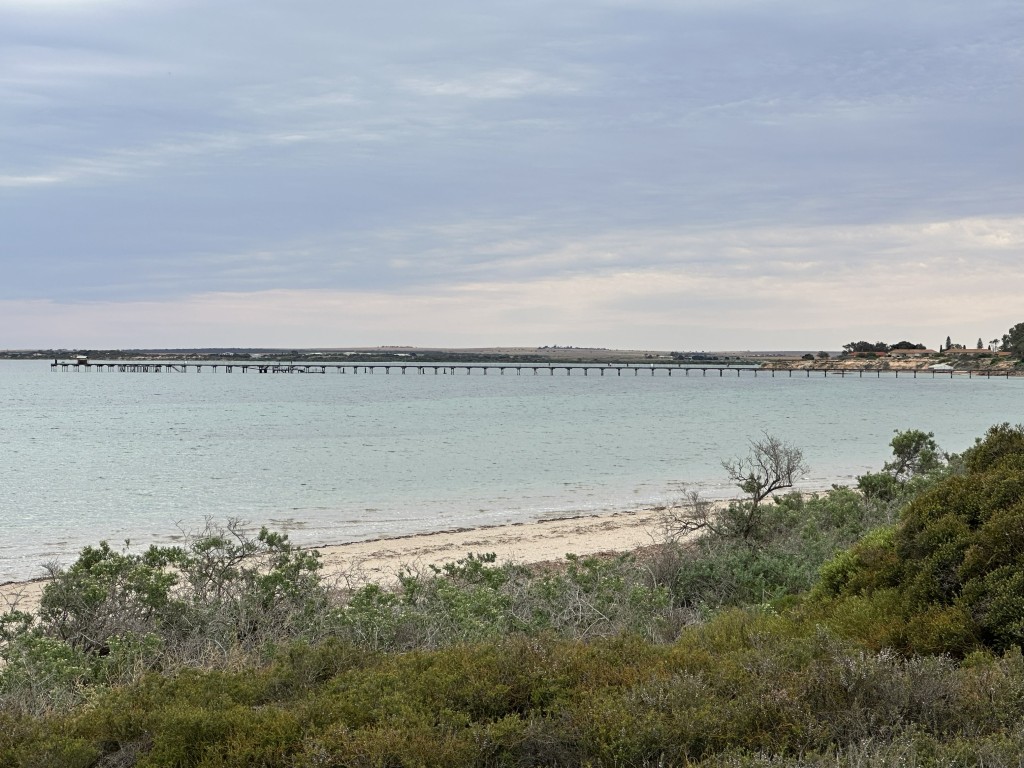
Our last stop before starting the Nullarbor was Ceduna jetty.
The Ayre Highway is a stretch of road linking Ceduna in South Australia and Norseman in Western Australia. This sealed road stretches over 1200km and is fairly straight and level. Some of the main challenges on the road are large trucks, cross winds and a lack of potable water along the way. There are no issues with fuel (other than the price) and there are many fuel stations, roadhouses, rest and camping spots along the way.
In addition to the challenges, there is not much to see on the road. There are only a handful of places of interest along this vast stretch of road.
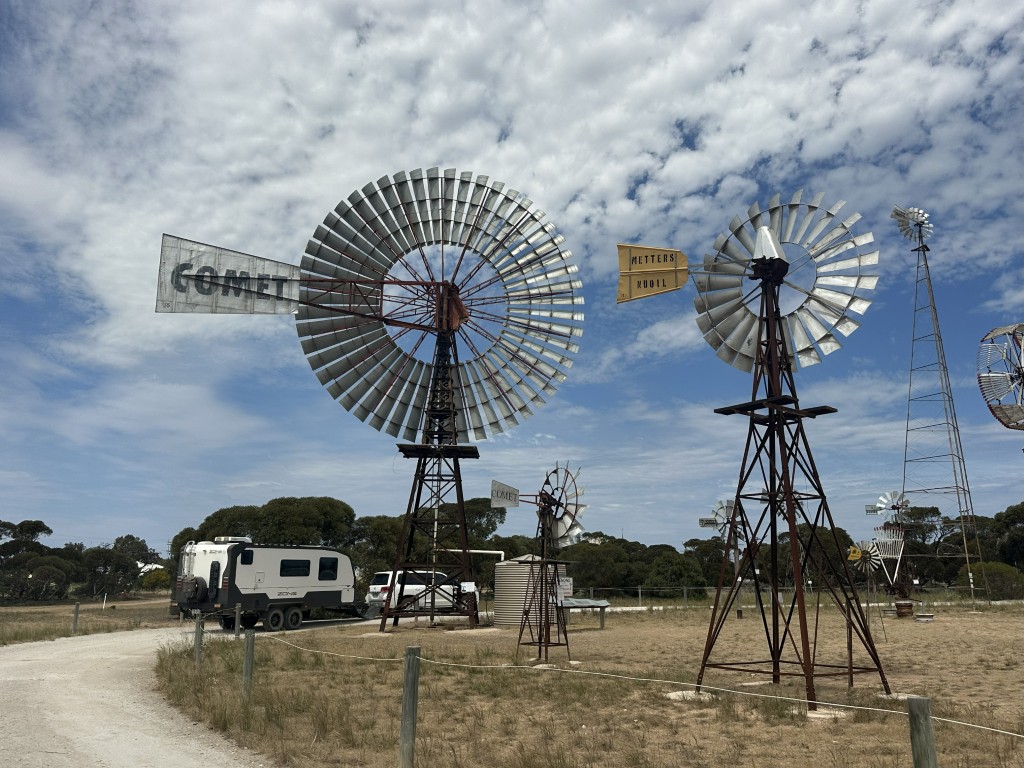
The first place of interest was Penong Windmill Museum. This museum is home to almost 20 windmills from across the country.
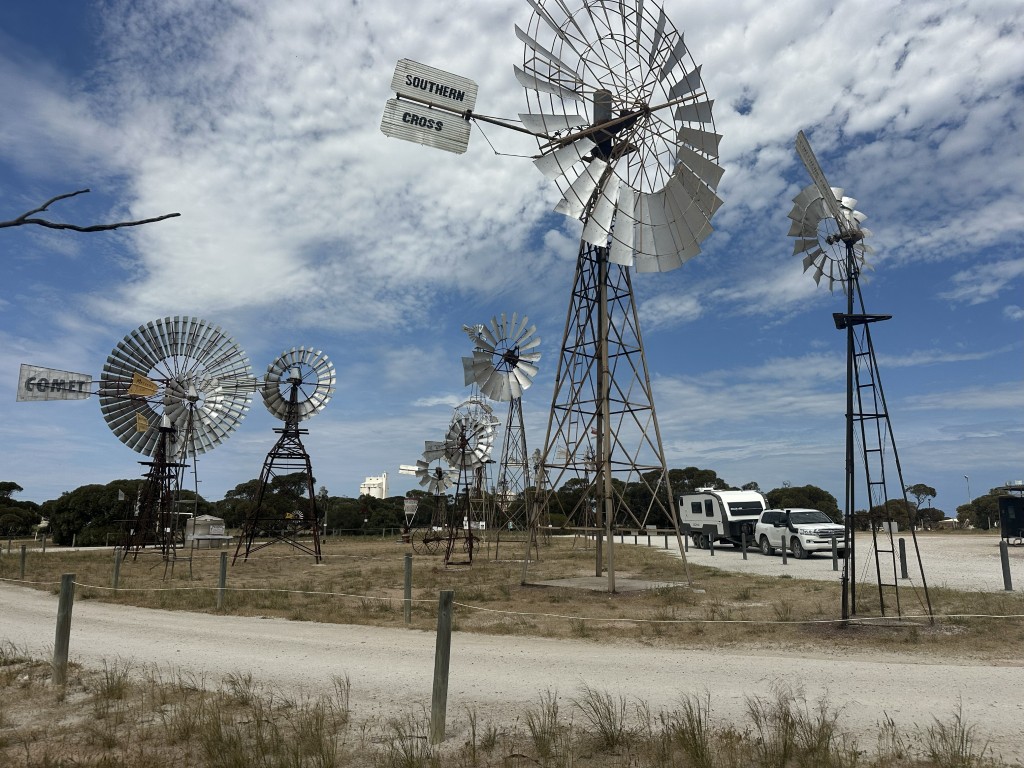
The main attraction is Big Bruce the massive Comet mill that was made in Queensland in 1932. Bruce was named after its owner who loaned the mill to the Penong museum. This 10.7m mill has 90cm blades making it the largest in Australia. The mill dwarfs the car and caravan.
After Penong it gets more remote and the risk of animal strikes increases.
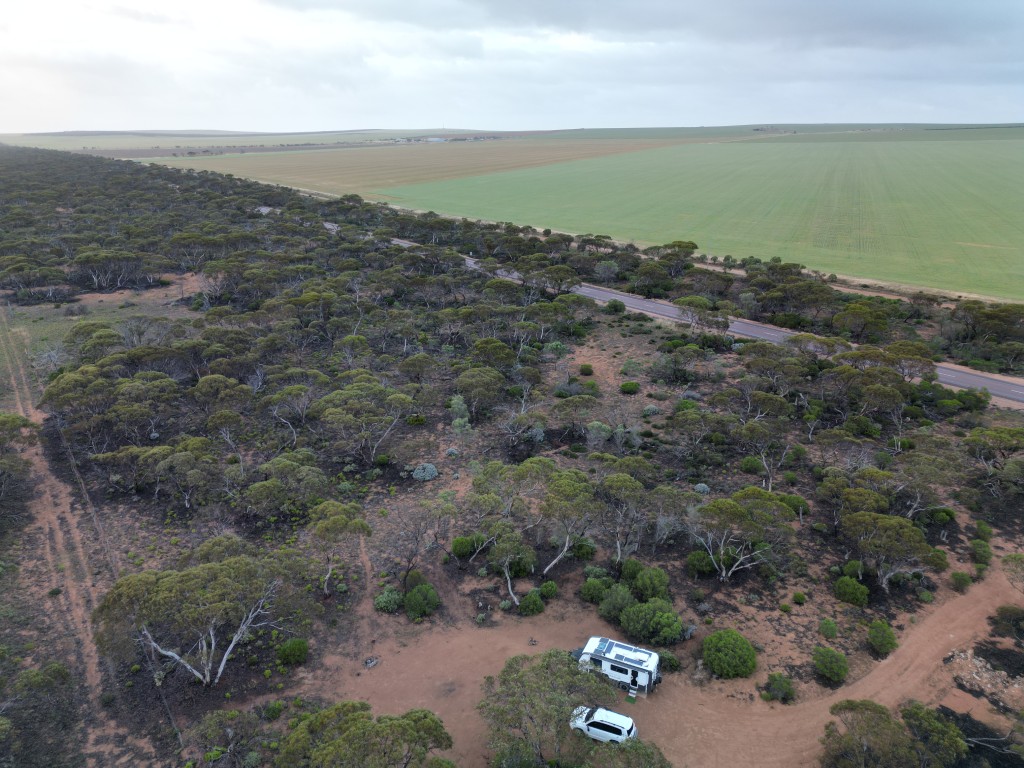
We camped at the old school site, just past Penong.
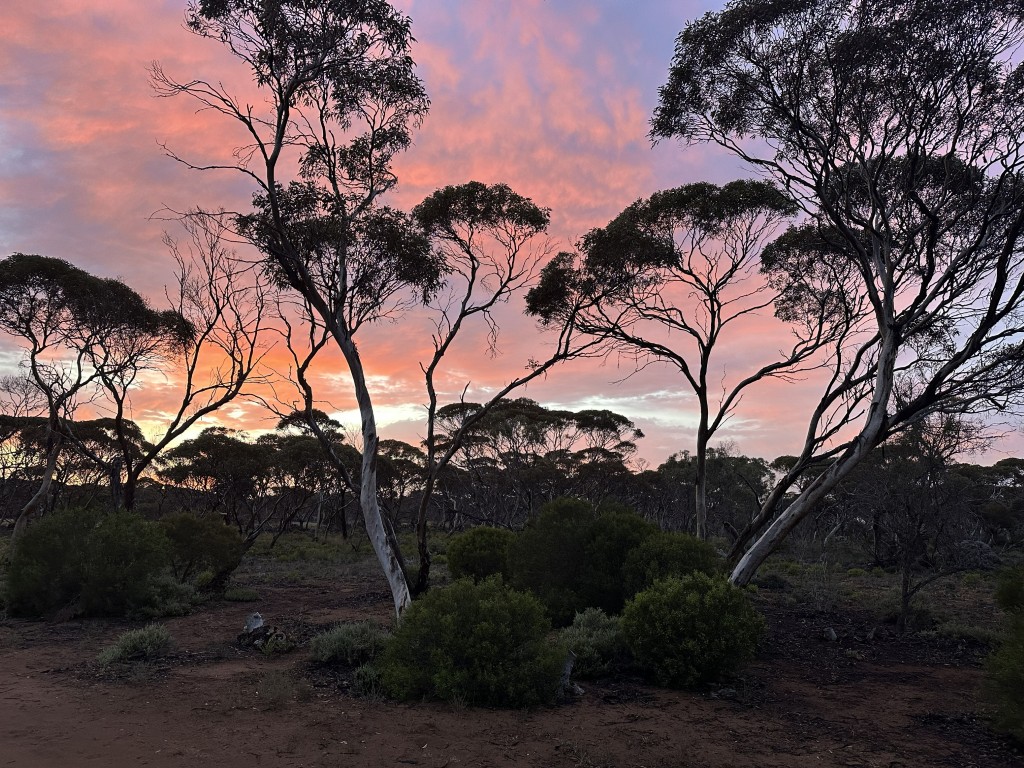
As the traffic faded we were in for a great sunset behind the Mallee trees.
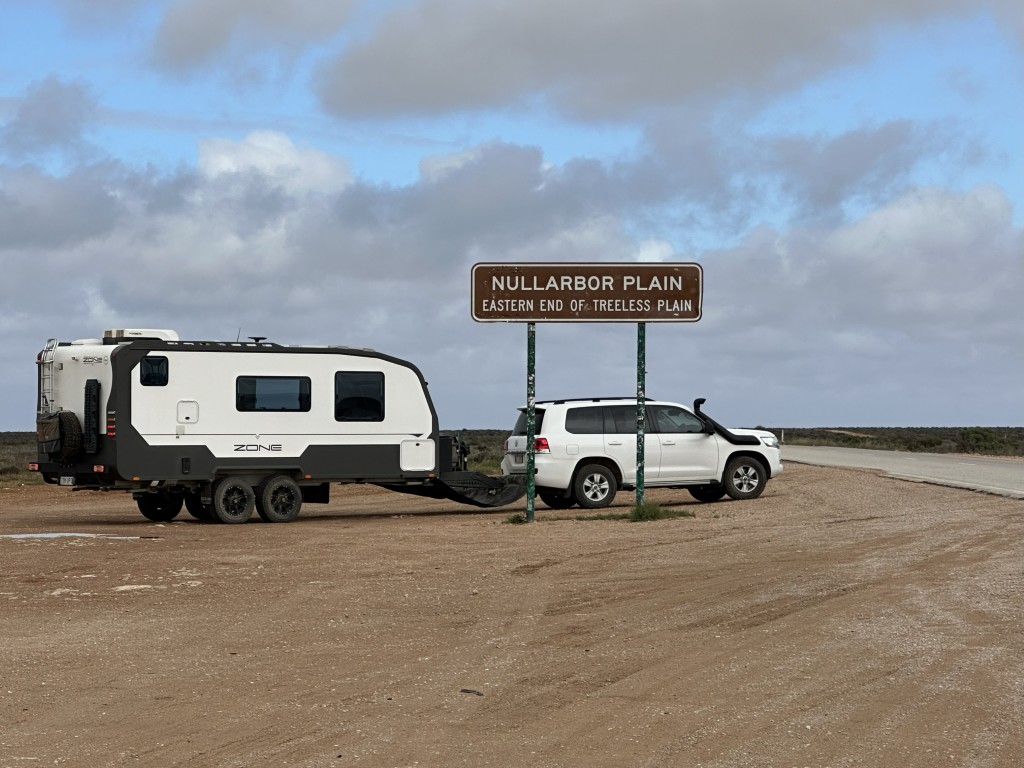
The next day we started the Nullarbor Plains section of the Ayre Highway. Nullarbor is Latin for no trees, and we quickly realised why it got the name. This road crosses a 200,000 square kilometre of limestone bedrock. The largest of its kind in the world.
Our first stop on the Nullarbor was the bustling Nullarbor Roadhouse. The original building was preserved as a historical site.
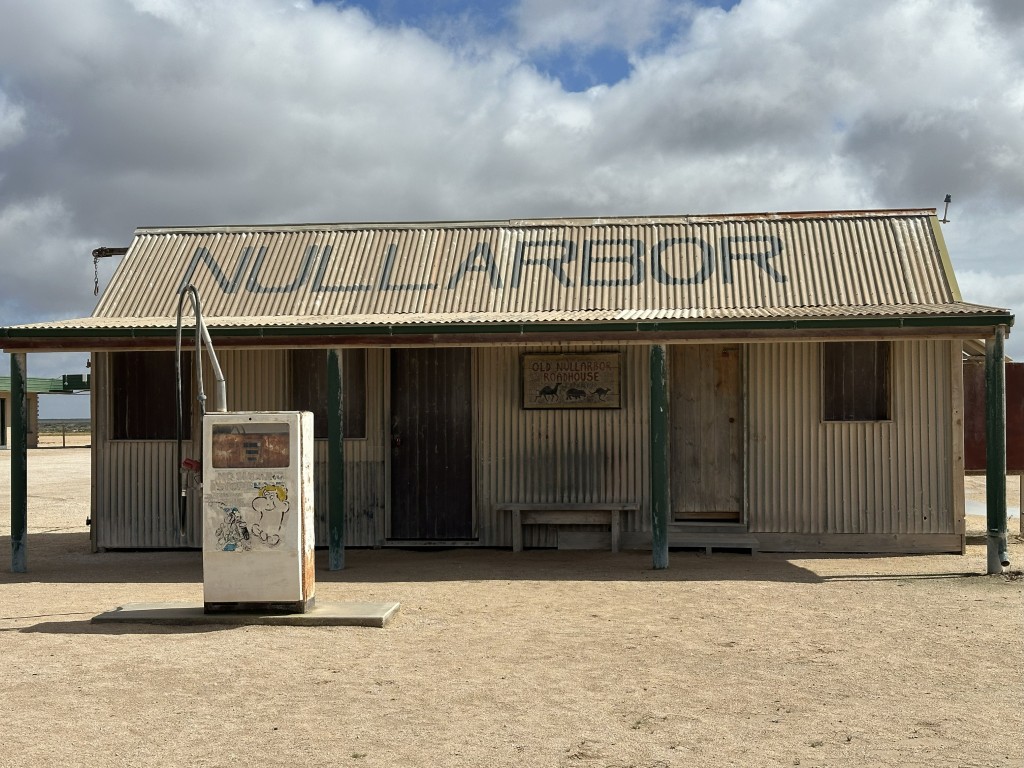
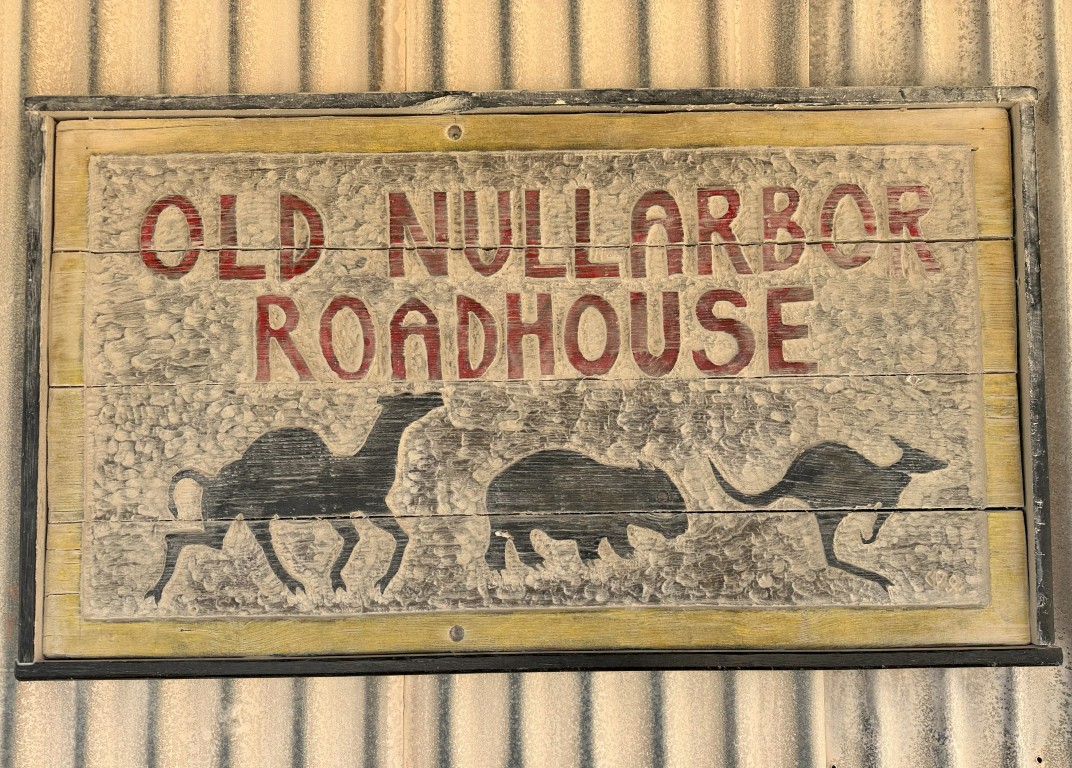
One of the old signs was also preserved and is still on display against the old roadhouse.
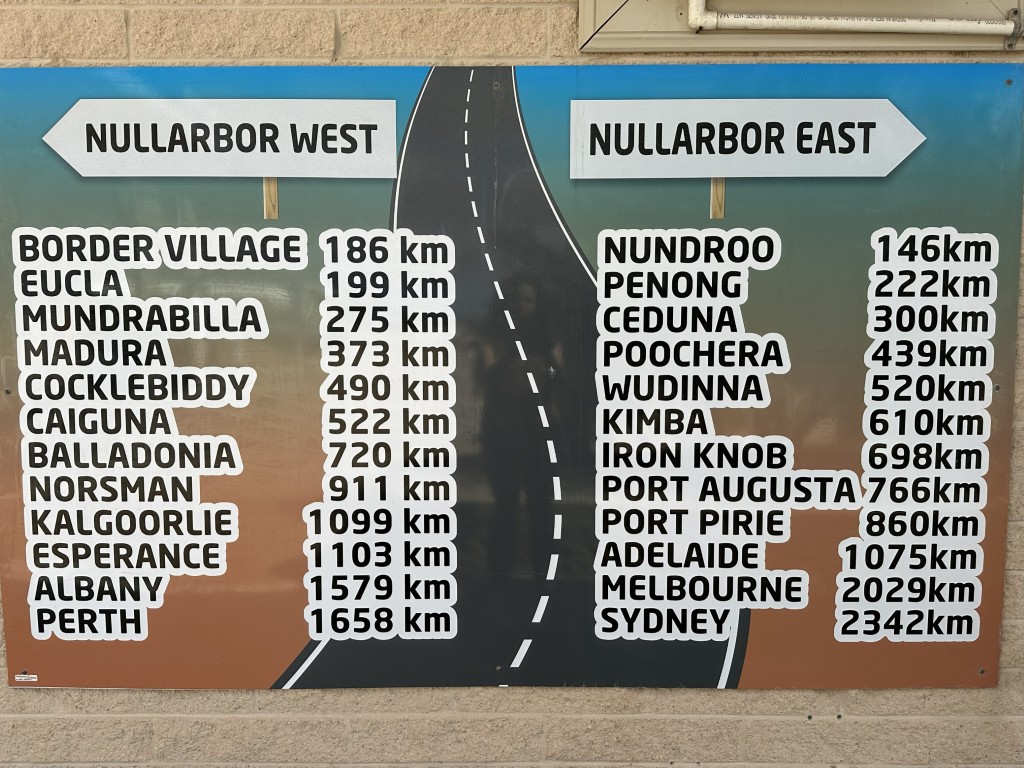
The sign at the roadhouse, makes you realise how remote you are.
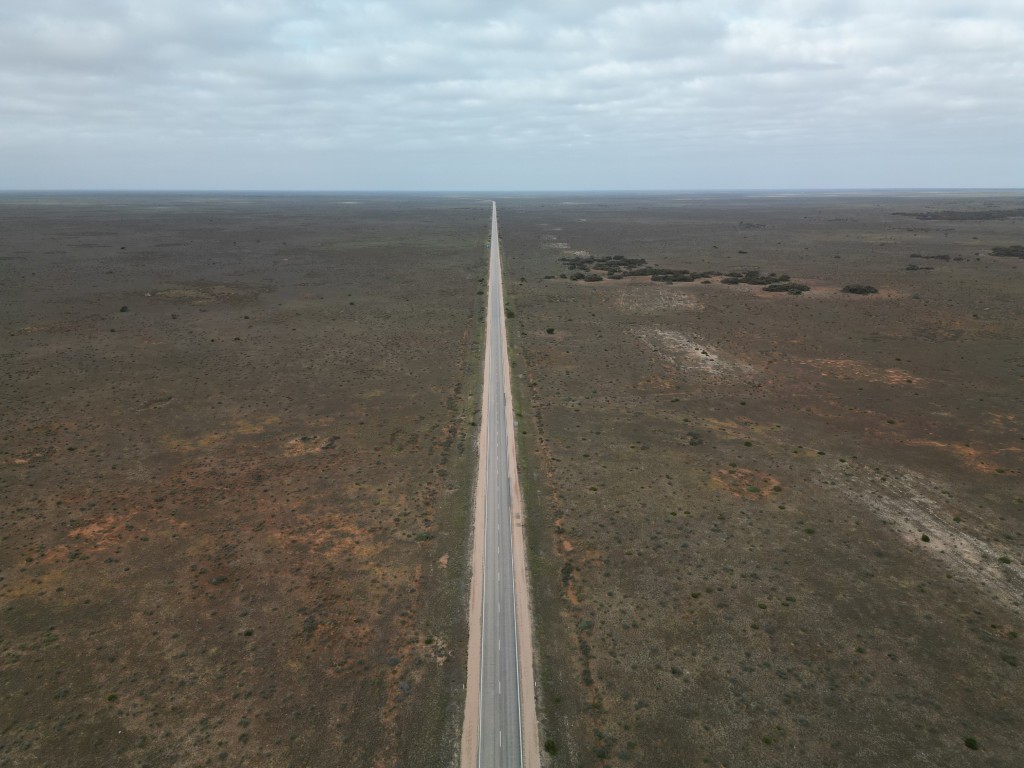
After a quick break we were back on the road. The Ayre Highway is an easy drive with great visibility and was not too busy, when we crossed it.
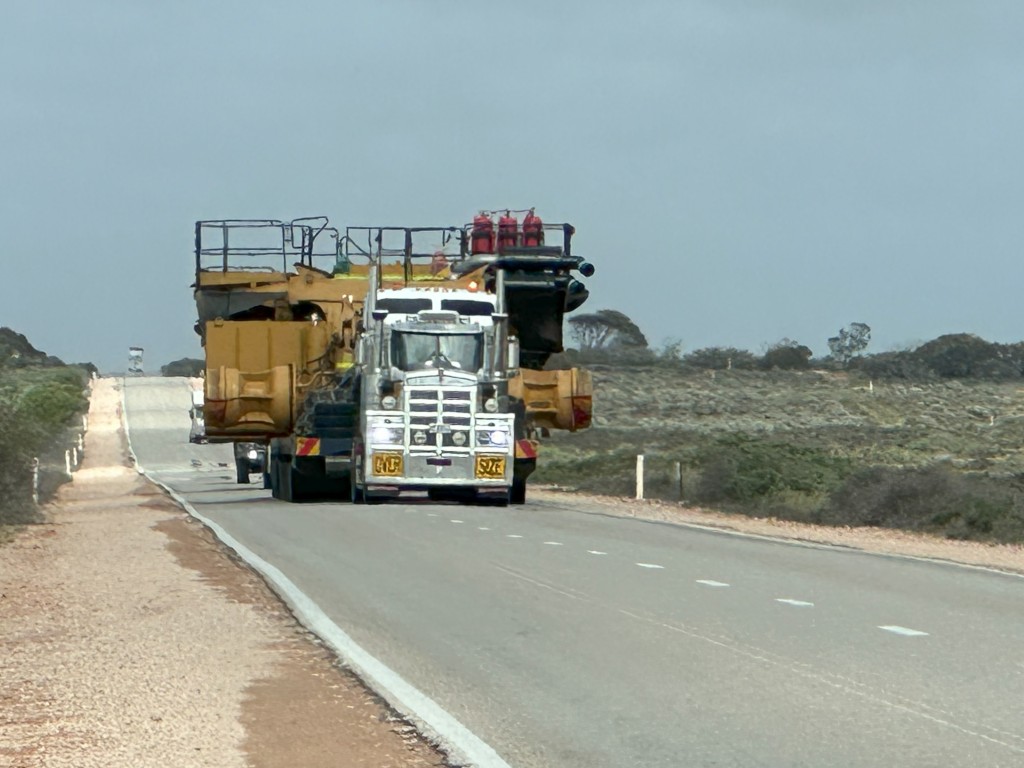
You still need to remain alert for animals crossing, planes landing on the highway and the occasional oversize truck or road train. Luckily we did get and early warning on the UHF radio of this abnormal load heading our way. We had to pull off the highway to allow this mining truck to pass.
Our next camp was another roadside stop at 164K Peg Rest Area on the Nullarbor.
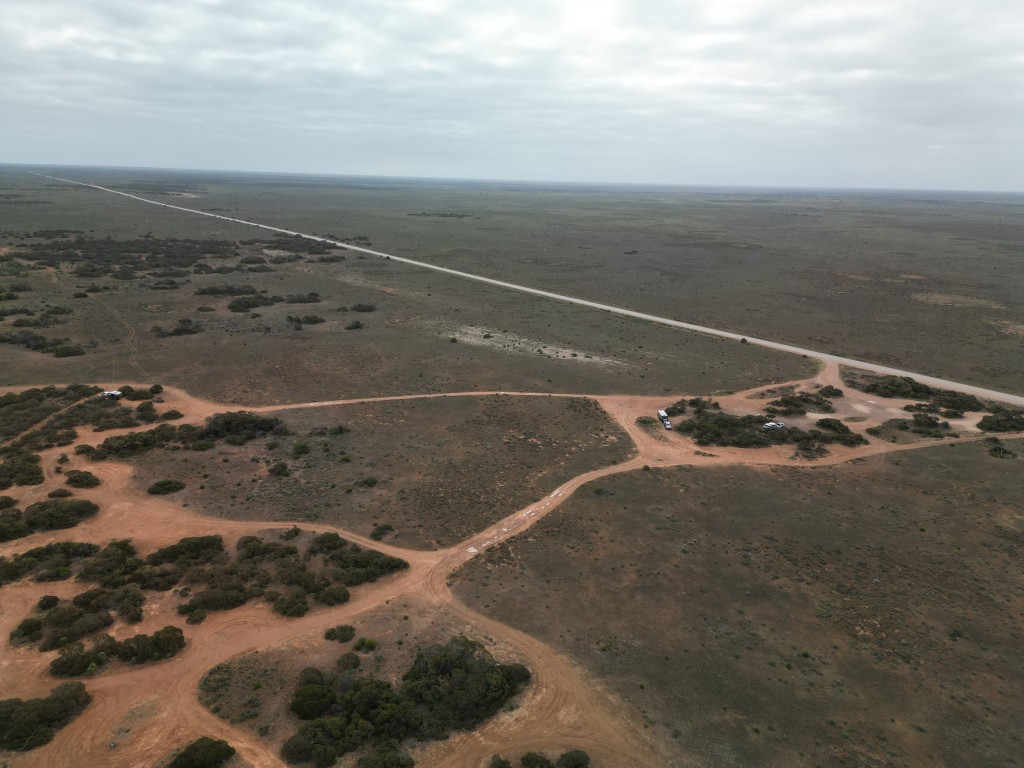
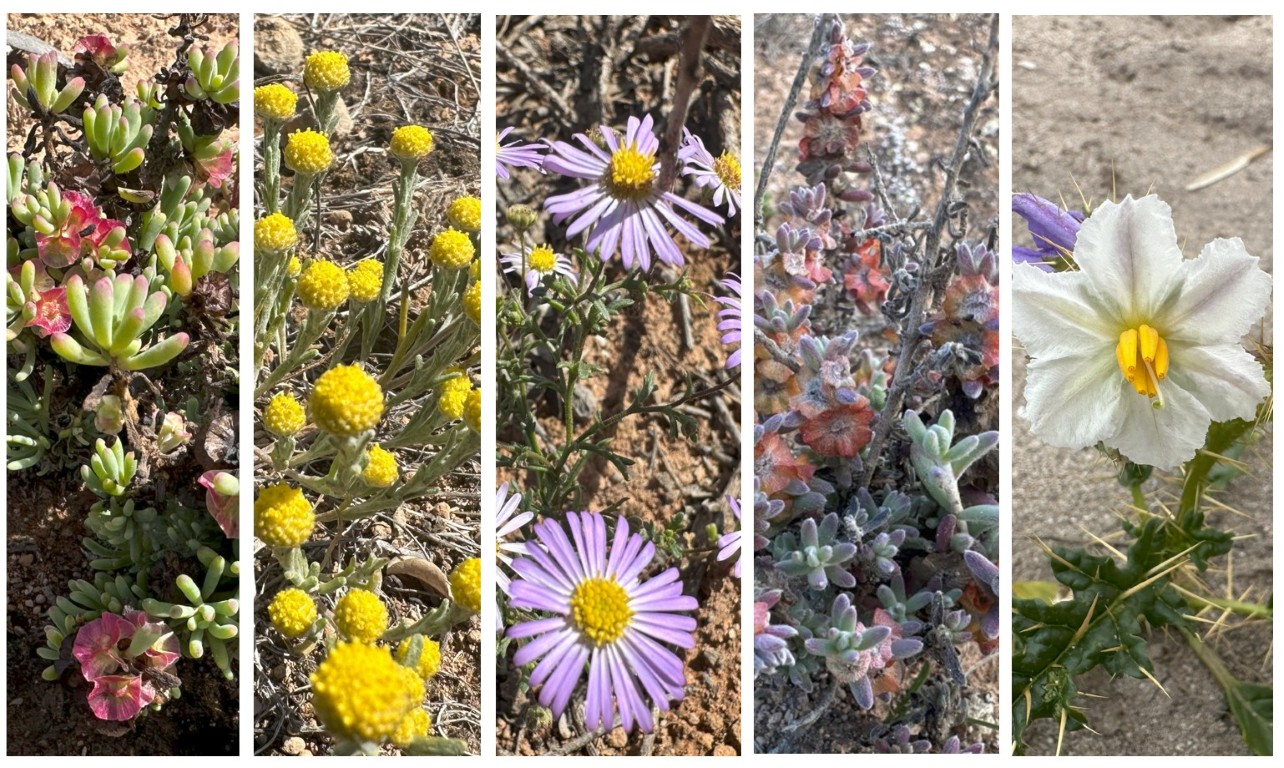
We had the camp to ourself and decided to stay a few days to explore places of interest close to the rest area. The campsite was covered in wildflowers.
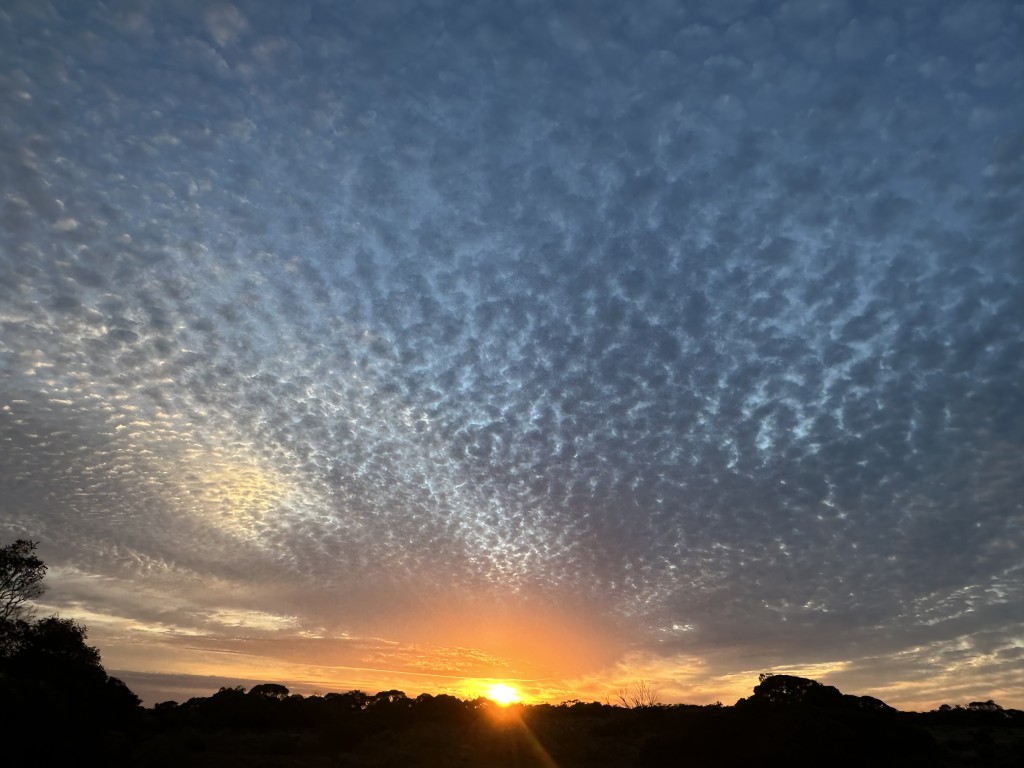
As the sun was setting and the traffic faded, the warm days made way for cool, quiet and dark nights on the Nullabor.
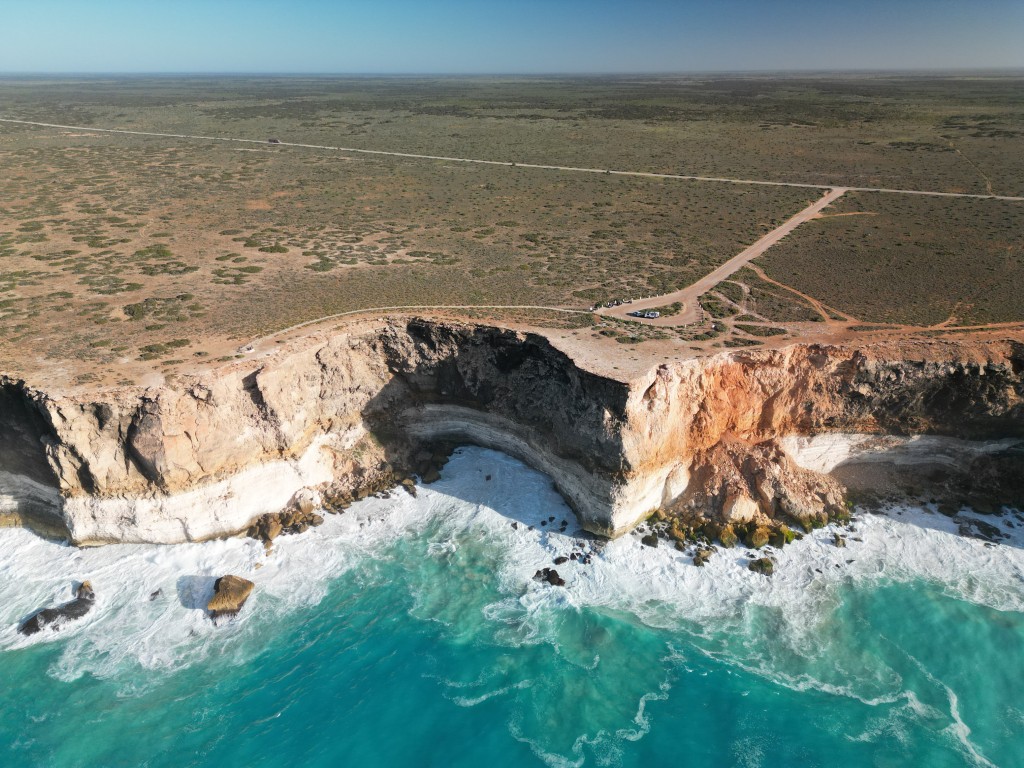
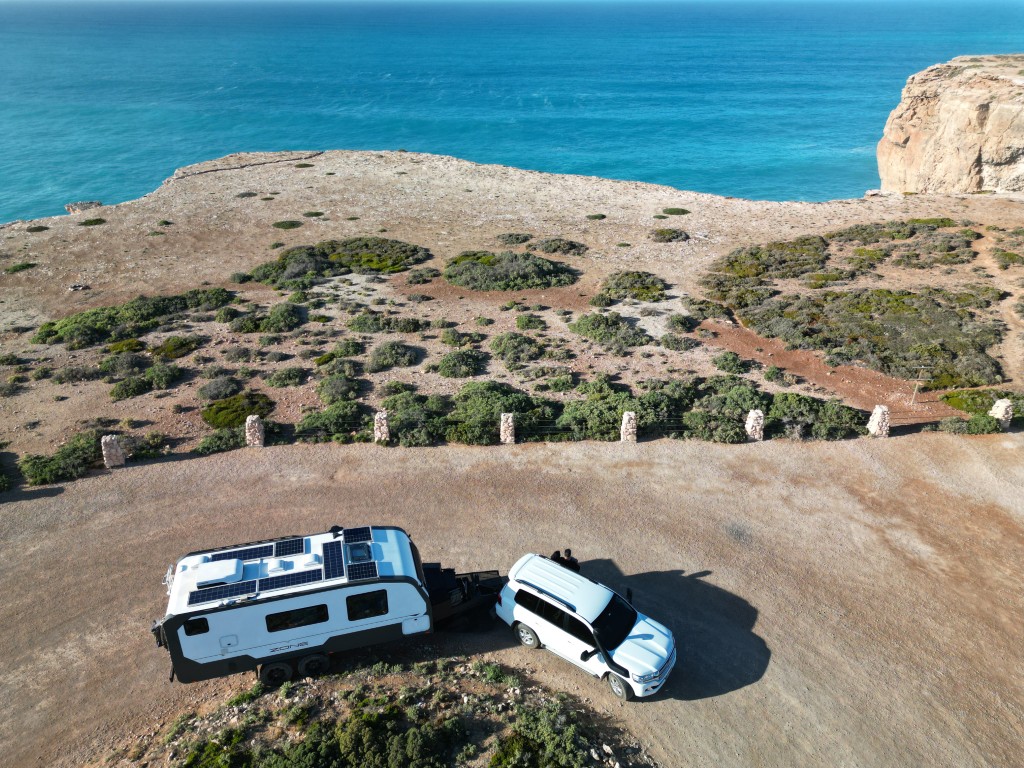
As we got closer to the Western Australia Border, the Bunda Cliffs started to appear in the Great Australian Bight. It literally feels like standing on the edge of the earth looking down sheer drops of up to 120 meters. You can see the cracks on the cliffs as the ocean reclaims the land. Our first stop was Lookout Number 1.
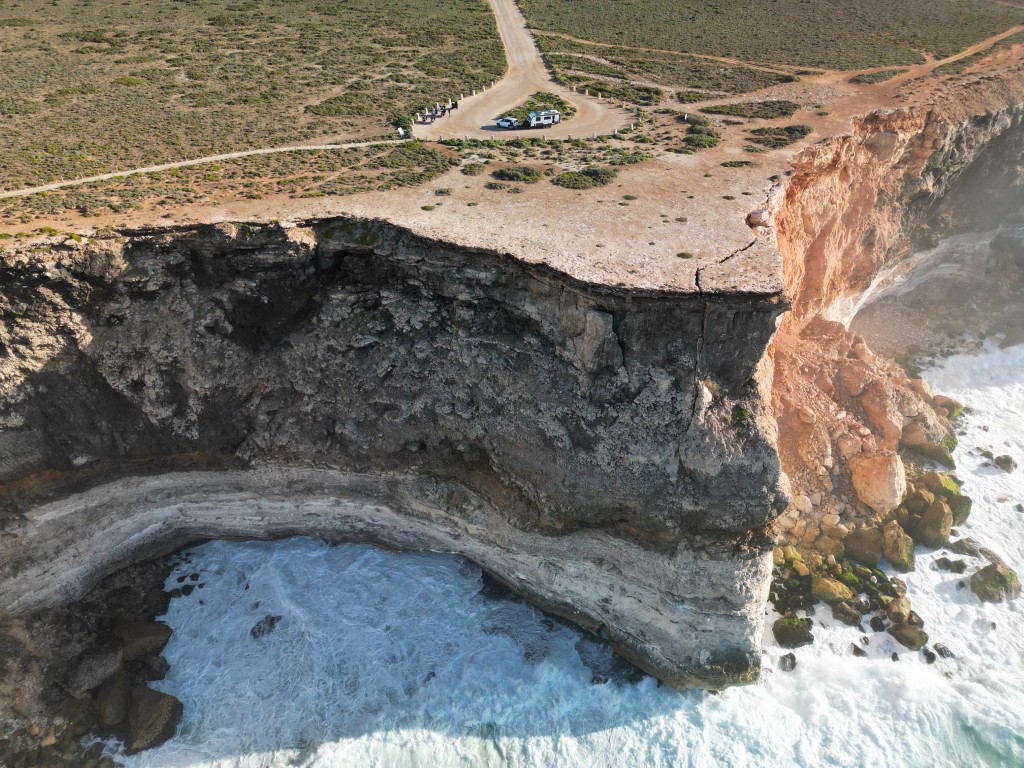
You can see the sedimentary layers of soil, limestone, and rock compacted over the ages. As the massive waves cave out the bottom of the cliffs, the top crust cracks and falls into the ocean. This is also the reason why camping on the cliffs was stopped.
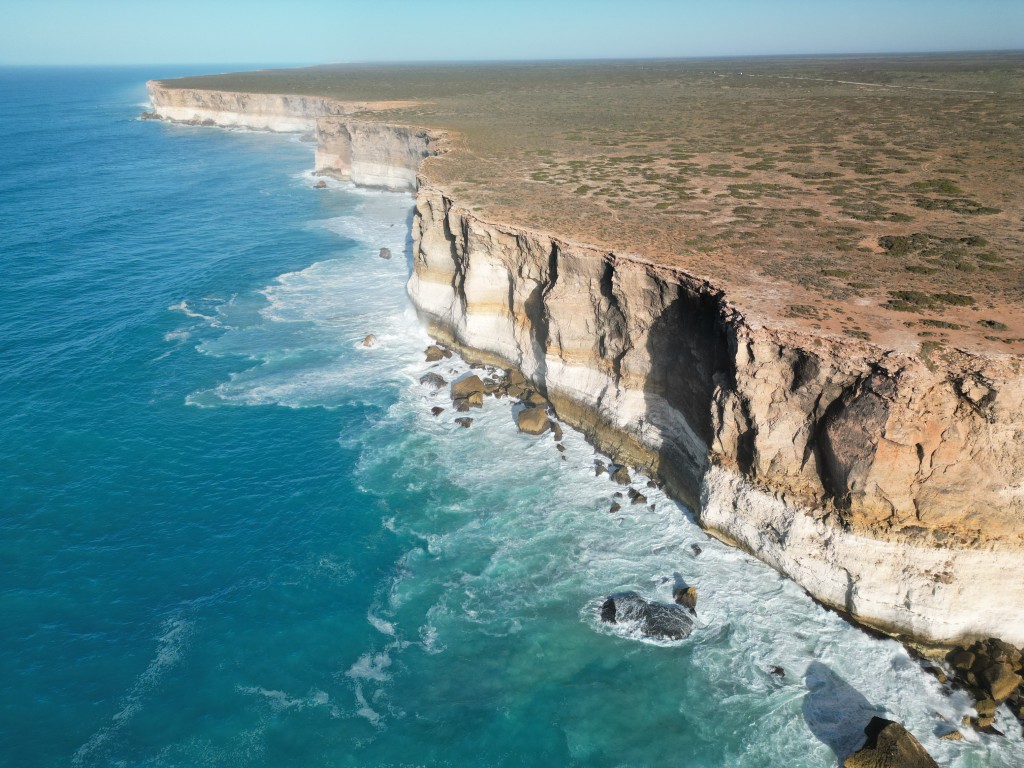
The cliffs are 200km long and disappear over the horizon. It is one of the world’s longest uninterrupted sea cliffs.
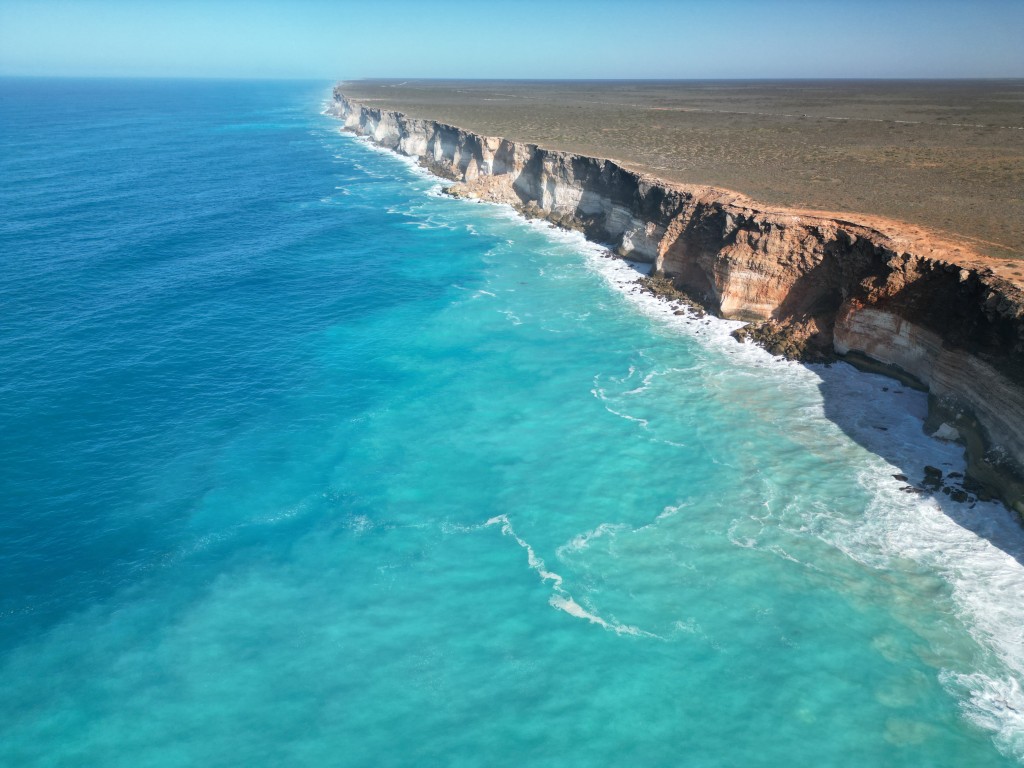
The whales migrate annually past these cliffs, calving and playing in the turquois water. We were too late for their annual migration.
There were at least three viewing platforms along the bight and we stopped at all of them. The viewing points had massive turning bays making it easy to get close to the cliffs with the car and caravan.
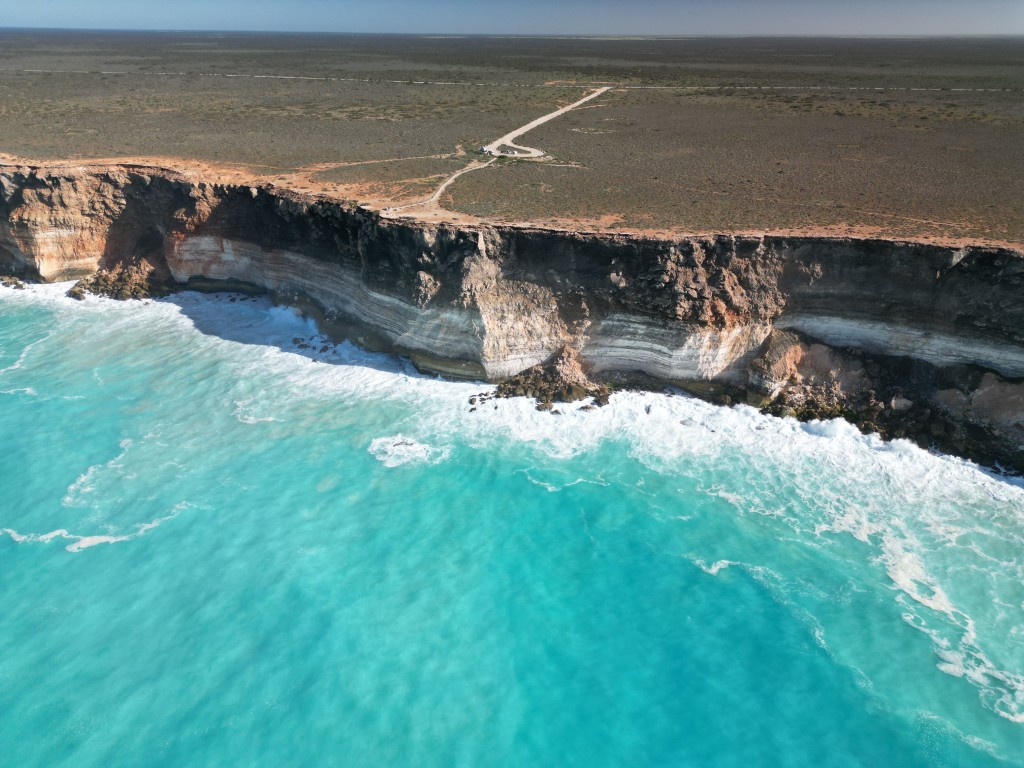
As we got closer to the Western Australian border, the height of the cliffs gradually reduced.
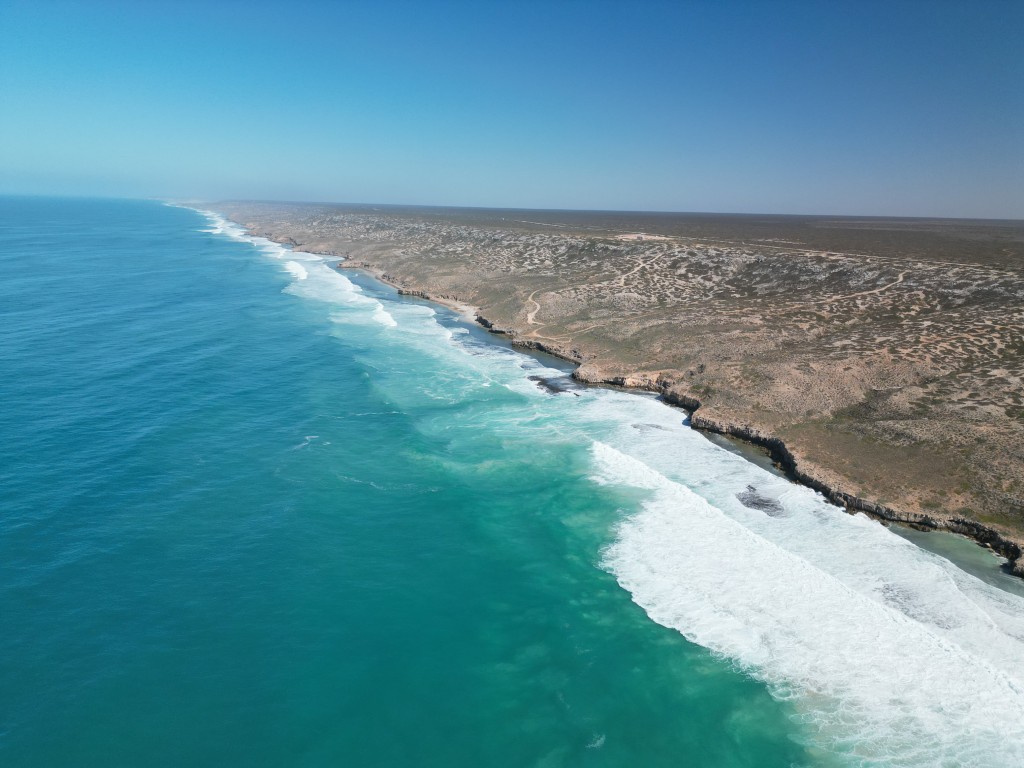
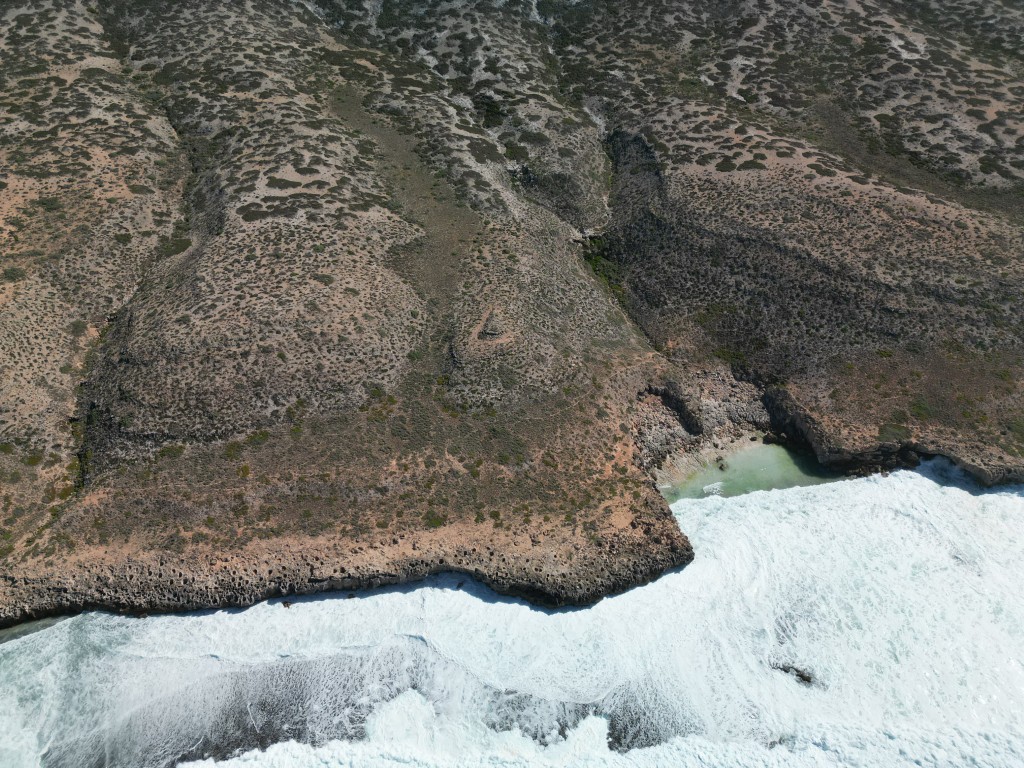
At the end of the cliffs were a few remaining campsites, where you could still camp.
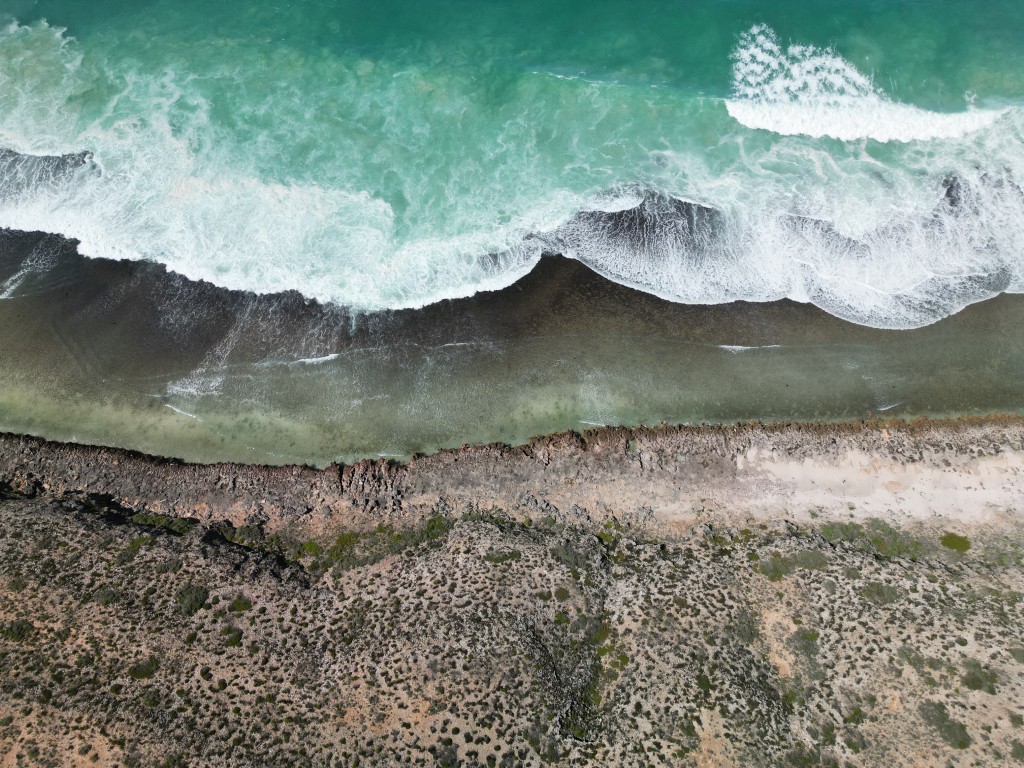
The rugged limestone and arid vegetation was our last glimpses of the Bunda Cliffs as we approached the border.
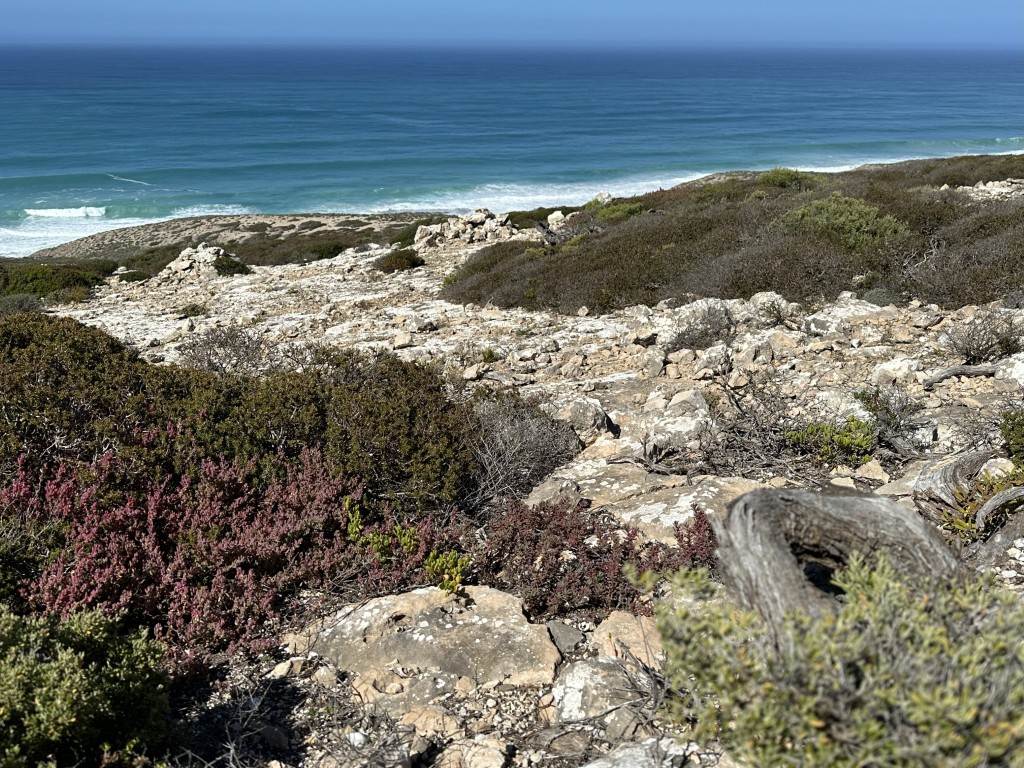
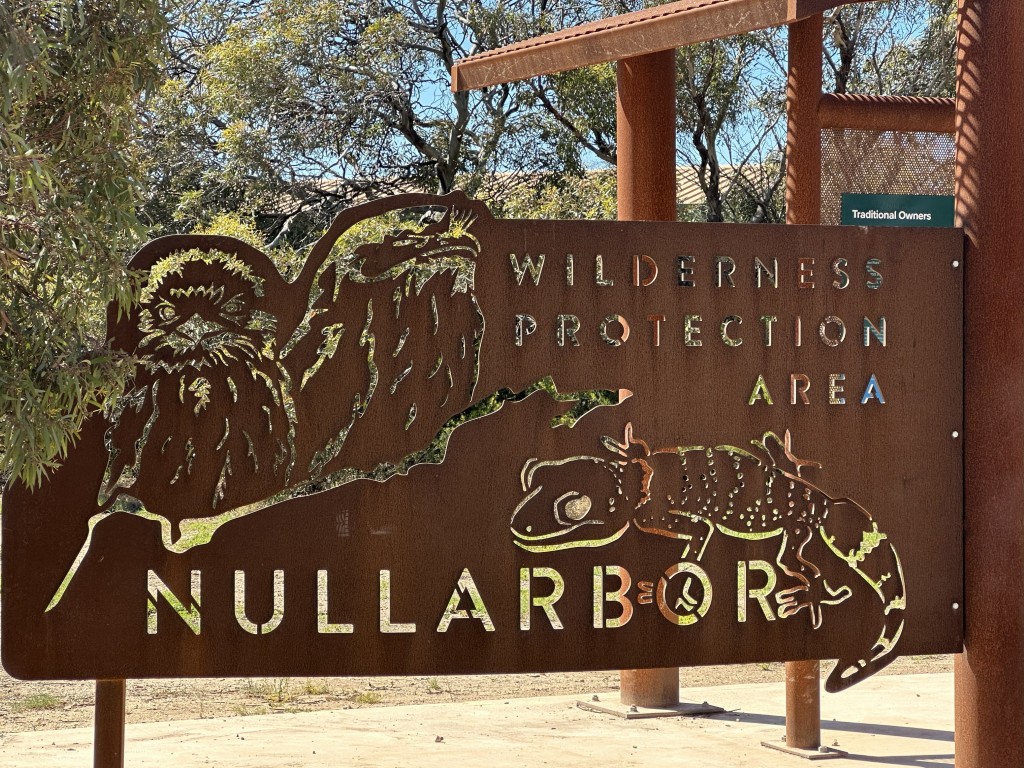
We stopped at the Border Village just before the quarantine post. There was a servo with information on the Nullarbor Wilderness Protection Area. We had enough fuel and with the price almost 30% more expensive, we were happy to continue on.
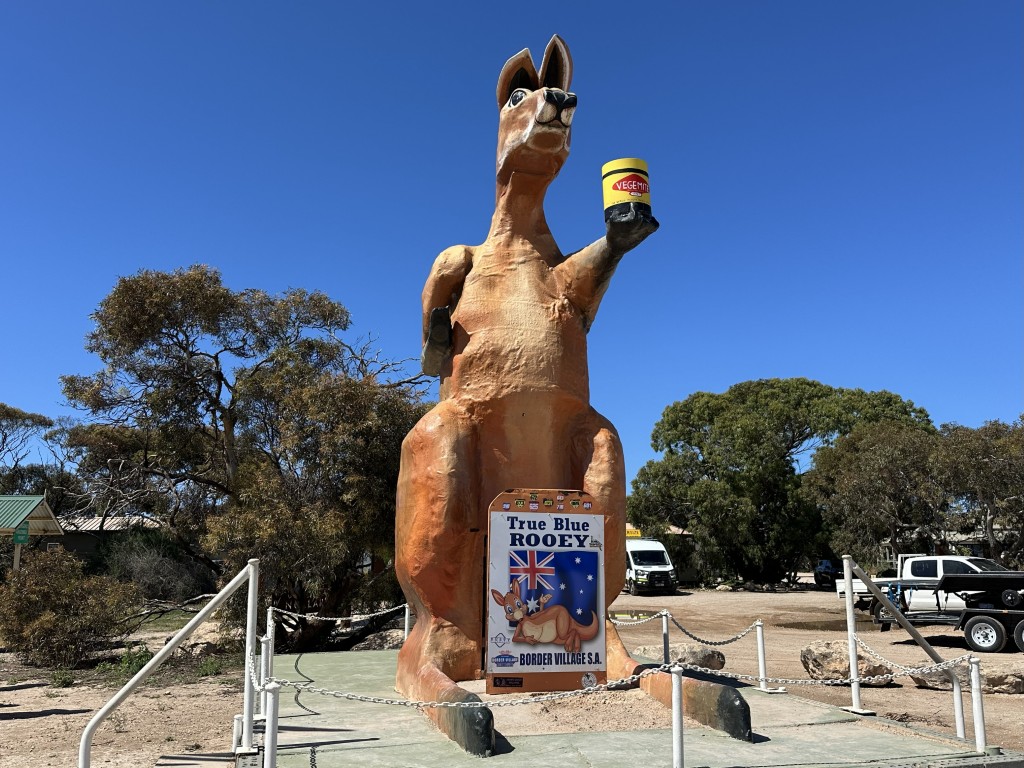
Rooey II, The Big Kangaroo is also at the Border Village with a jar of Vegemite in its forepaw. The 5m high Rooey II started his life with a beer in his paw but as it was apparently sending the wrong message, it was changed to a can of soft drink. The soft drink was changed to a tub of Vegemite in 1986 to promote local products to overseas visitors attending the American Cup regatta hosted in Fremantle near Perth. The poor kangaroo has gone backwards in my estimation.
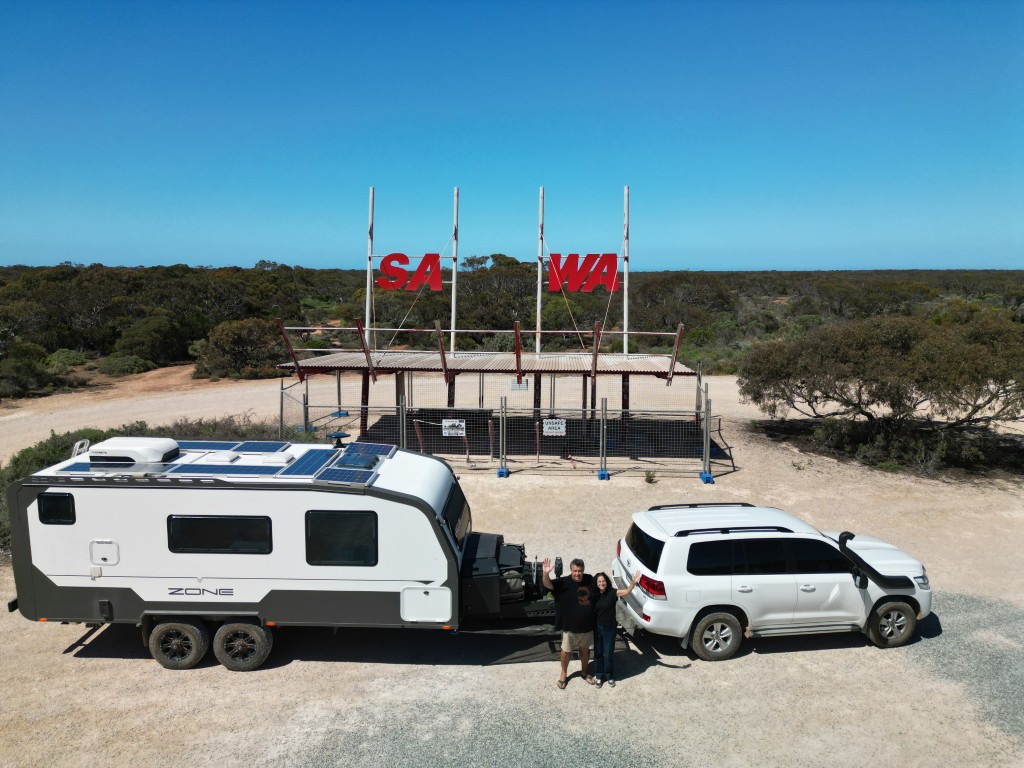
In the weeks before entering Western Australia, we used all the food prohibited from entering Western Australia. After a quick inspection in the car and caravan we were cleared by Quarantine and crossed the border. We stopped on the other side of the border at the border sign for the obligatory photo.
Our next stop was Eucla where we fuelled up. We had a quick walk through the museum. Even the equipment in the playground was old enough to be in a museum.
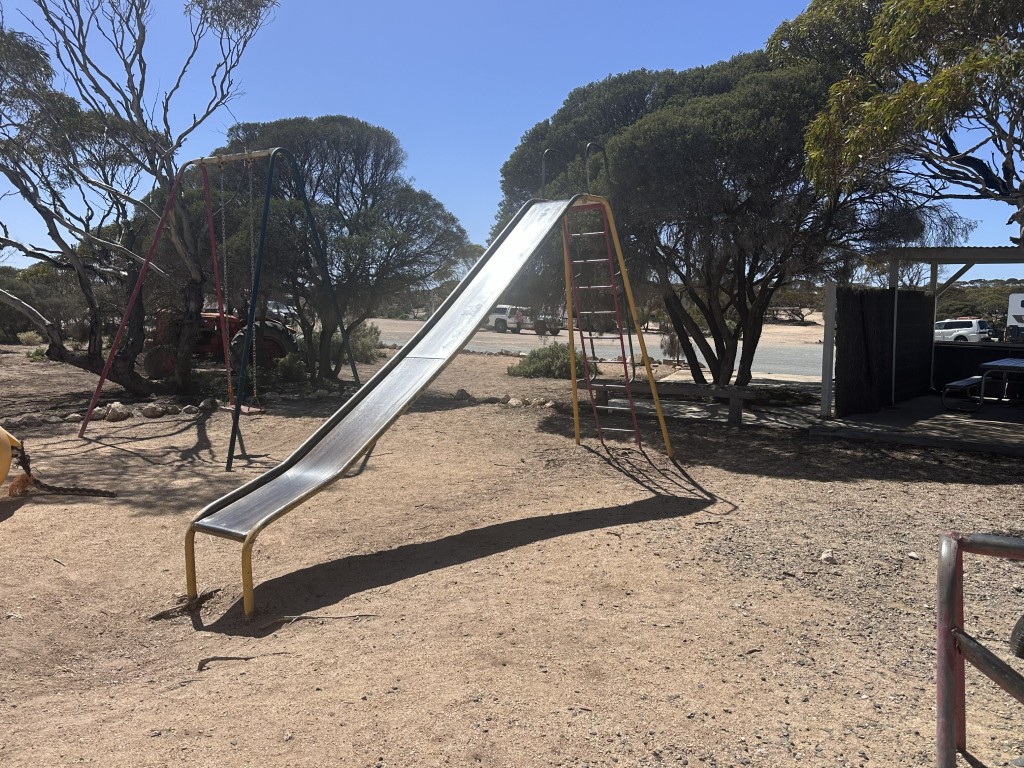
Eucla was named in 1867 and was a critical telegraph station in the early 1900s. The town expanded and a jetty and tram were added to provide sea access. The town even had a local newspaper.
In 1927 the telegraph station closed and the once thriving town started dwindling. According to the Adelaide Advertiser of 31 December 1971, the town was reduced to “eight people, four crossbred dogs and a swearing parrot”.
Why would such an insignificant town be featuring in the Adelaide Advertiser, you may ask. This is where it becomes more interesting.
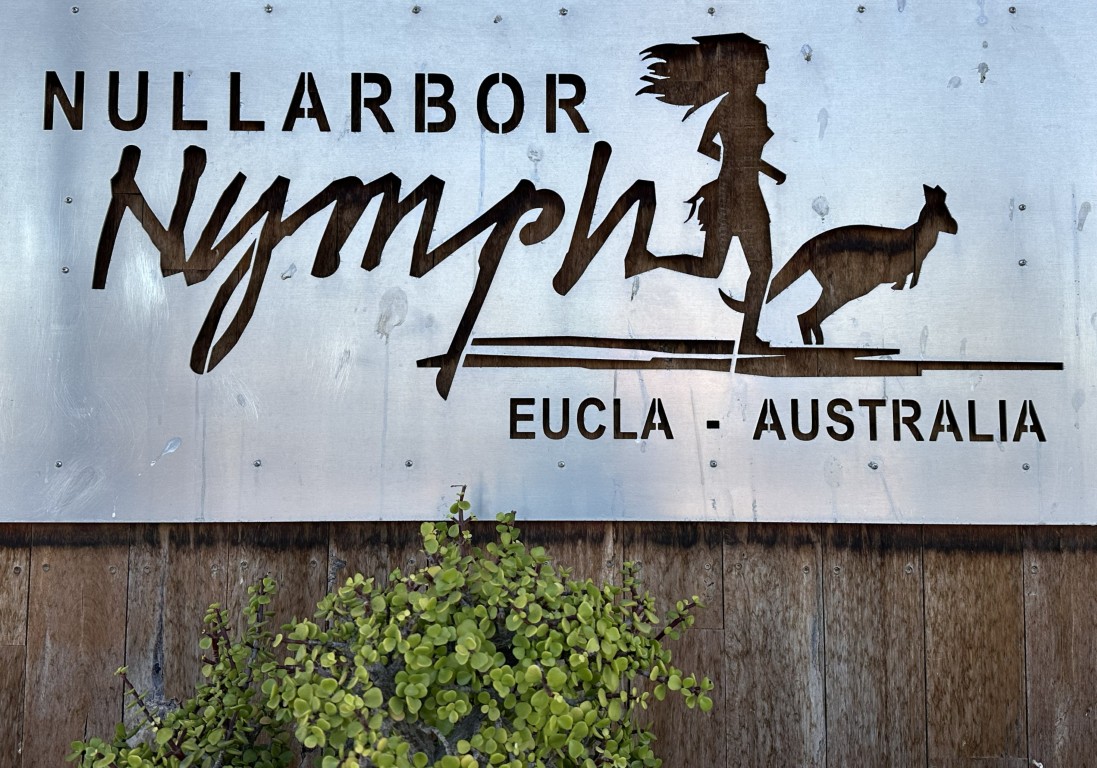
Five days before the news article, Geoff Pearce could not pay his motel bill at the Eucla motel and he promised the owner an elaborate publicity stunt that would put the town back on the map. Geoff was sitting in the pub writing his proposed article to the newspaper about a nymph sighting in Eucla. After a few beers and discussions with a local Kangaroo shooter, Laurie Scott, the plot thickened. Laurie convinced his partner Geneice Brooker to be photographed as a nymph wearing kangaroo skins. They took a photo to increase the validity of Geoff’s article. This all happened on Boxing day of 1971, long before deep fakes or AI generated images. The photo, Geoffs article to the newspaper and a local kangaroo shooter confirming the nymph sighting, was enough to start a frenzy. Geneice also ran across the road on a moonlit night at 1.45am as a tour bus was passing. All the passengers corroborated the sighting and even left some food at the roadside for the poor woman.
After the sighting was reported in most Australian papers, it sparked international interest with US and UK TV crews arriving and searching for the mysterious nymph. It was only five months later that the true story surfaced.
This plague at the motel is a reminder of the elaborate hoax.
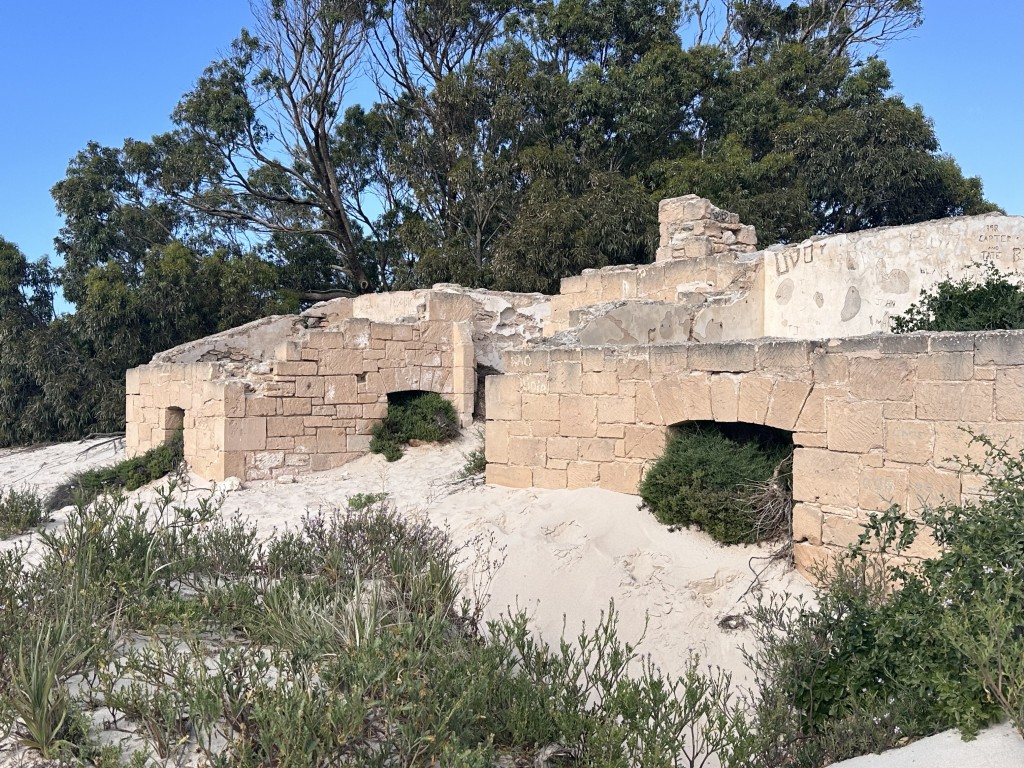
We decided to stay a few days at Eucla in the old telegraph station campground, close to the beach. The ruins of the the WA Postmaster’s Residence is still in the dunes next to the campsites. Over time the sand started filling the old ruins.
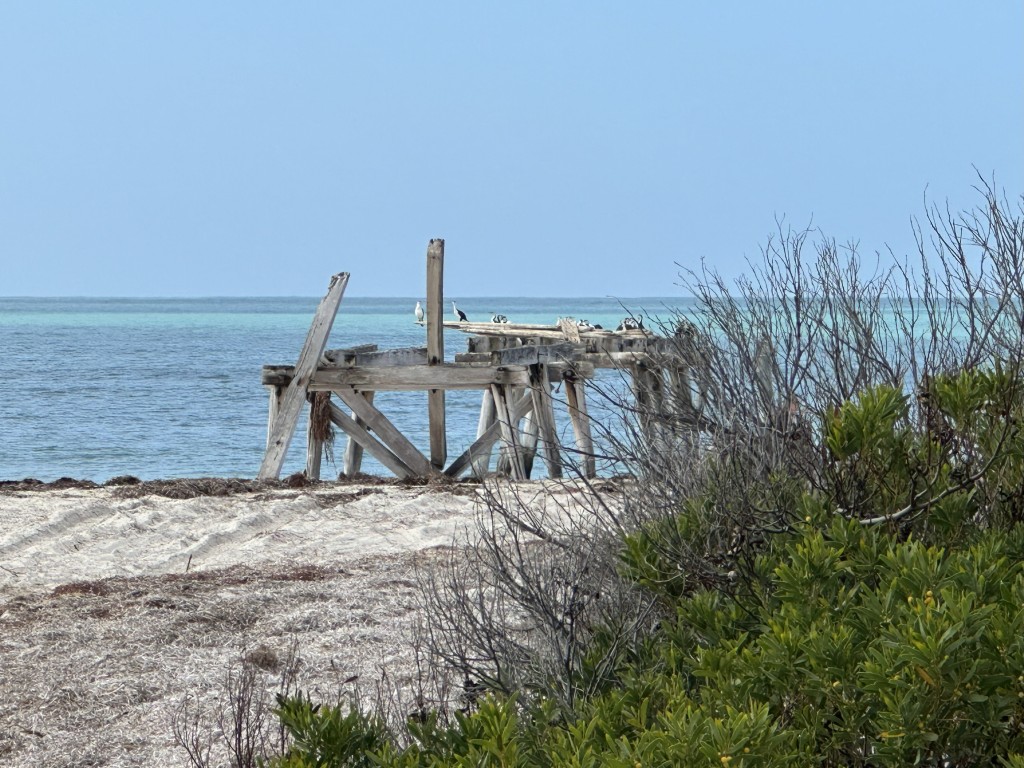
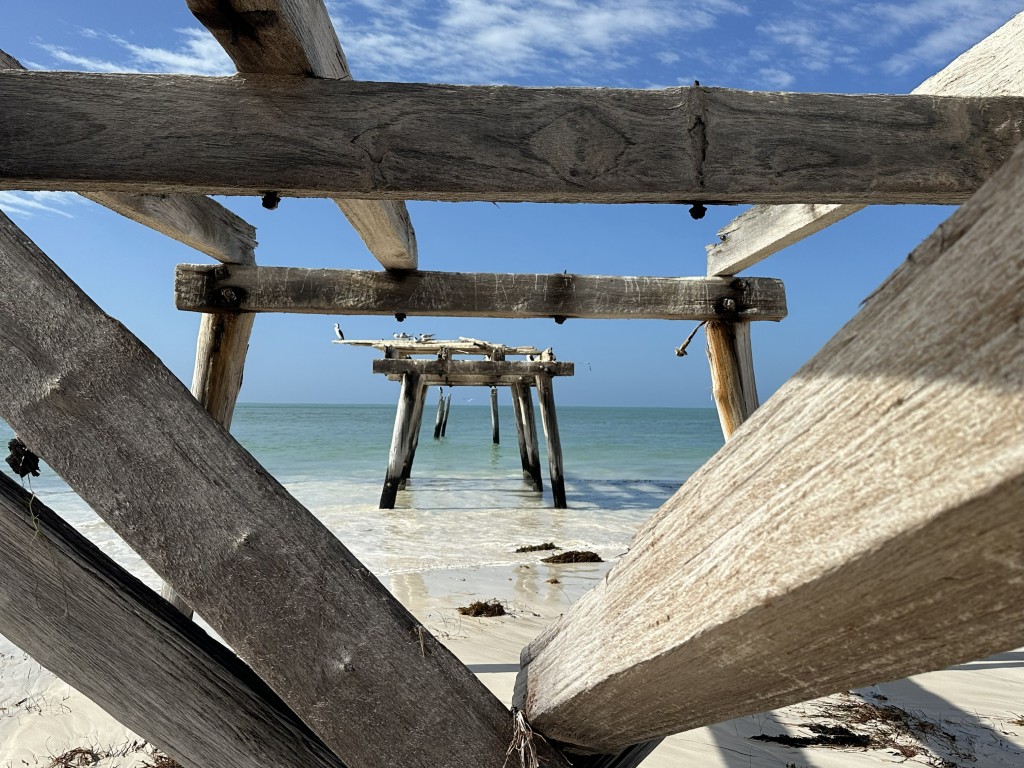
From the beach we could see the remains of the old jetty. The jetty is the last testiment to a once well connected community.
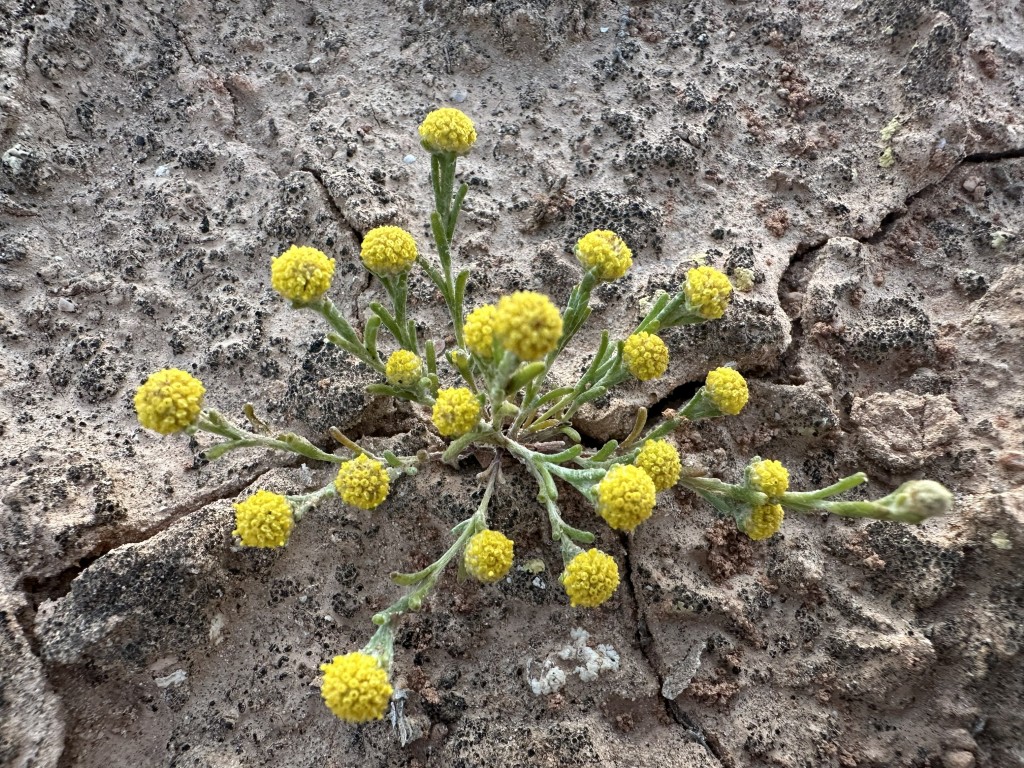
With the late rain many wild flowers were still breaking through the crust of the arid landscape.
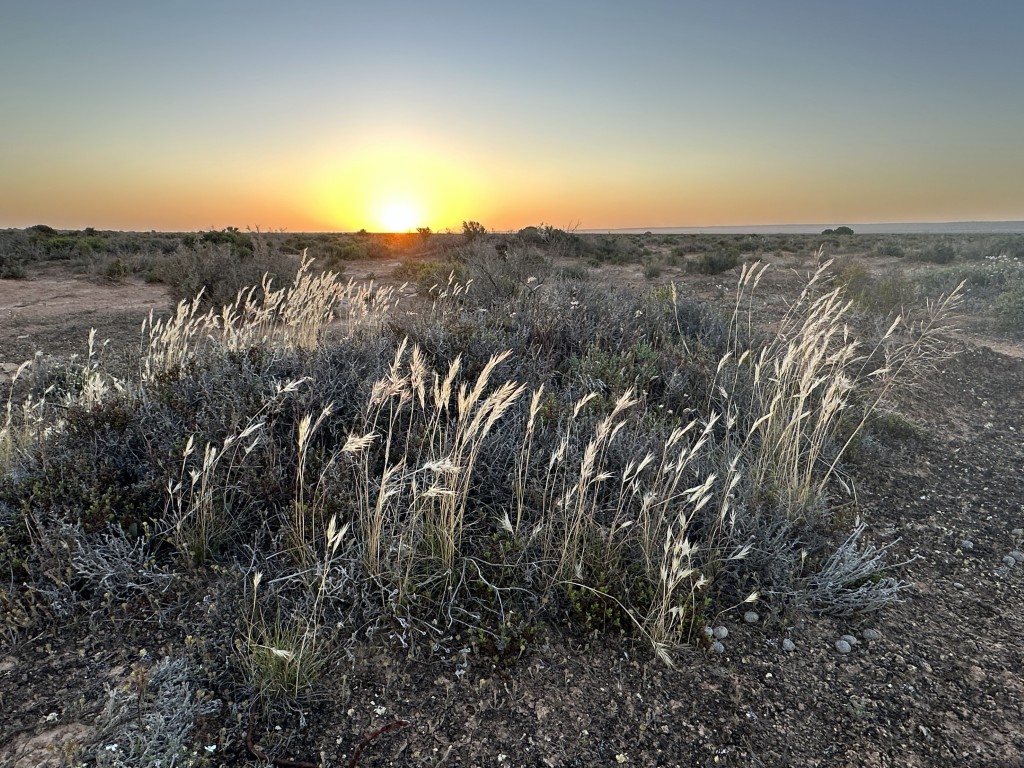
The sunsets along the Ayre Highway just never disappoint.
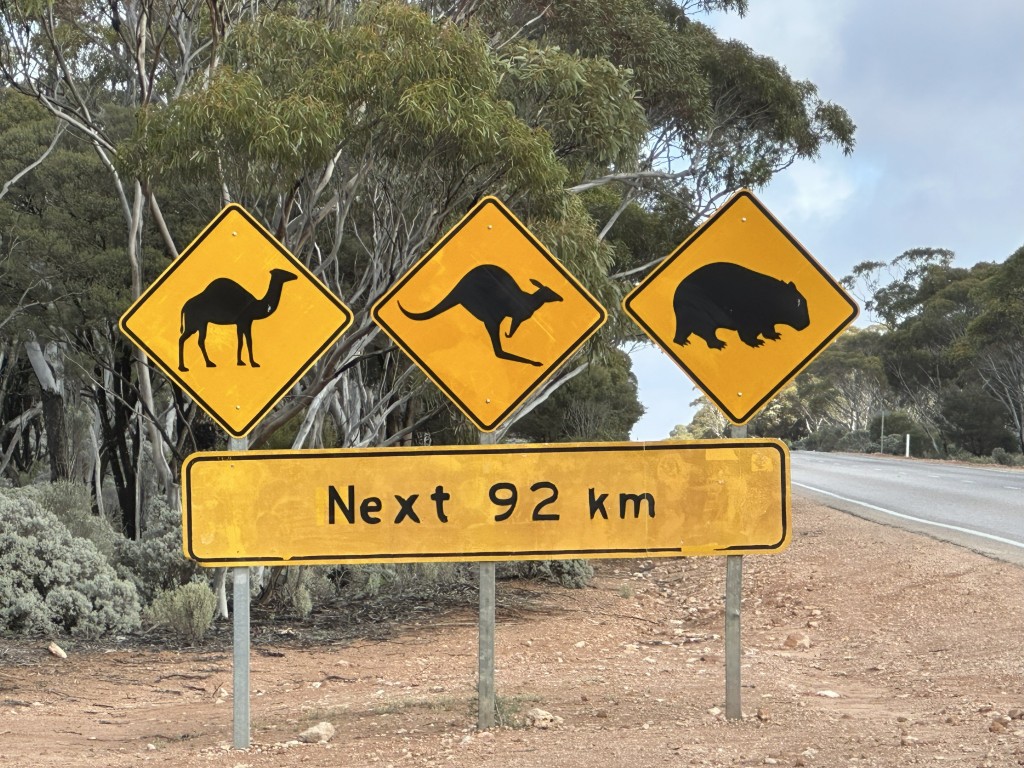
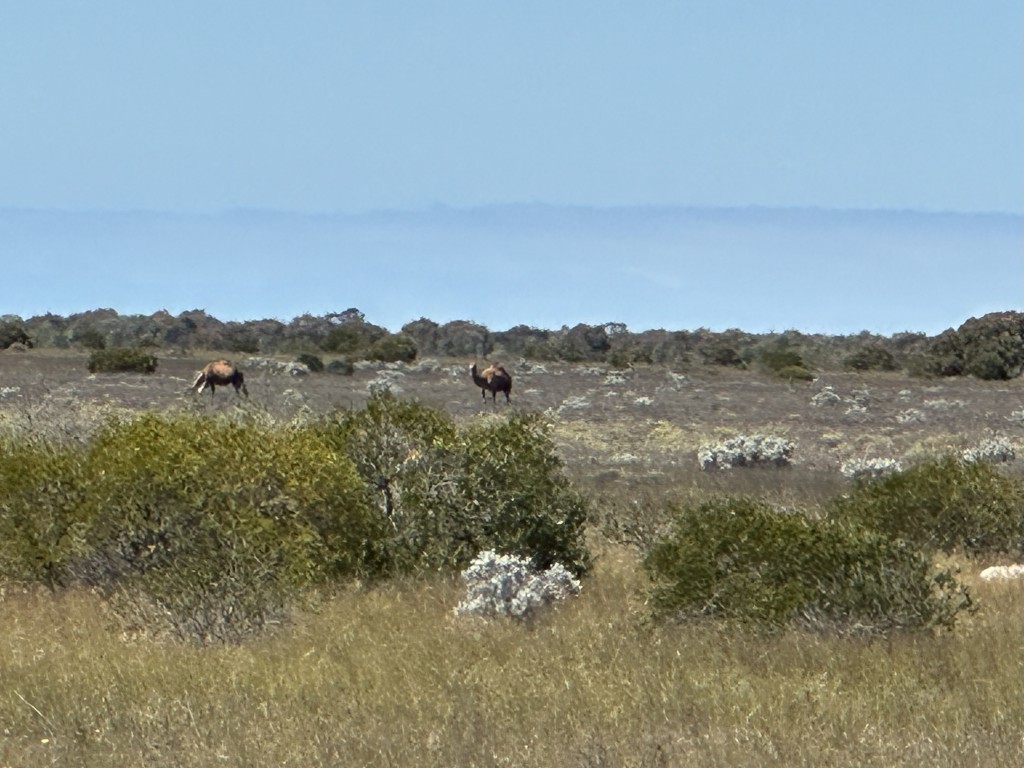
The next day we saw the camels along the road, explaining the earlier warning sign of camels crossing the road.
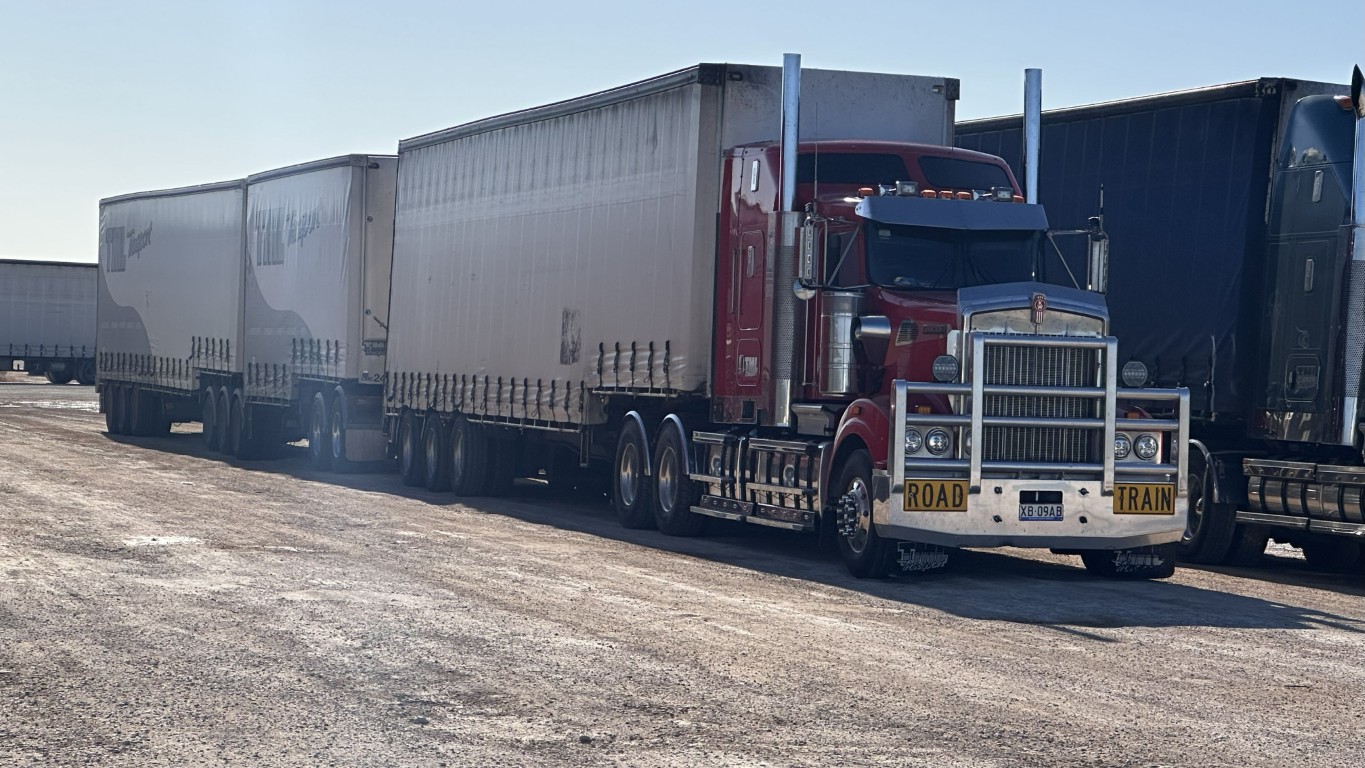
We did a quick stop at Mundrabilla Roadhouse, where trucks were waiting on a diesel delivery. The road trains often have four trailers and can be up to 50 metres long.
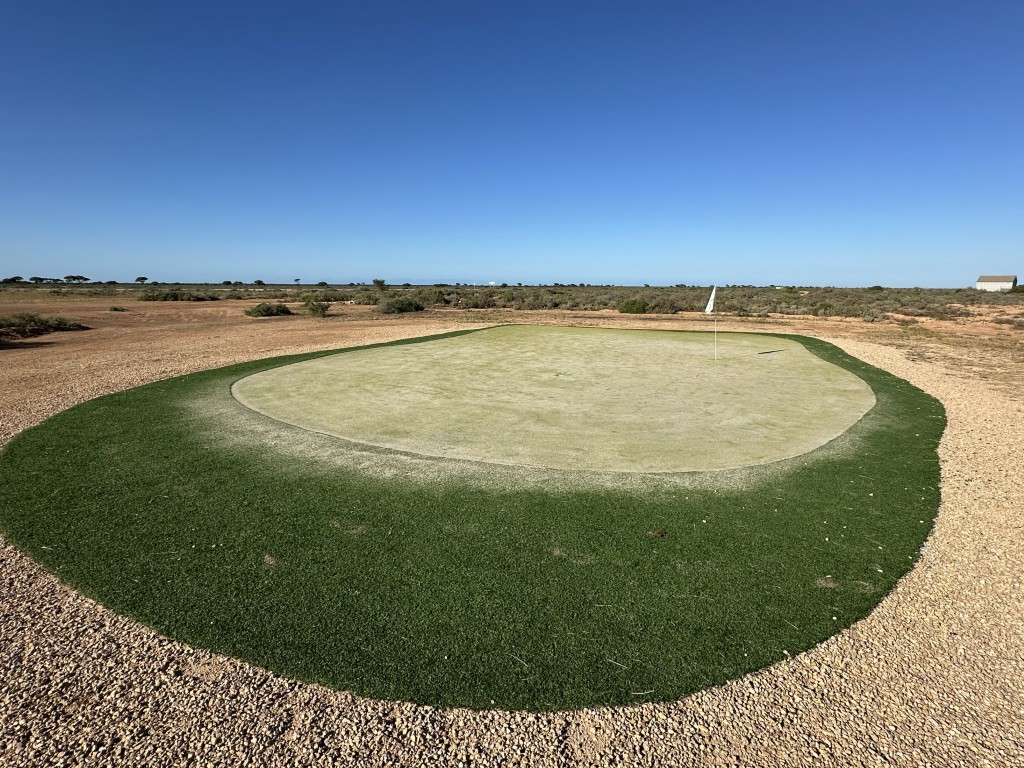
Along the the Ayre Highway is the Nullarbor Links Golf Course. This 18 hole par-72 course is the longest golf course in the world stretching 1,365 kilometres. The course can be played from east to west or west to east depending on the direction of travel. The course runs between Kalgoorlie in Western Australia and Ceduna in South Australia.
Mundrabilla participates in the Nullarbor Links Golf Course and has a Par3 hole, dubbed the Watering Hole.
This is a great way to break the endless straight road and stretch your legs. For those not travelling with golf clubs, sets are available on loan at either starting point of the coarse, along with the scorecard to track your progress. At every hole the participating roadhouse or servo will stamp your score card, once you played the hole.
The next stop along the highway was Cocklebiddy. Behind the roadhouse are two rehabilitated Wedge Tailed Eagles, Samantha and Bruce. Samantha was rescued from a roadside accident in 2012 and Bruce in 2015. After being operated on in Karatha and Perth respectively, they were unable to be reintegrated to the wild due to their injuries. Bruce and Samantha found a permanent home in Cocklebibby.

Our next stop was Balladonia. From the roadhouse you can access the Balladonia Heritage Museum, and what a surprise that was. Detailed accounts of the local history with artefacts to complement the stories.

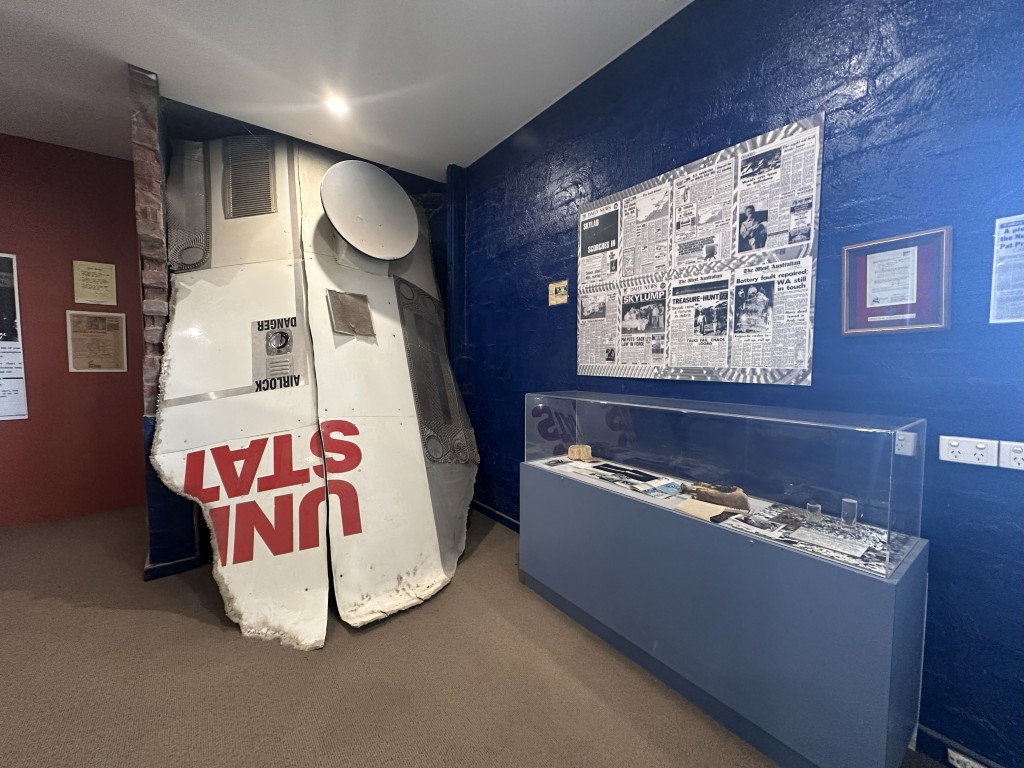
Space junk from the US space station Skylab that entered earth’s atmosphere in 1979 was scattered across the southern parts of Western Australia. Some of the debris was on display in the museum.
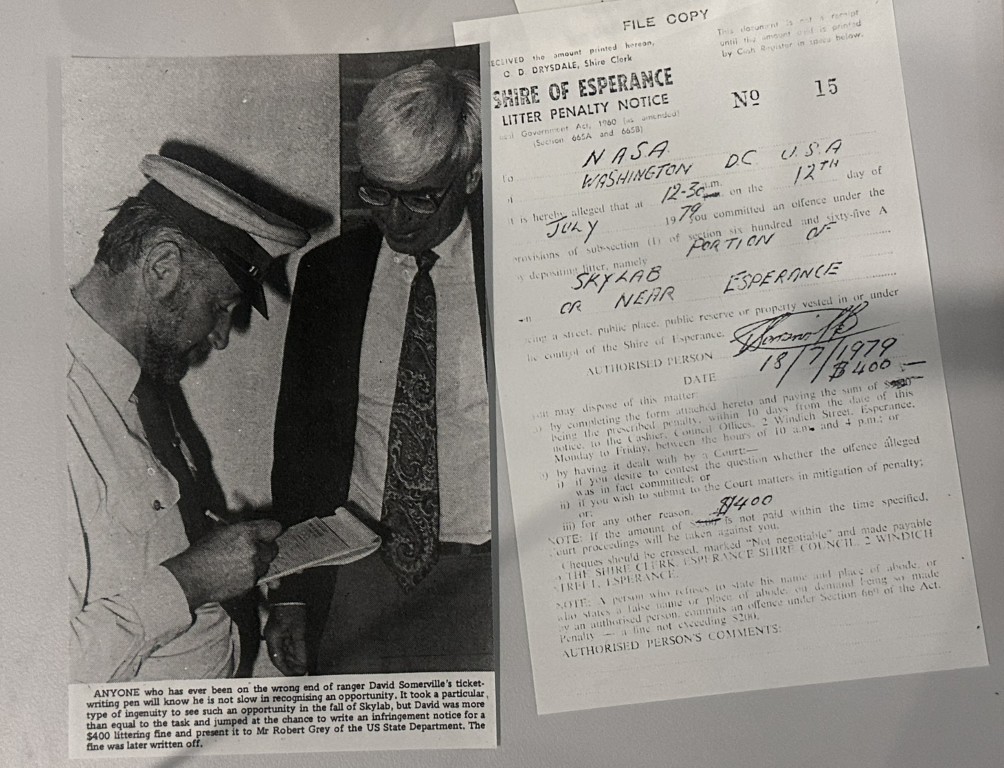
In true Aussie fashion the Shire of Esperance fined NASA $400 for littering. A copy of the fine as well a photo of Ranger Somerville issuing the fine to Robert Grey of the US state Department were also on display.
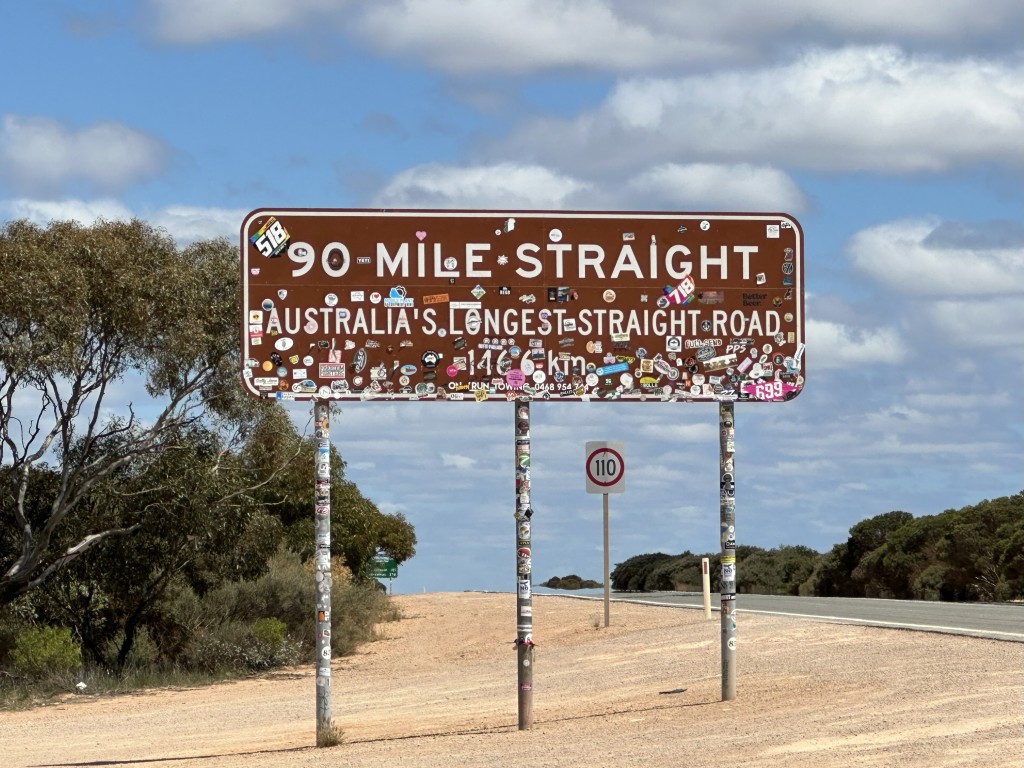
Just past Balladonia is the start of the 90 Mile Straight road. This almost 150km straight stretch of the Ayre Highway, links Balladonia and Caigun. It is the longest stretch of straight road in Australia. It used to be the longest straight road in the world until the 250km Highway 10 in Saudi Arabia surpassed it, in March 2018.
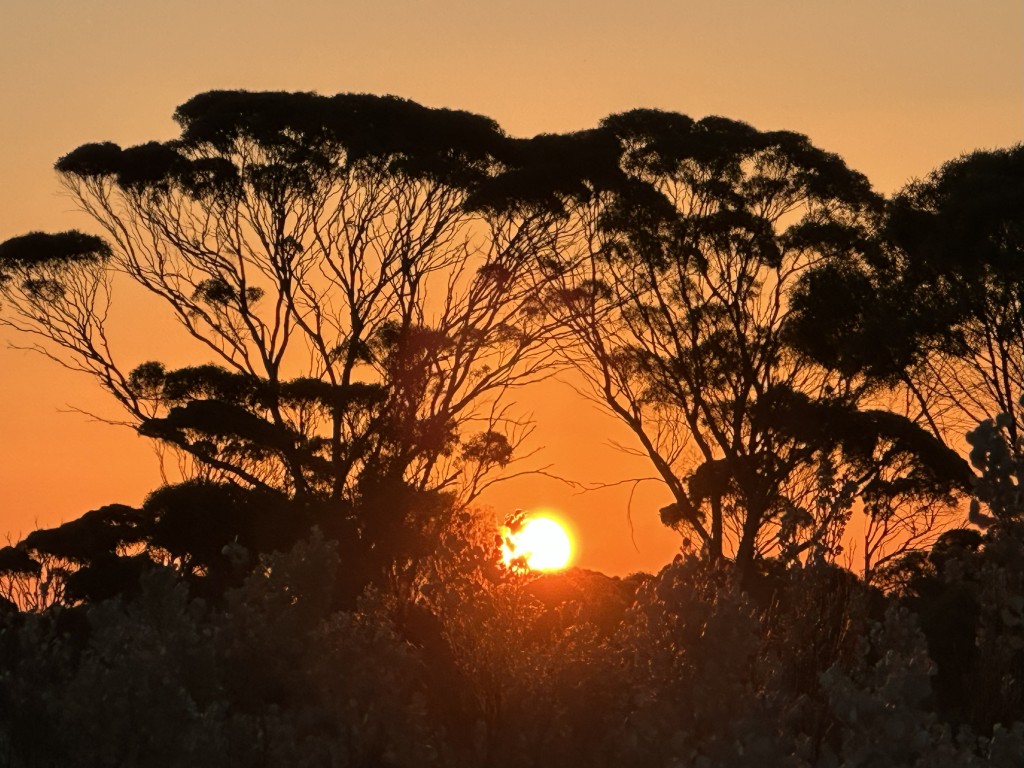
Our last camp on the Ayre Highway was Frazer Range Hideaway, where we stayed a few days. Once again, the night started with a great sunset behind the Mallee trees.
After eleven days on the hot and dry Ayer Highway, we were ready for a sea change, heading to some of the best beaches in Australia.