
A Wrap on the First Trip
(between July 2023 and October 2024)
After 15 months on the road, we were back in Brisbane. It was great to spent time with our family and friends.
We also used our time in Brisbane to do some maintenance on our property and did a trip to visit family and friends abroad.
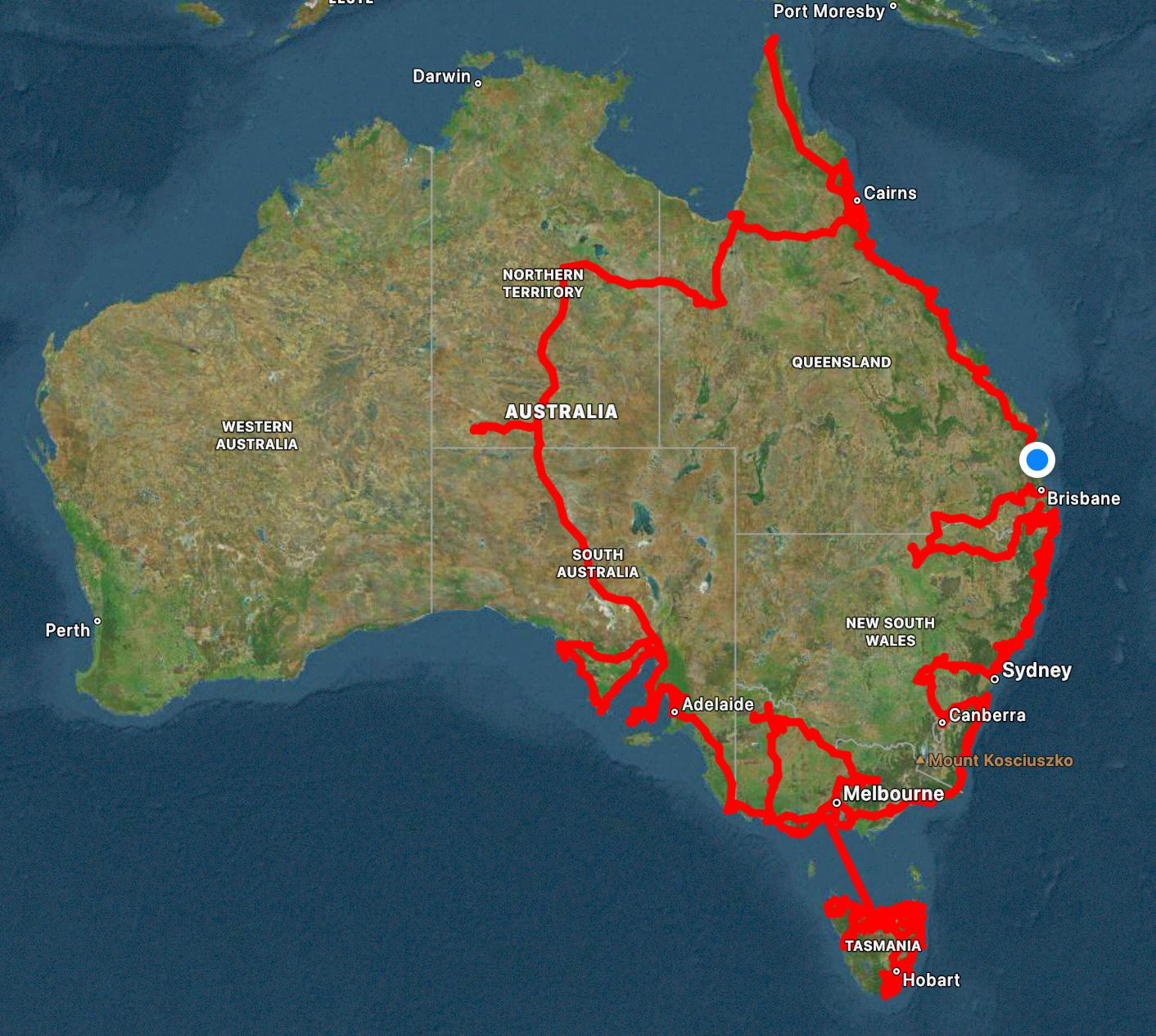
After 37000km we finished the first leg of our trip. We did keep a few stats for the period July 2023 to October 2024. This post reflects some of the stats we kept during our trip.
We have visited six of the seven states of Australia. The only state we did not get to, was Western Australia.
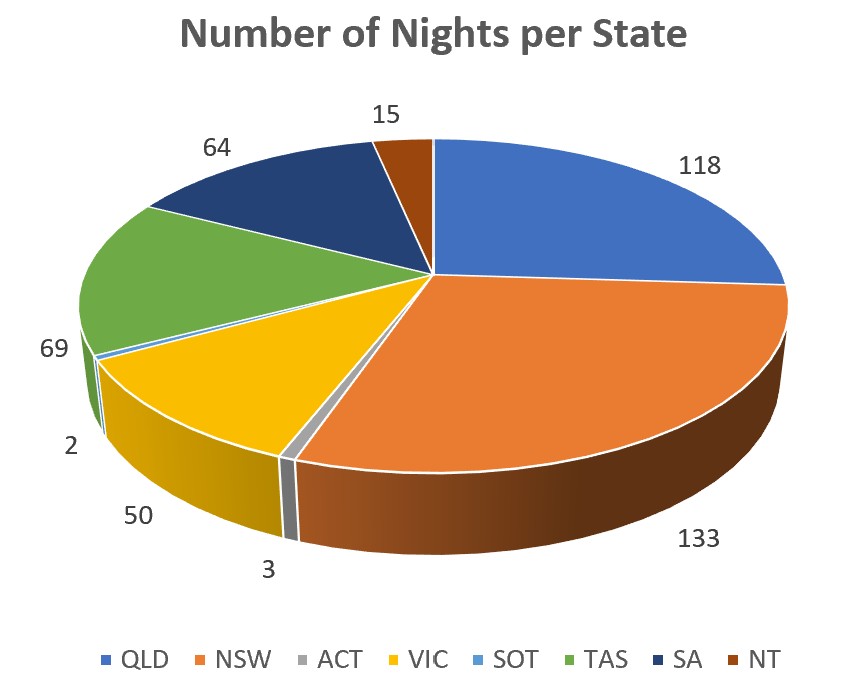
We spent more than half our time in New South Wales and Queensland. During the 454 days travelling, we stayed in 137 different campsites. On average, we stayed 3.3 days per campsite. During the trip, we visited 1441 places of interest.
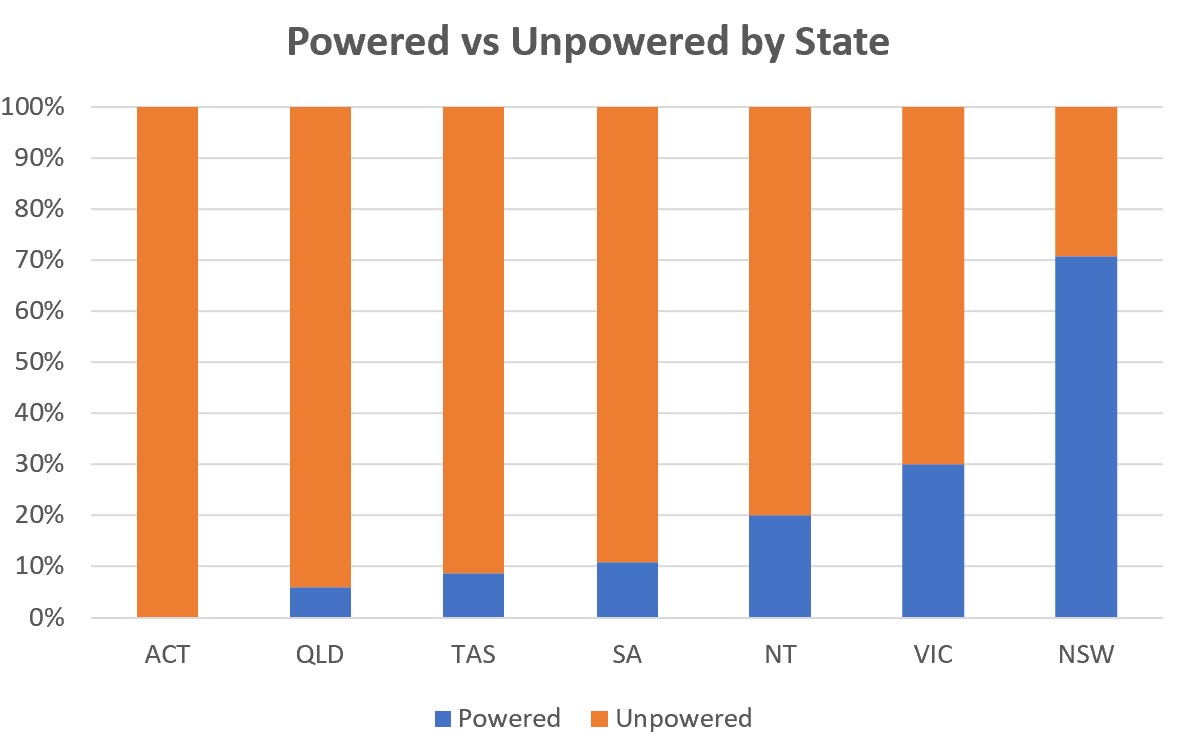
More than 70% of our time we spent off-grid, reliant on onboard battery power and water. The amount of off-grid camping varied significantly amongst the states we visited. The longest continuous period off-grid, was 69-days, starting at Yarck in Victoria and ending at Port Lincoln in South Australia.
During this trip, the lowest we have seen our battery, was 46% charged. We were surprised with the impact of the seasons and latitude on the solar performance.
More than 70% of our time in New South Wales was on powered sites. At the start of our journey south, we spend 32 nights plugged in at Woodenbong. The allowed us time to catch up with friends and family. We also stayed 31 days at Reflections Holiday Park in Coffs Harbour. The stay in Coffs, was organised by RACQ as part of a roadside assistance claim when we had issues with our car.
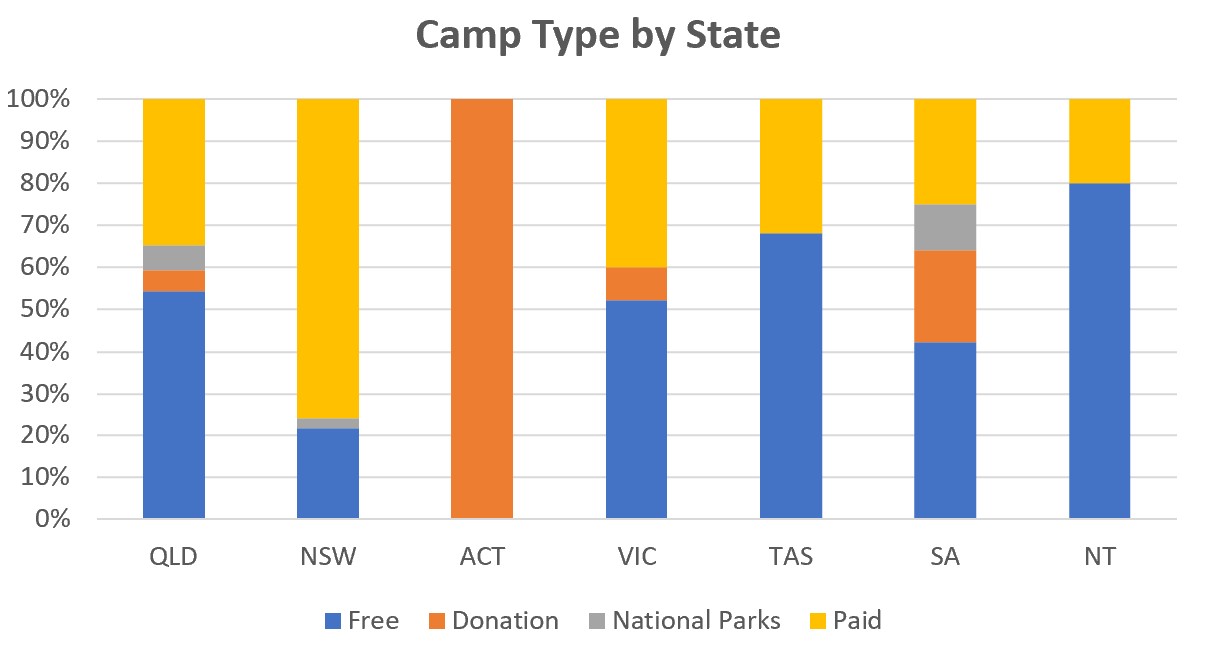
Along the road we had many camping options available, but our preference was free or low-cost camping, where possible. The availability of free camping depends on the area. We were able to free camp 45% of our trip. Tasmania, South Australia, Northern Territory and remote Queensland were our favourite areas for off-grid camping.
Although Northern Territory has many free camps, the ones close to the major attractions, were pricy.
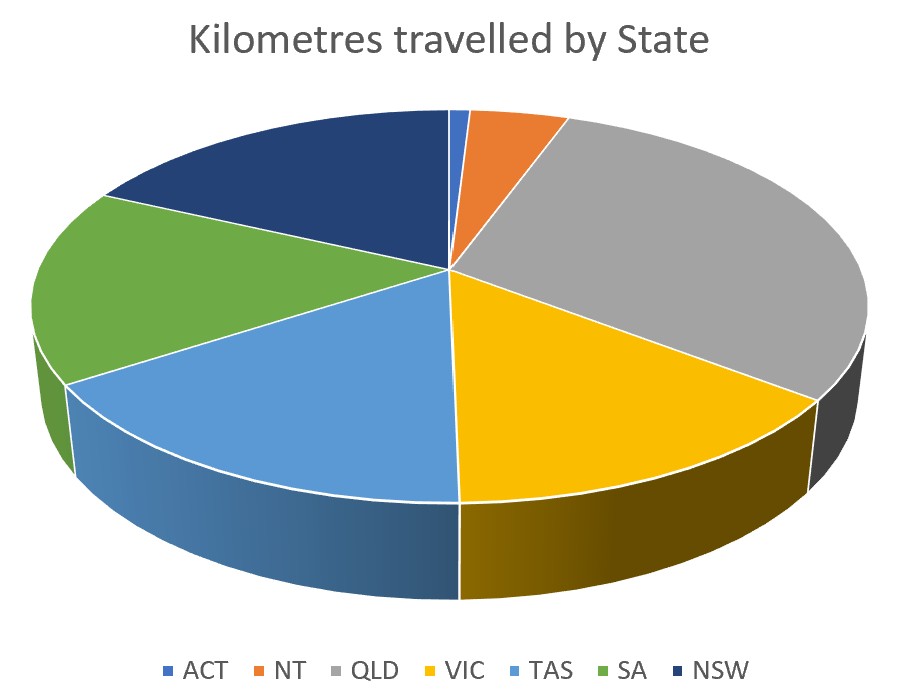
In the year we travelled 37167 kilometres and used 6449 litres of diesel. On average, we travelled 82 kilometres per day.
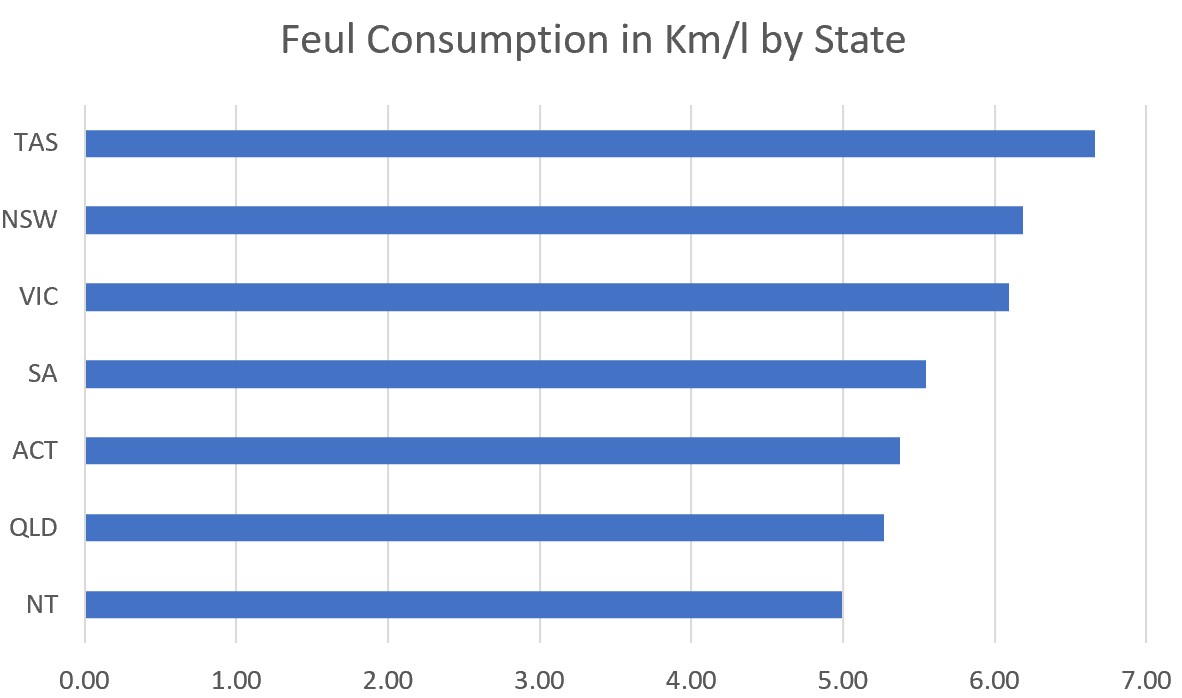
We had an average fuel consumption of 17.35 litres/100km. This consumption includes trips with and without the caravan. The best consumption of 10.4 litres/100km was recorded in Sorel, Tasmania. The worst consumption was 28.5 litres/100km at Burnie, also in Tasmania.
We filled up 96 times. In more remote areas we filled up where fuel was available, regardless of what we had left in the tank. We got our cheapest fuel in Maryborough, Queensland at $1.60/l. The most expensive fuel was in Bramwell in Cape York, Queensland at $2.82/l. Our average cost per litre was $2.05/l.
To get the best out of our trip, we consciously slowed down. We did not book anything in advance other than our trip on the Spirit of Tasmania ferry to get the car and van across the Bass Strait to Tasmania.
We got into a rhythm to only travel on Mondays and Thursdays and limited our distance to 200km, where possible. This allowed us to avoid both the weekend campers and weekend traffic.
Although we were mostly on the coast, we travelled inland during school holidays.
We had an unforgettable trip and the freedom that comes with living day by day and going wherever you want, was liberating. What started out as a road trip, ended up being the life changing experience.
We are looking forward to our next trip.