
The Flinders Ranges have an ancient geological history, with some of the oldest landscapes in the world. We were in two minds on visiting the Flinders Ranges, as it was a bit of a detour. It was the perfect season to visit the ranges and we made a call to include it in our trip across South Australia.
On the way to the Flinders Ranges we identified a few smaller towns and cities to visit. On the way to the first town Hay, we saw the largest mob of emus we have ever seen in the wild. We counted about 150 on the one side of the road and 50 on the other side.
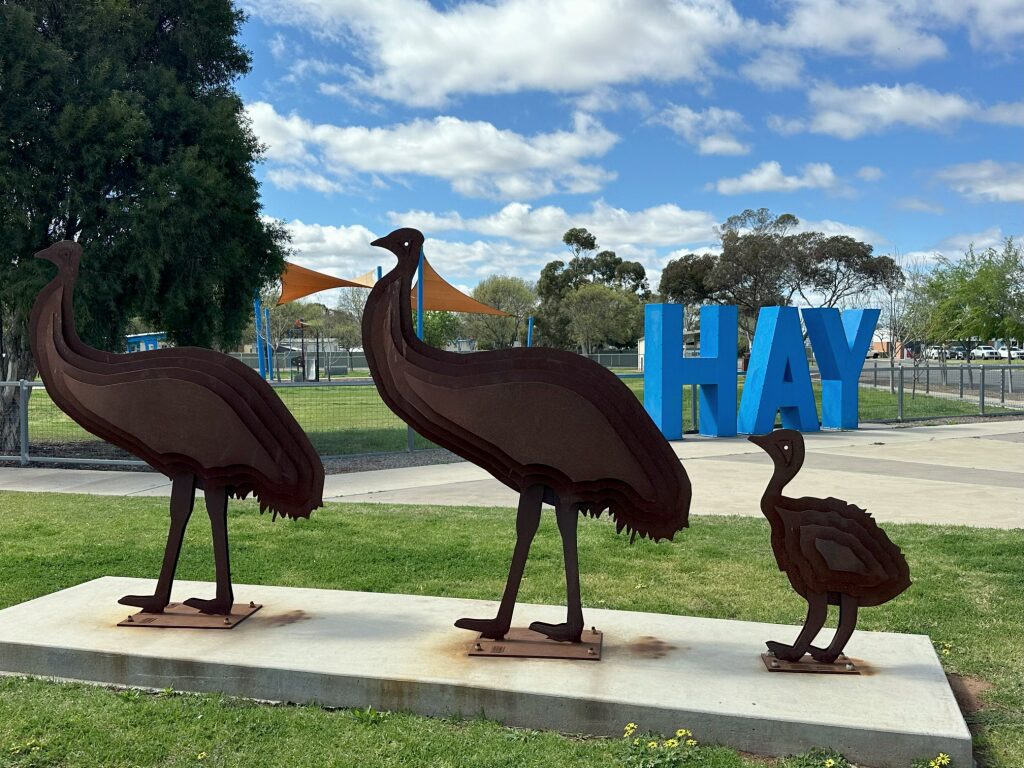
As we entered Hay, we were greeted by another emu family.
We set up camp at Sandy Point Reserve on the Murrumbidgee River.
Despite the area being dry when we visited, Gazanias lined a few side walks. This is one way to get out of mowing.

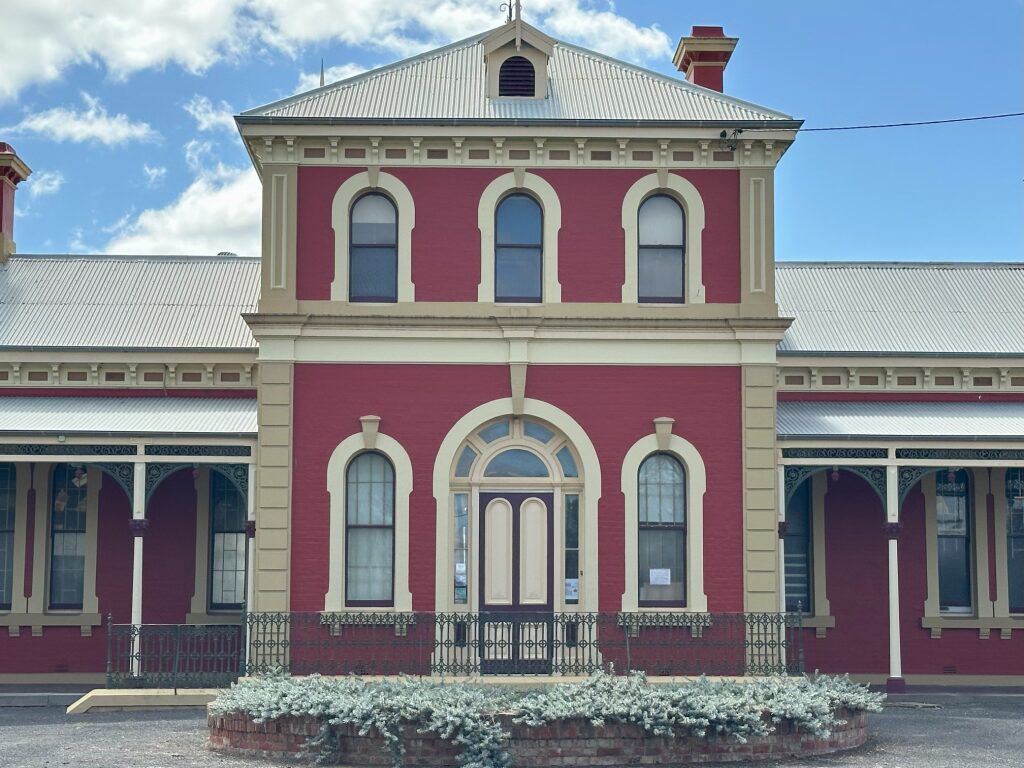
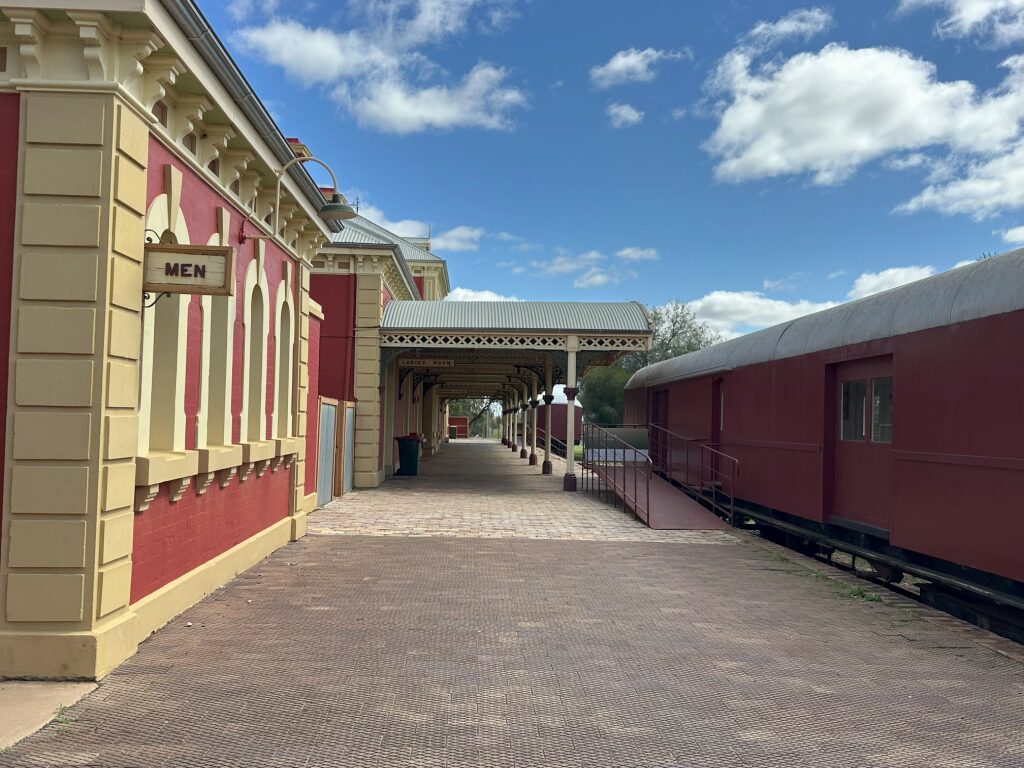
There were may attractions in town but we only got to a few. The Dunera Museum at the Railway Station has fascinating stories covering local and international events including the 6000 WW2 prisoners of war that were incarcerated in Hay.
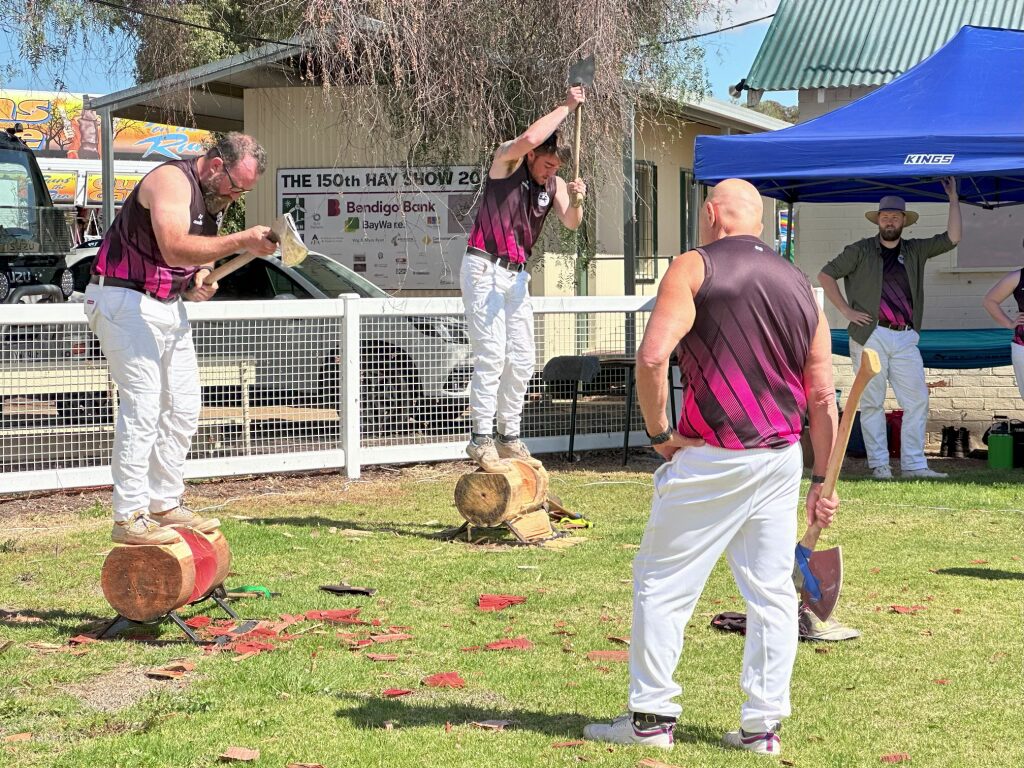
We extended our stay in Hay to attend their 151st annual show day. This show had everything you would expect in an agricultural community. Various horse related events, baking, wool classing and even the lumberjacks carving through thick stumps.
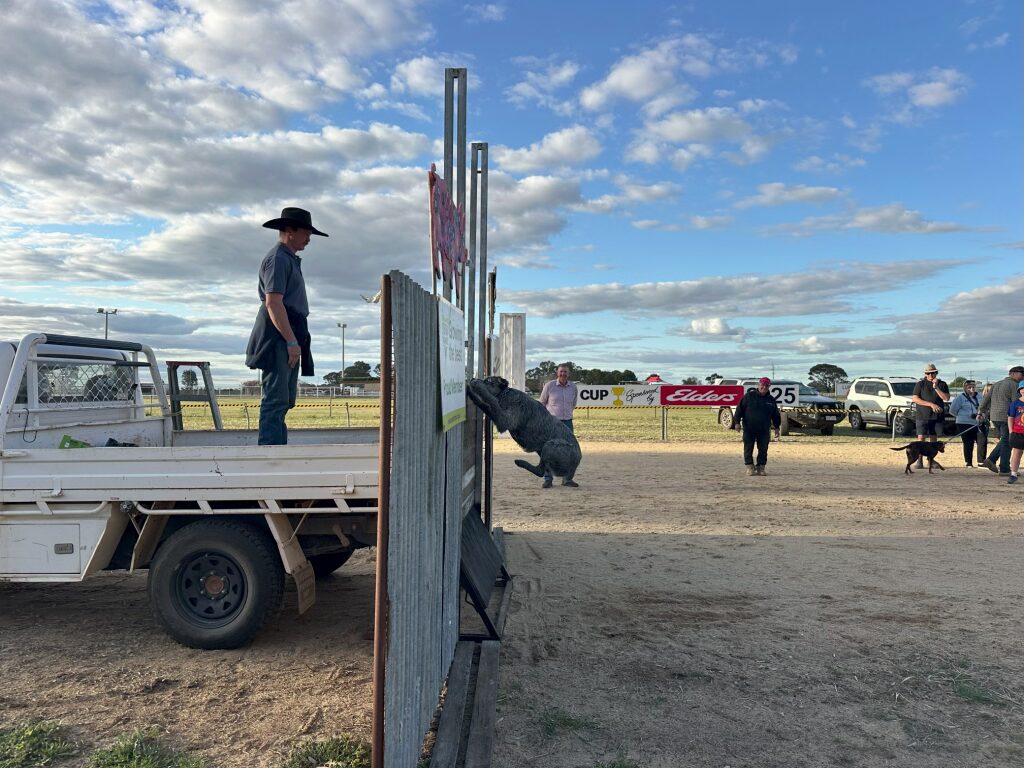
We had our first introduction to a Working Dog Jump Competition. This was a New South Wales Trial and the equal winners were Alvin and Billy clearing 1.97m.
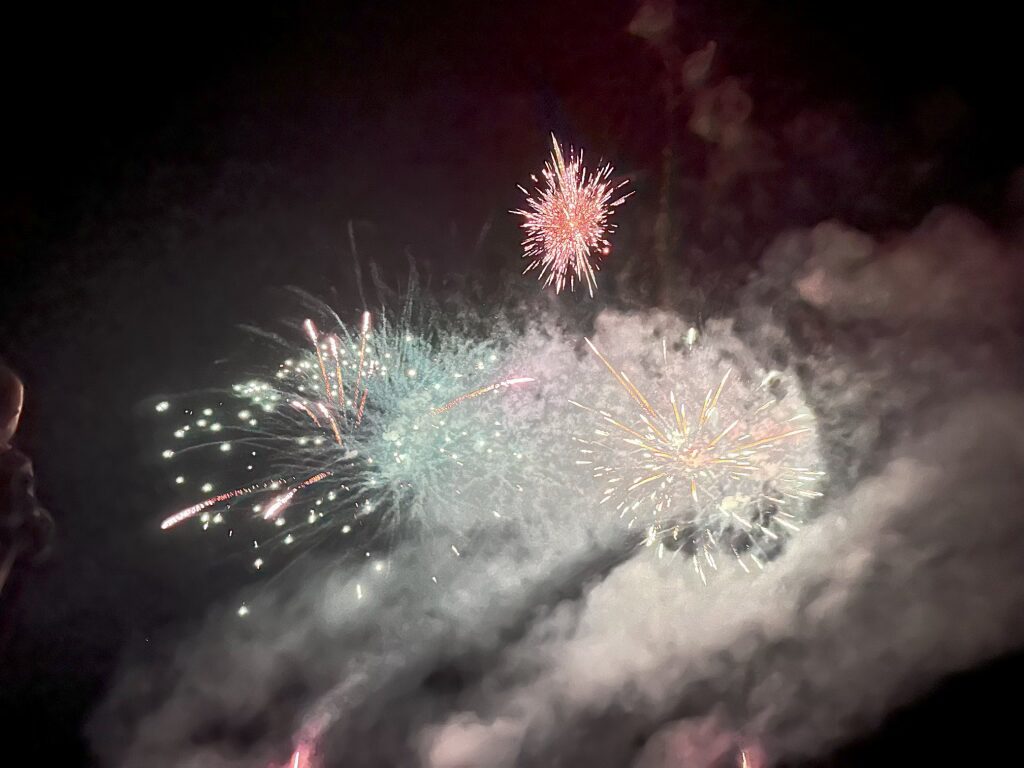
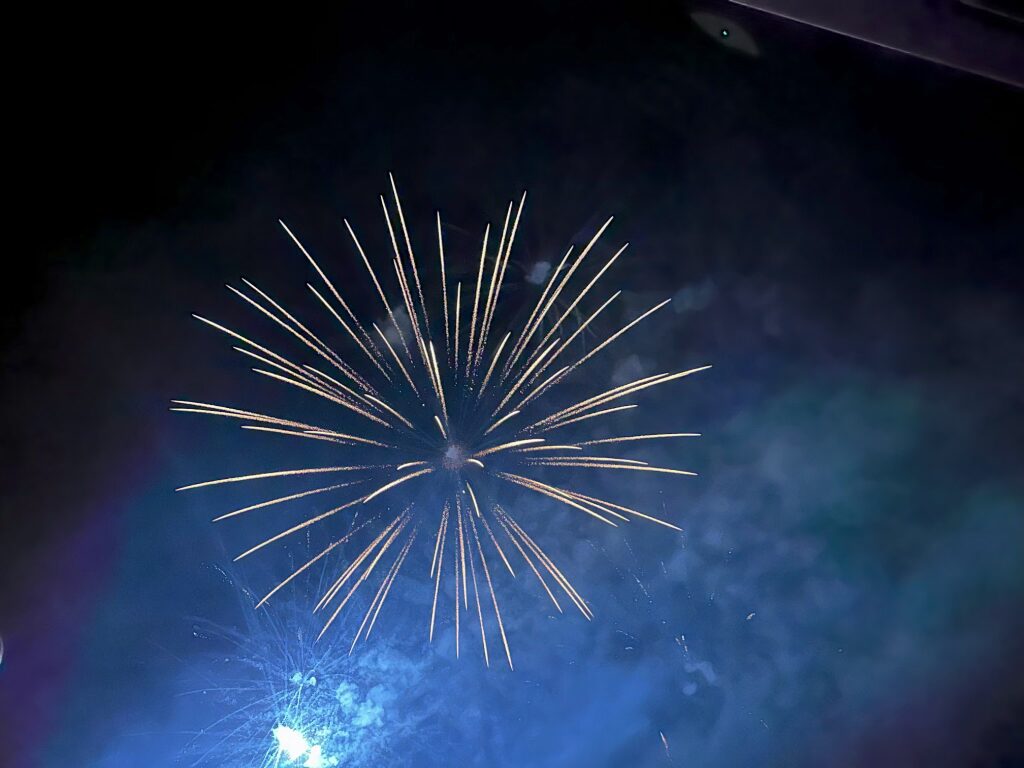
The show day closed with a firework display.
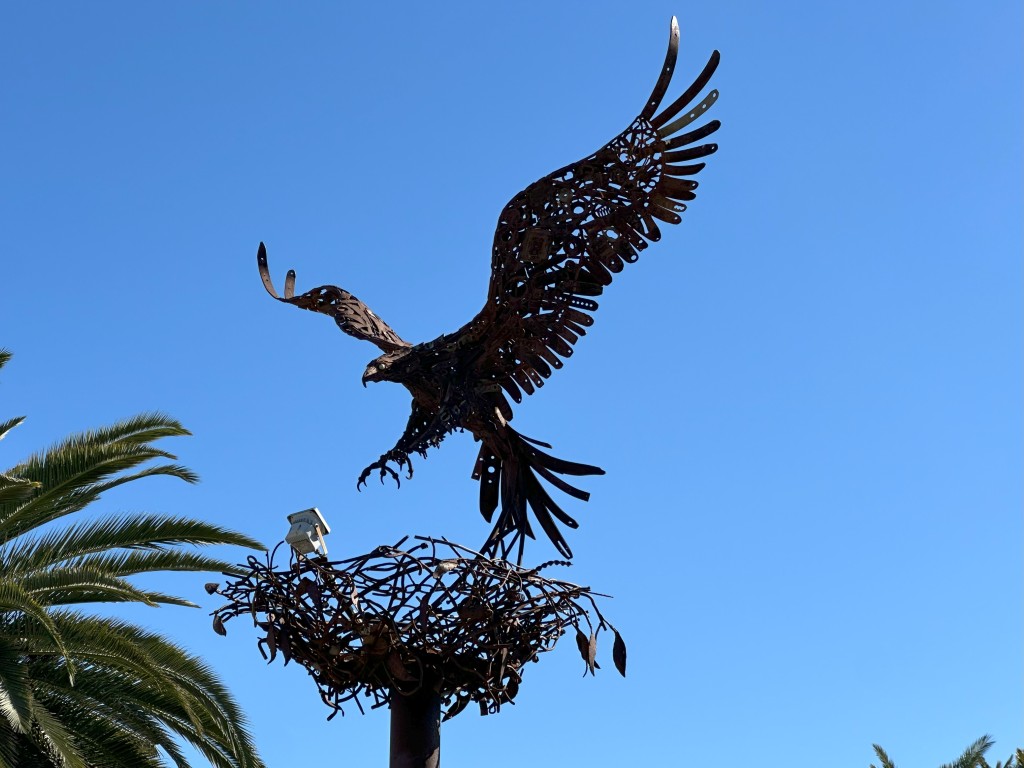
From Hay we passed through Balranald to get a few maps at the Visitors Information Centre, just as the eagle was landing.
Our next stop was Buronga. This is the last New South Wales town, before crossing the border into Victoria.
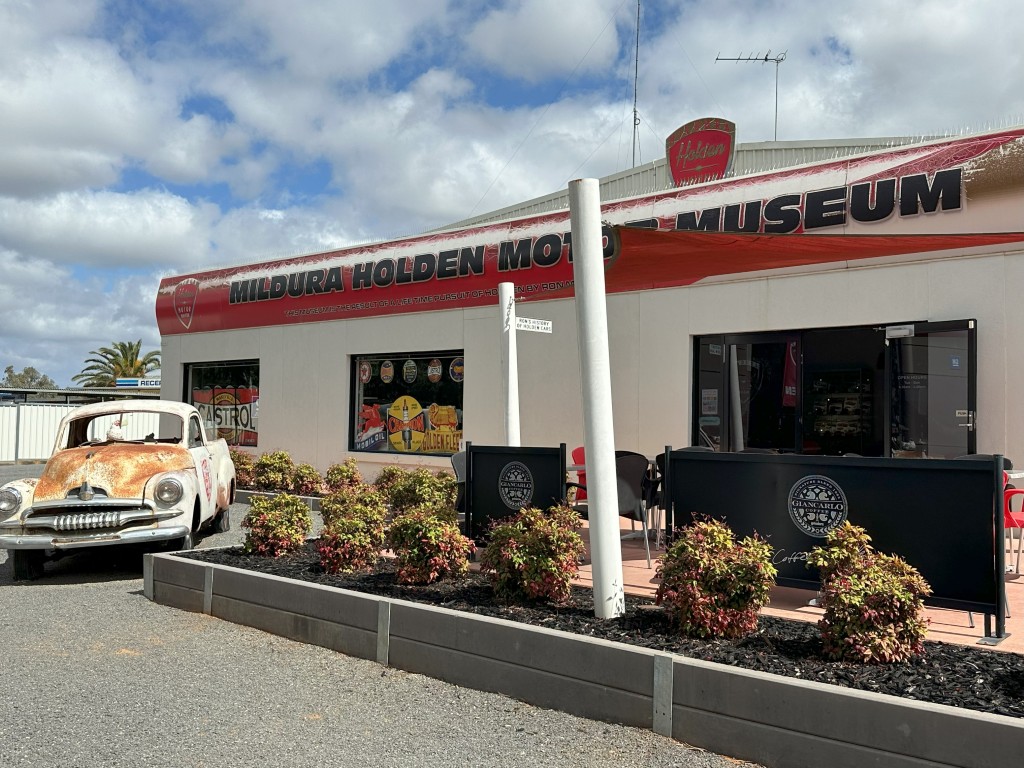
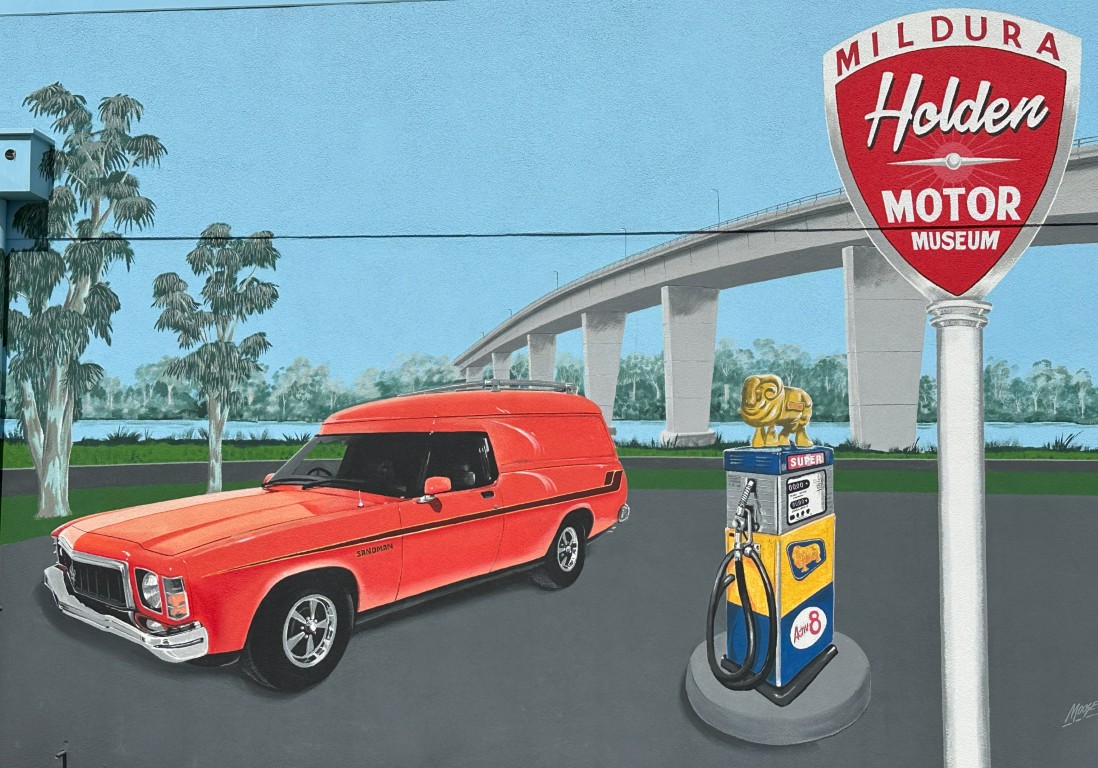
Buronga is home to the Mildura Holden Motor Museum. There were over 30 vehicles on display and lots of motoring memorabilia.
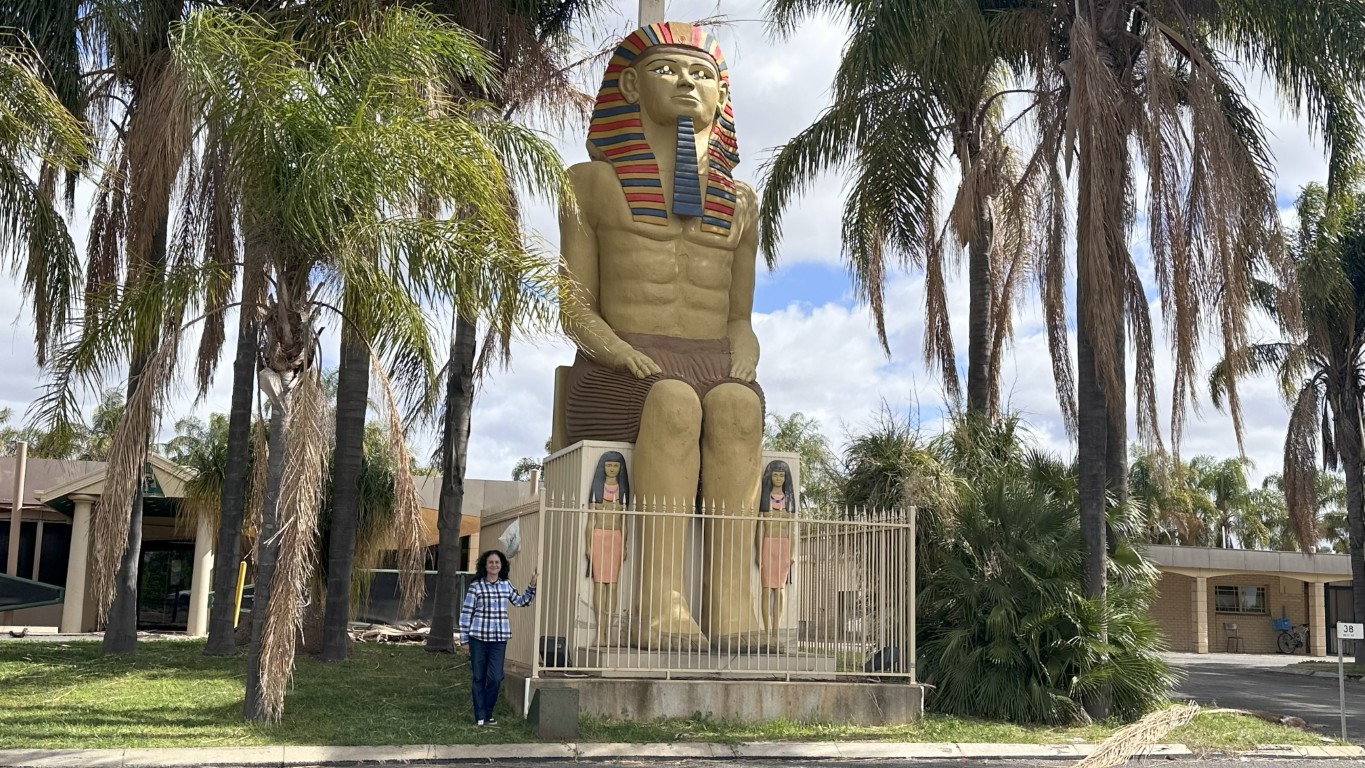
In the same street we found the statue known as the Big Tutankhamun. This modern replica of a Pharaoh stands 8m tall.
Just past Buronga, we crossed the Murray River into the next state, Victoria. Once across the border, we entered the city of Mildura.
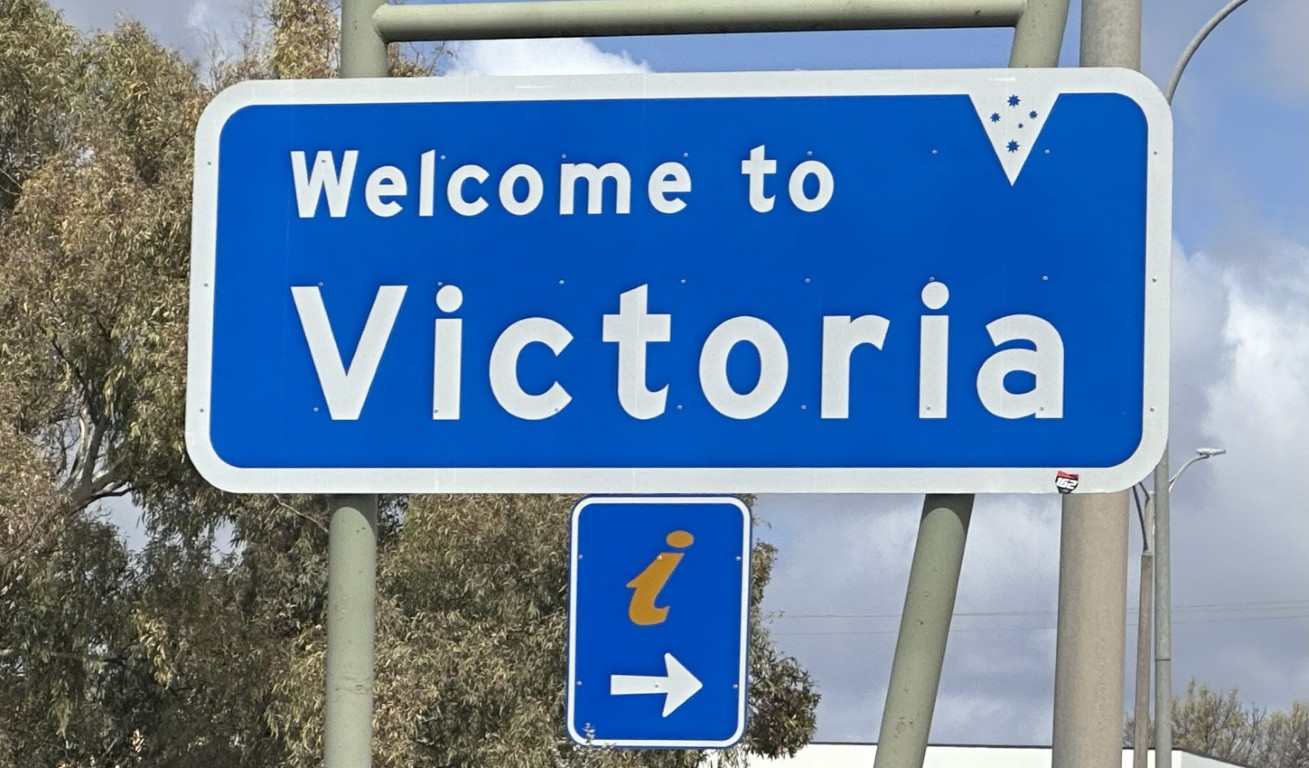
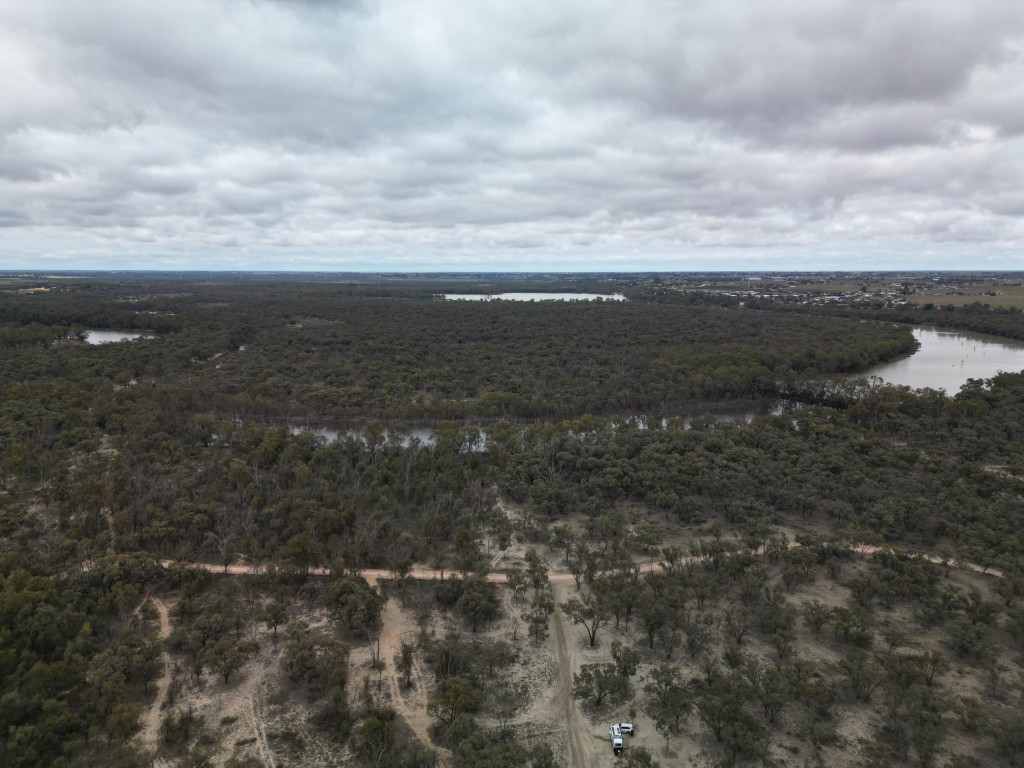
We decided to stay a few days to explore the areas around Mildura. We snagged a great spot on the Murray River where we camped for a few days.
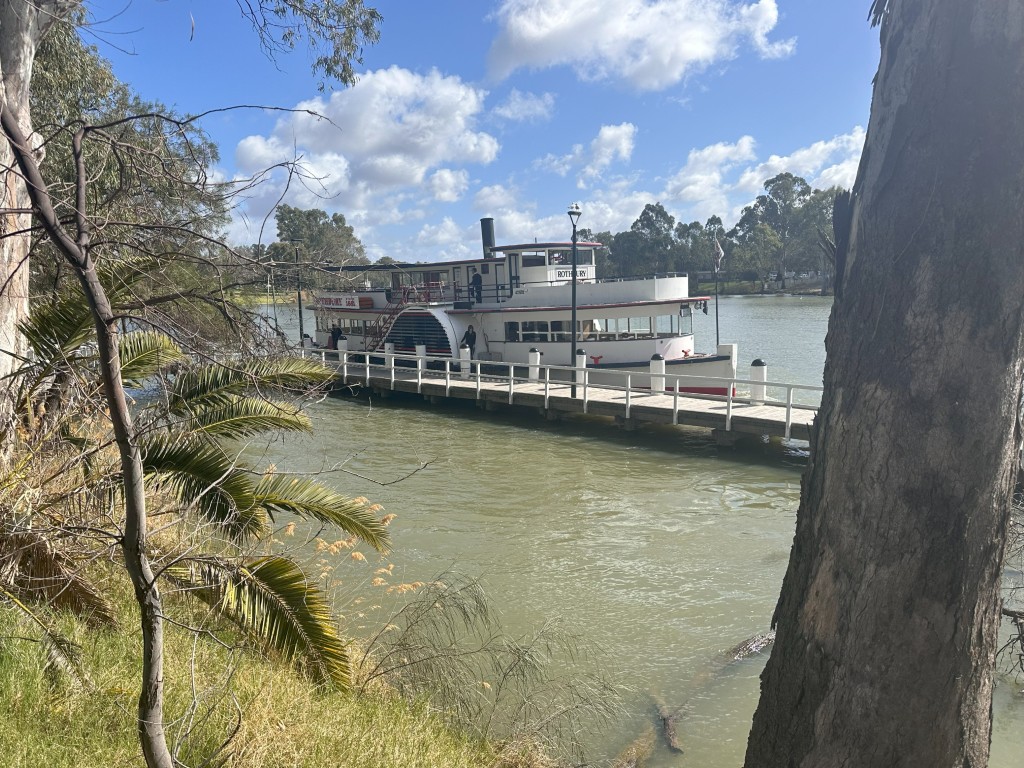
Mildura has a long history of paddle steamers gliding past on the Murray River.
Paddle steamers were one of the best ways to transport produce and people along the Murray-Darling river system between 1850 and 1900. Old paddle steamers had wood or oil fired furnaces to drive their steam engines that rotated the paddles. As boats were refurbished, many of the woodfired steam engines were replaced by diesel engines, now referred to as paddle vessels.
The last operational paddle steamer in Mildura is the Melbourne. We did not see the Melbourne during our visit. While we were at the harbour, the paddle vessel Rothbury was disembarking.
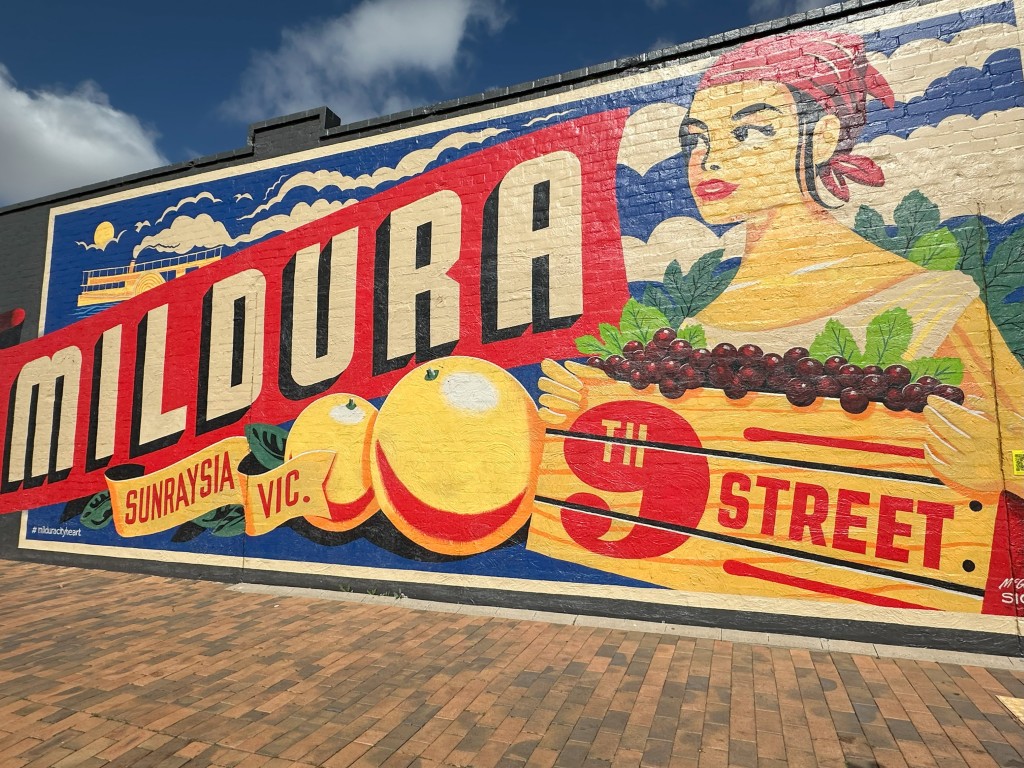
The centre of the city has a mural trail. We passed a few of these murals while in town.
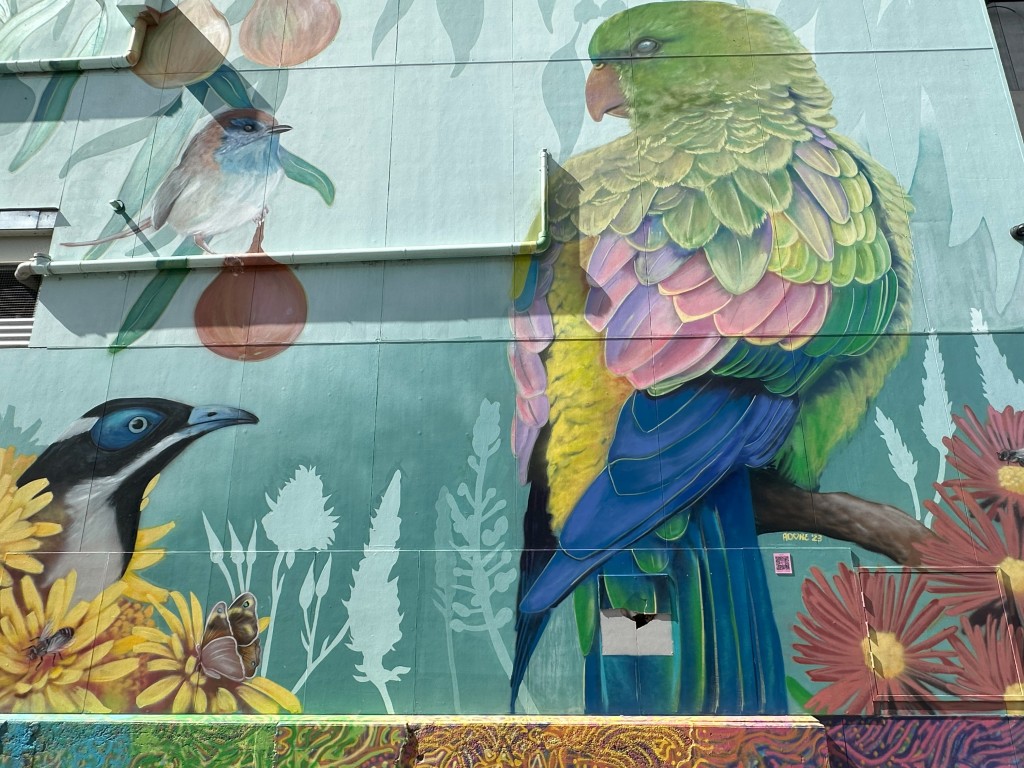
We were keen to visit Wentworth where the Murray and Darling rivers join, we crossed the border back into New South Wales. The Darling river runs 1472km from Bourke in New South Wales and confluence with the Murray river in Wentworth. The confluence is the meeting point of Australia’s two longest rivers and the fourth largest combined river system in the world. The two rivers has a distinct colour difference, the Darling river is clay-based and light brown in the photo below and the mighty Murray is olive green.
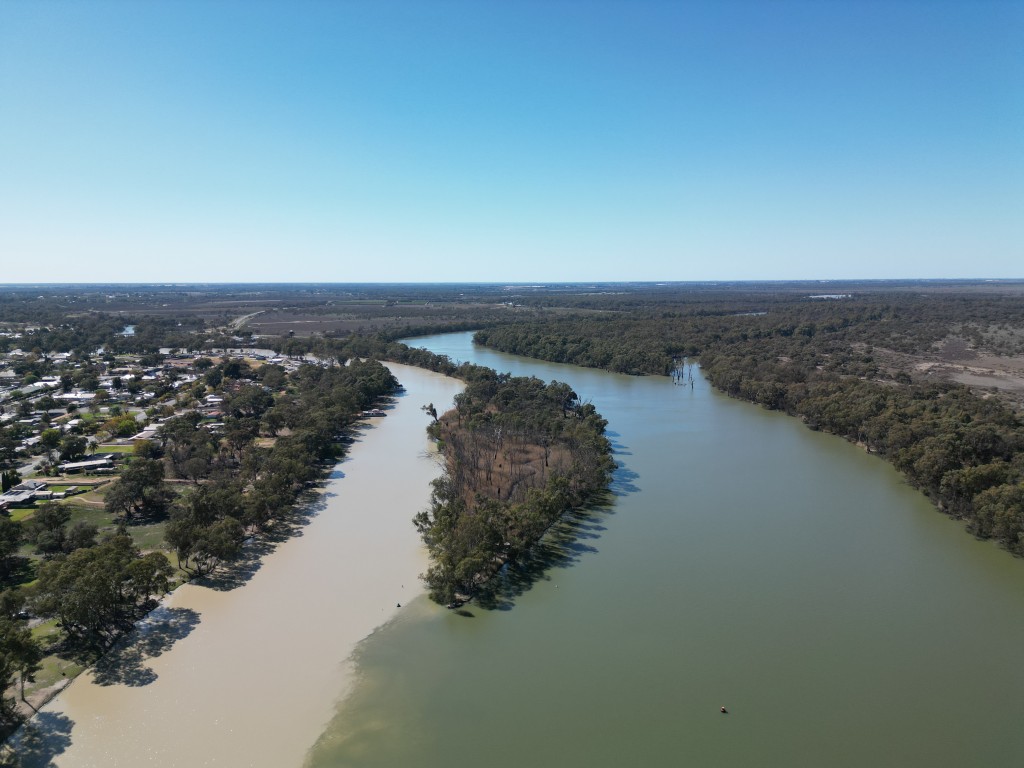
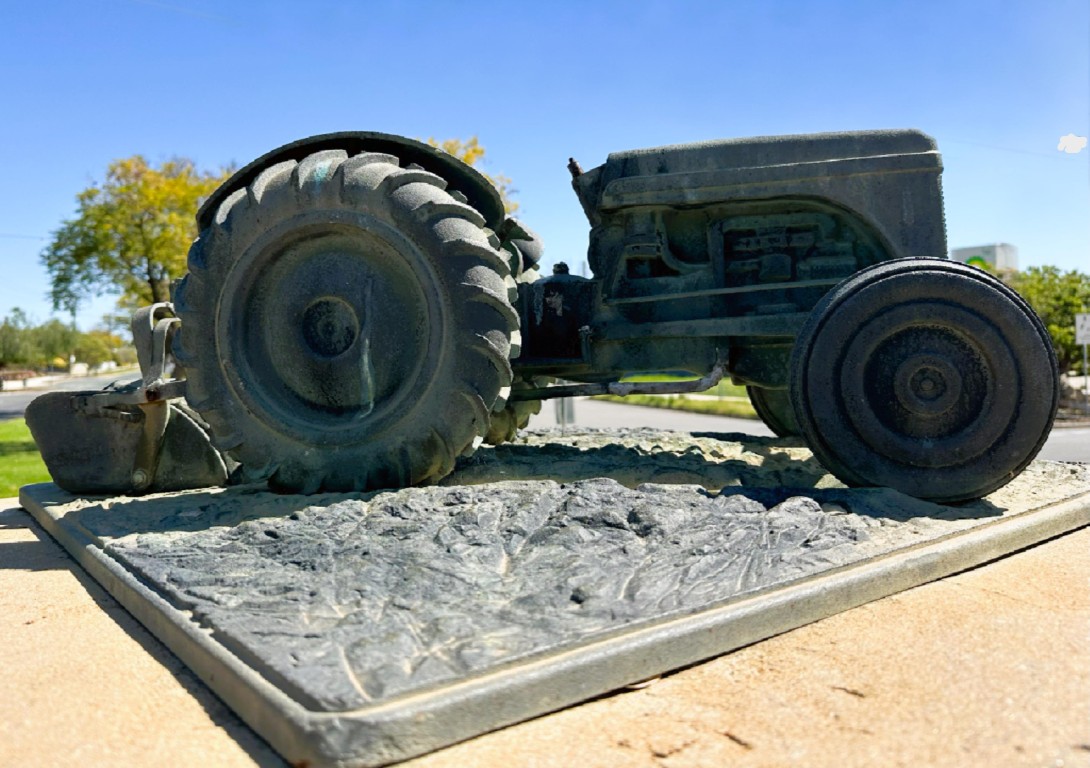
With the two rivers converging in Wentworth, the town is prone to flooding. During the 1956 floods, a little grey Massey Ferguson tractor saved the town by creating a levee bank to hold the water, leaving Wentworth isolated on an inland island.
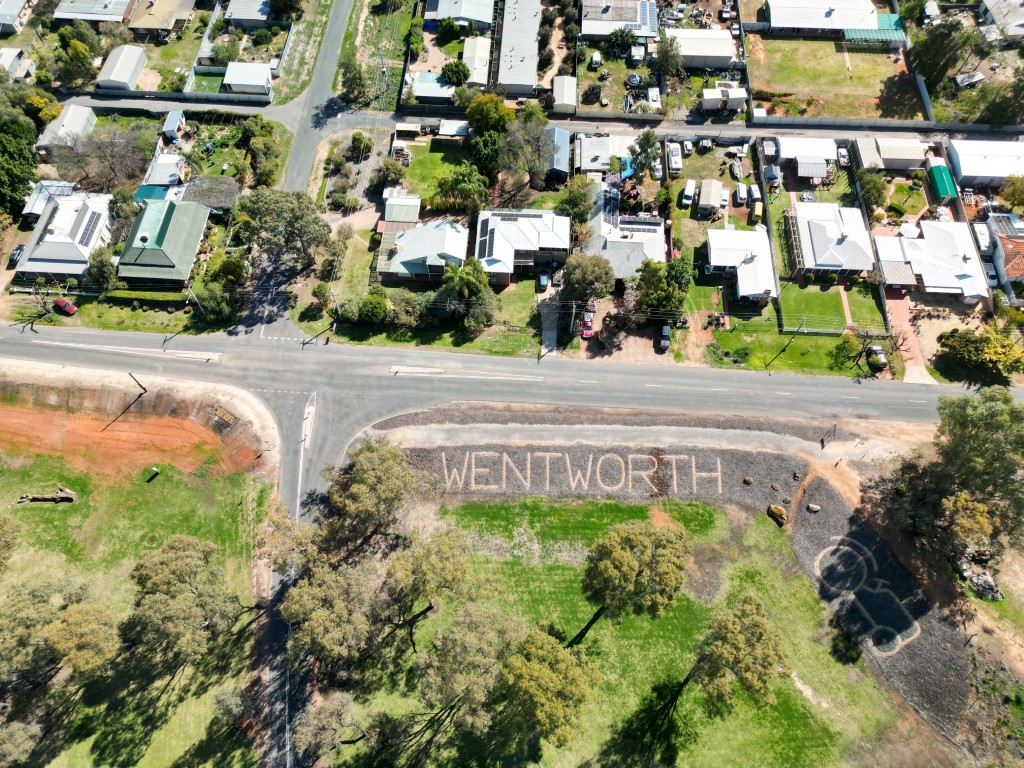
The little grey TEA20 Fergie tractor was immortalised with a little statue in the centre of town.
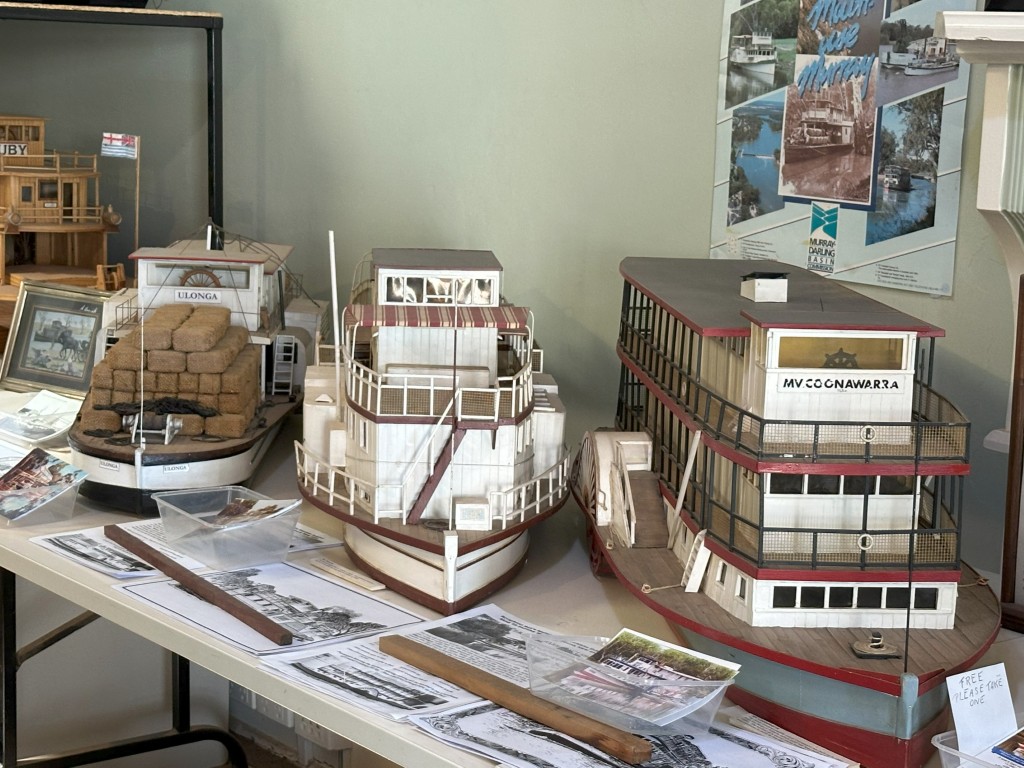
Wentworth is also on the paddle steamer route. The town is home to the decommissioned PS Ruby, docked close to the central business area. The PS Ruby was maintained by local volunteers for many years. One of the volunteers and paddle steamer enthusiasts Rod, builds model steamers. We visited Rod’s Model Paddle Steamer display where Rod shared the rich steamer history with us. He has 30 mini steamers on display. Rod said some models would take him up to 700 hours to complete.
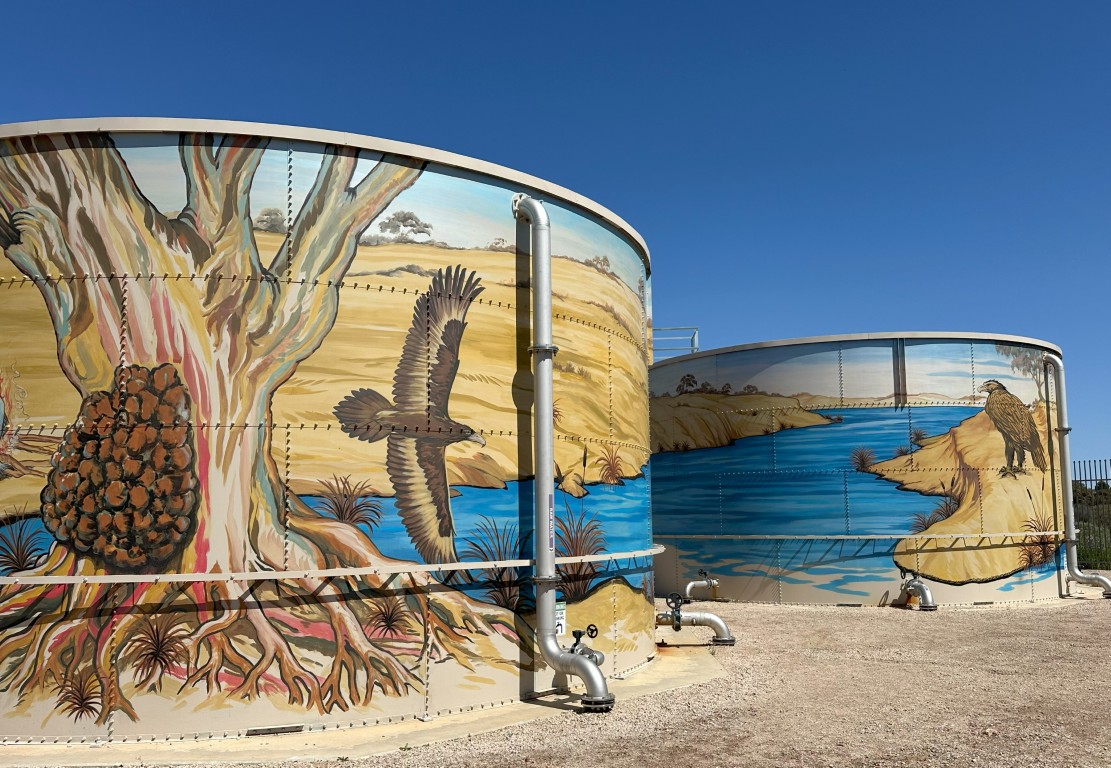
As we left Wentworth, we passed the Namatjira Water Tank Art.
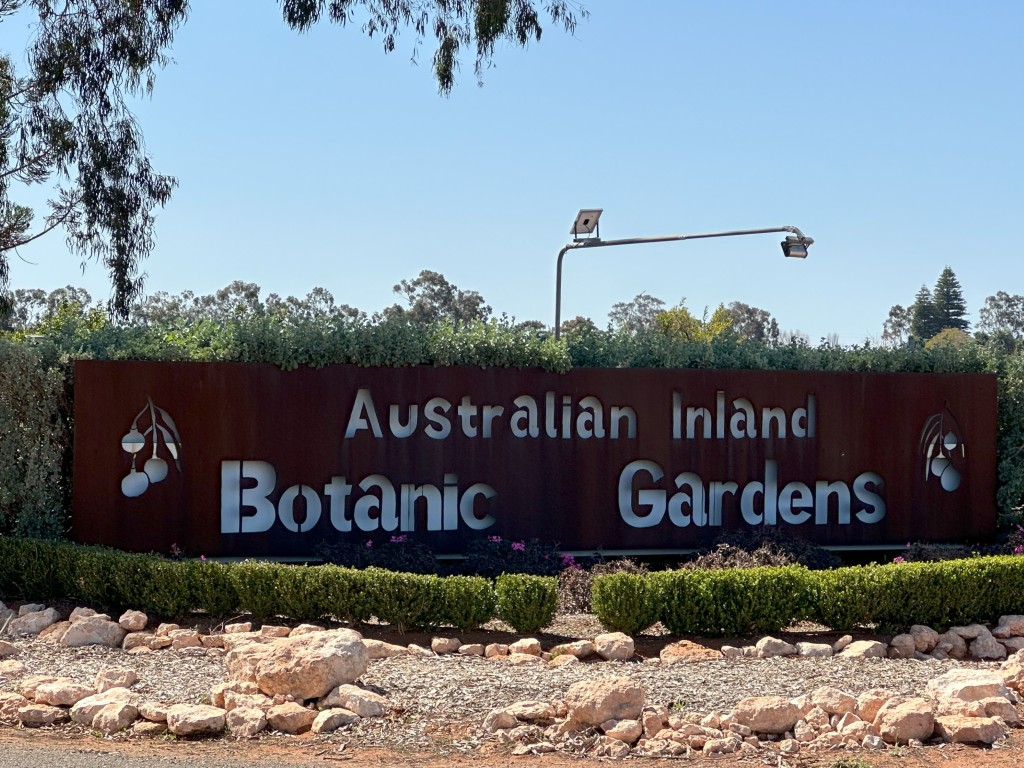
We stopped at the Australian Inland Botanic Gardens. In our travels we have never seen the Sturt’s Desert Pea and we were hoping it might be our lucky day.
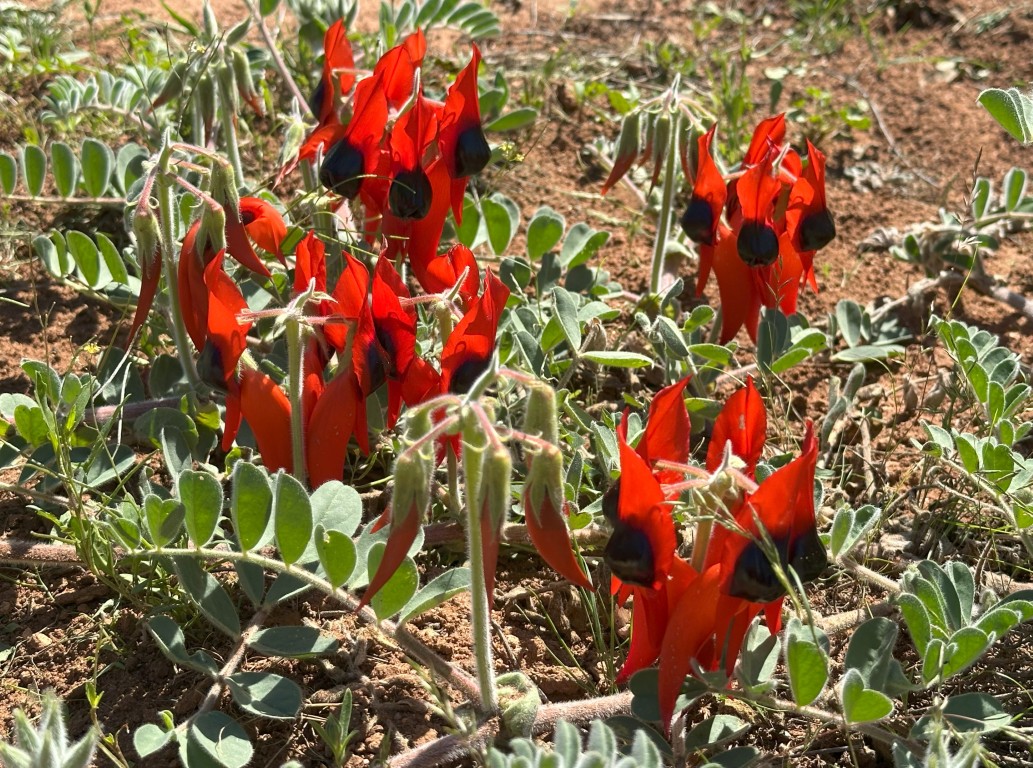
The timing was perfect and there were many of the Sturt’s Desert Peas in full bloom. Although these can be seen in most Australian deserts, South Australia has claimed the Desert Pea as their floral emblem.
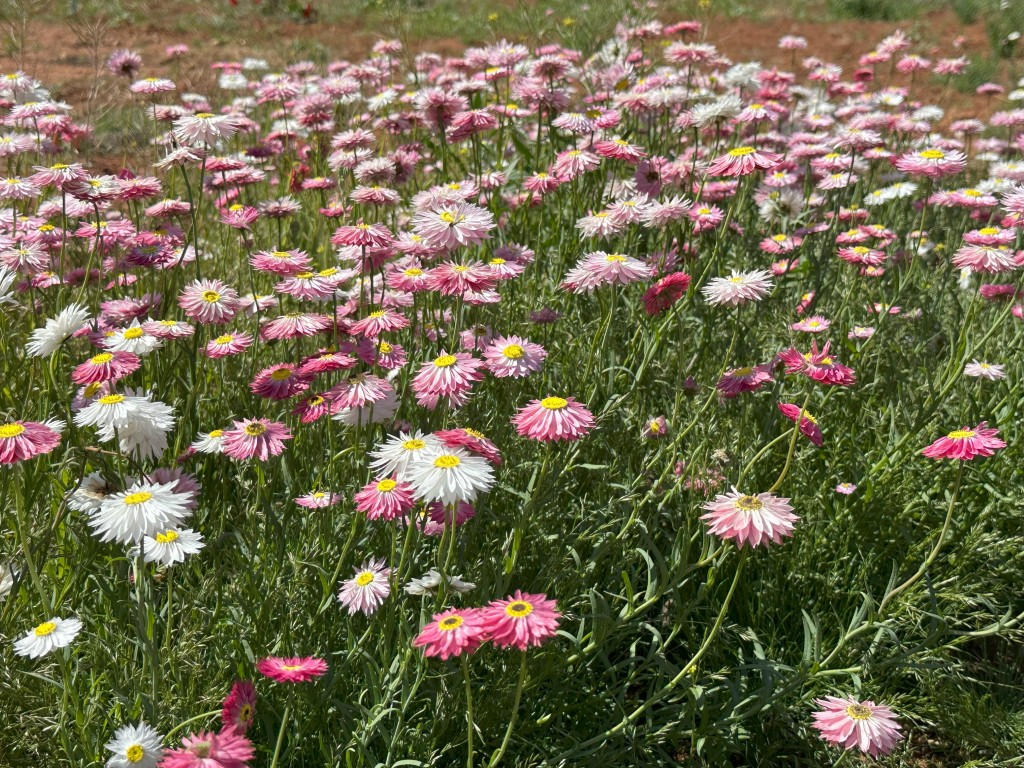
The Paper Daisies were also in full bloom when we visited.
Our next stop was Perry Sandhills. This is a piece of desert like habitat and is very similar to the Simpson Desert. It is difficult to believe it is adjacent to a floodplain.
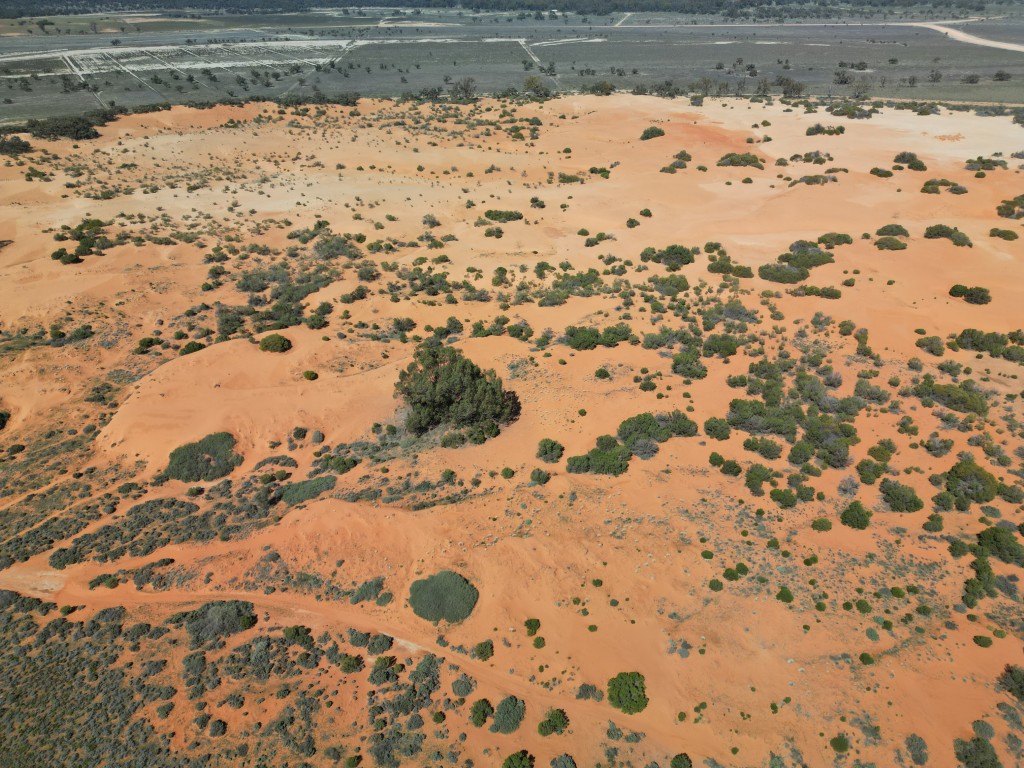
The 400 acres of dunes are open to explore.

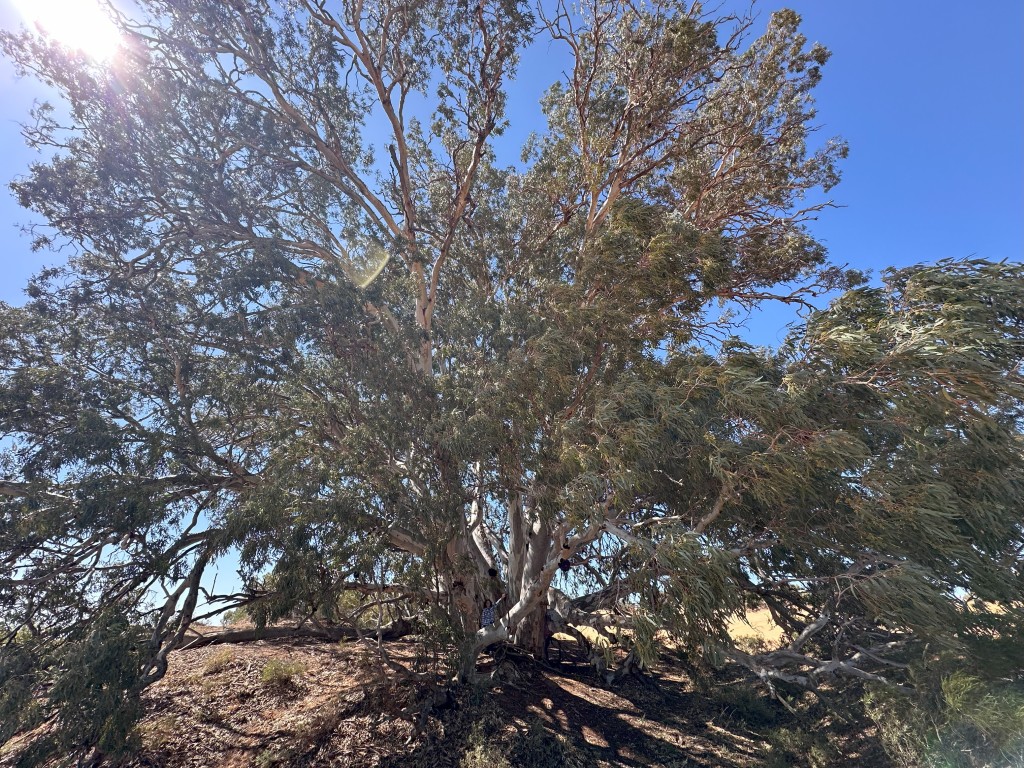
Almost in the centre of the dunes is a massive Maurray River Red Gum tree dubbed, The God Tree.
This was the end of our stay in New South Wales and Victoria. We crossed the border into South Australia passing through a road quarantine station. South Australia quarantine stations aim to protect its agricultural industries from pests and diseases, particularly the fruit fly. The inspectors thoroughly checked the car and caravan for fruit, vegetables, plant products and honey.
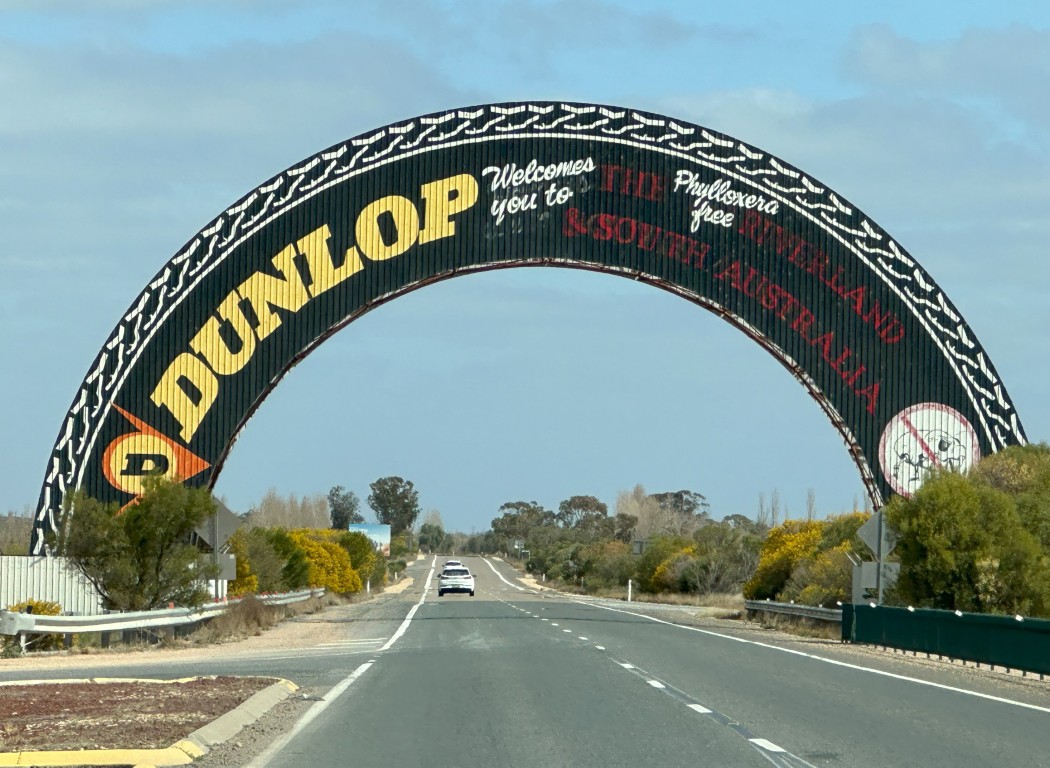
After we got the all clear, we passed through The Big Dunlop Tyre into South Australia.
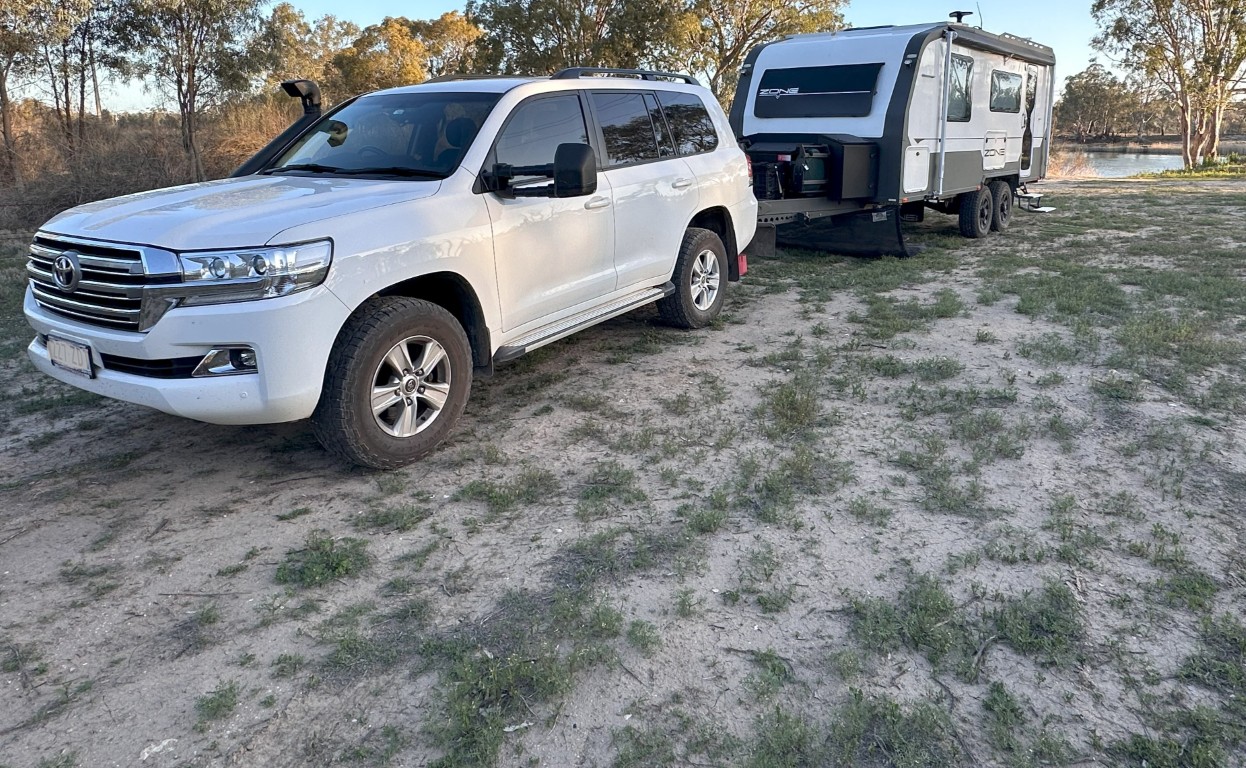
We stopped at Devlin’s Pound campsite for a few days. Getting to the river was a steep and narrow 4X4 track. Maintenance work was under way on the pumpstation on the river bank on our arrival. Before setting up, one of the tradies approached us to let us know that a massive crane will be coming down the track the next morning and may block us in. That changed our plans to an overnighter with a 6.30am departure.
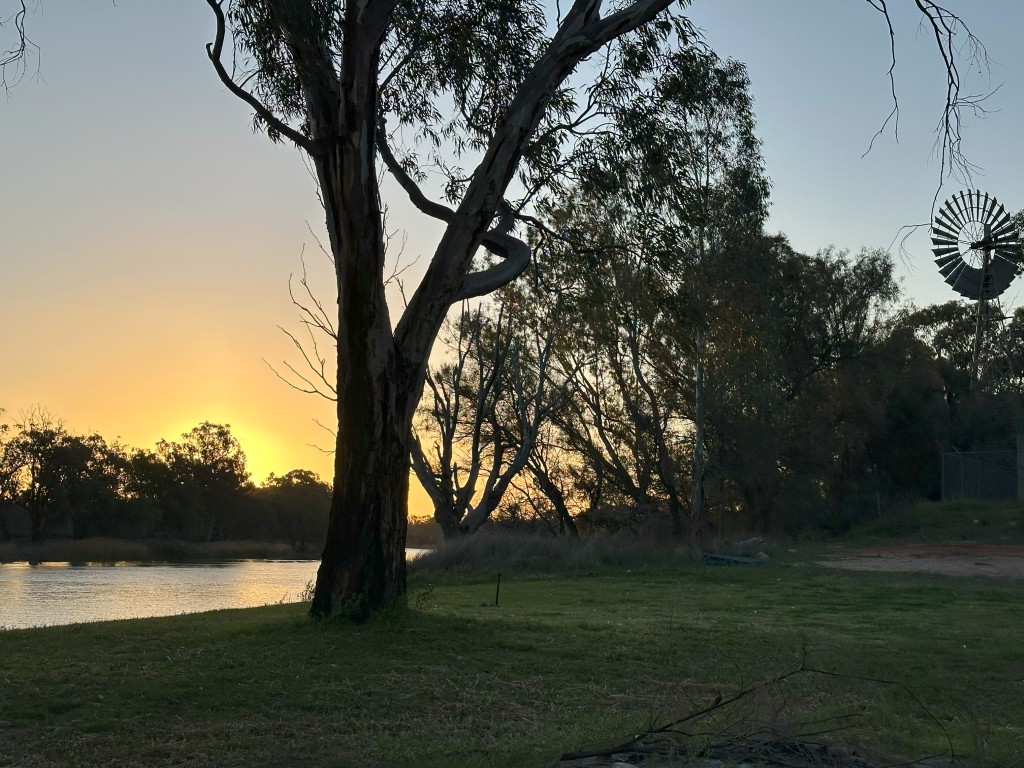
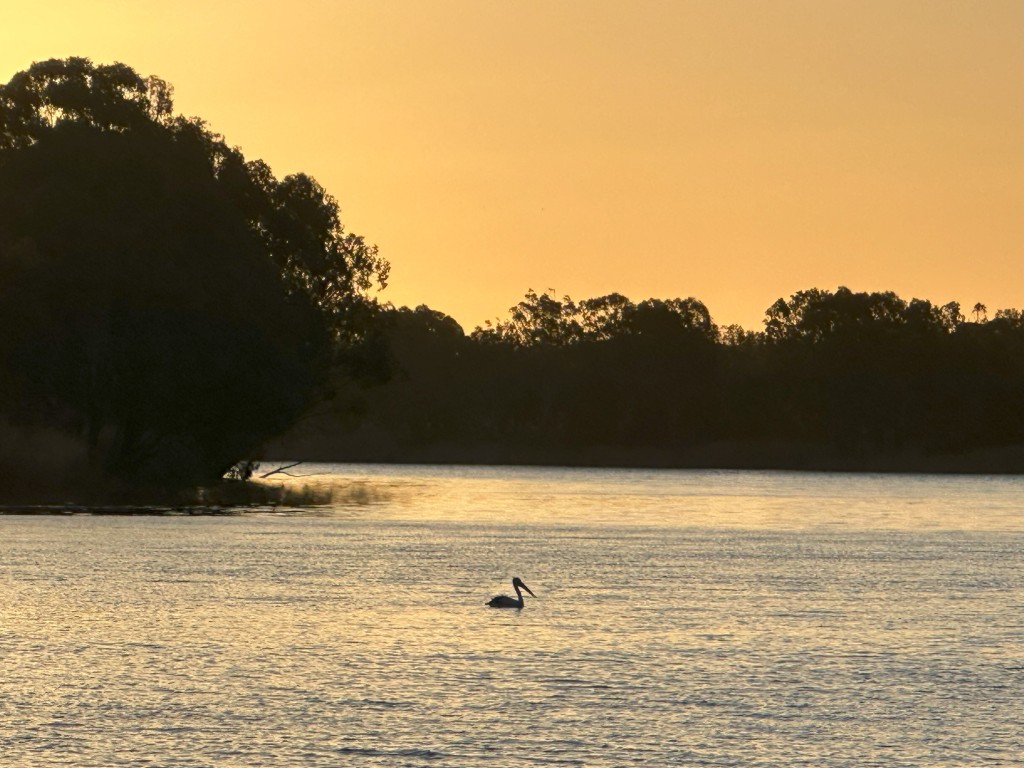
The great sunset on the river bank was a consolation for the short stay.
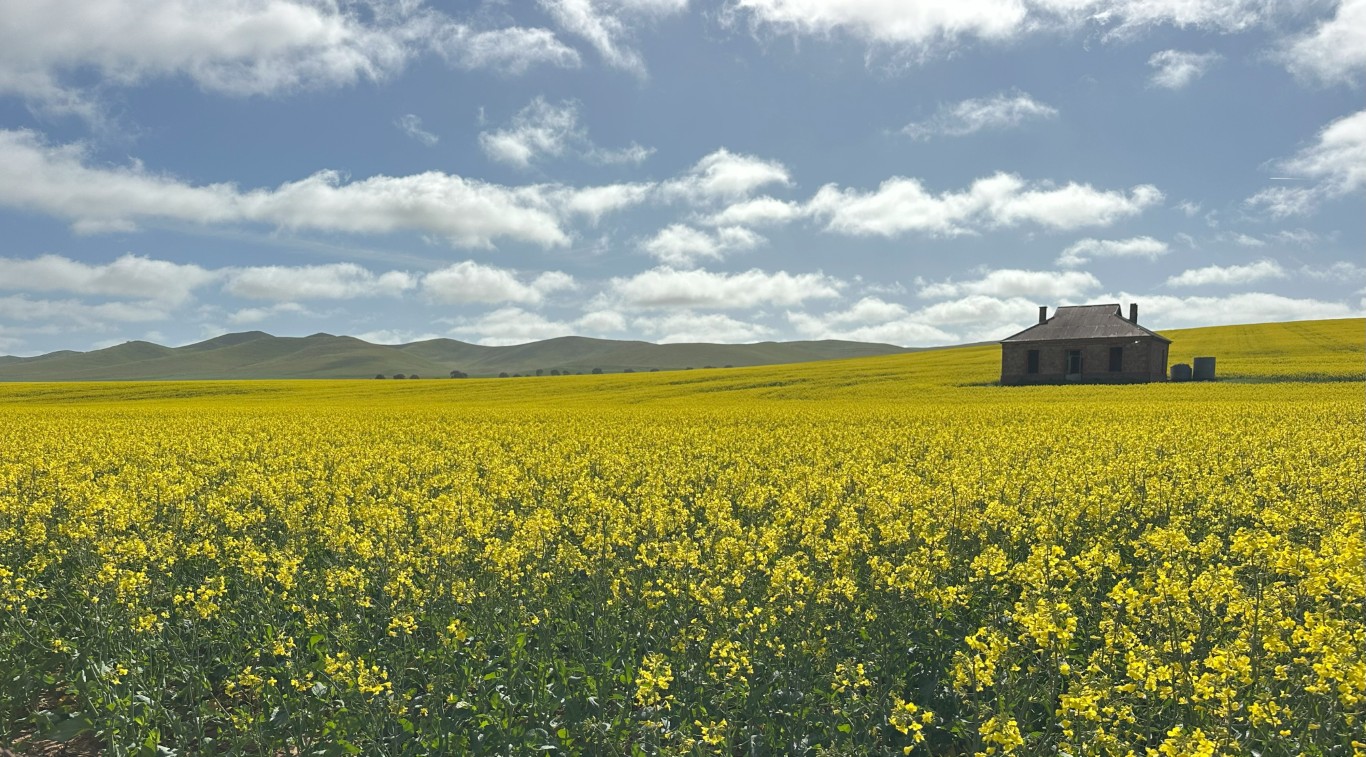
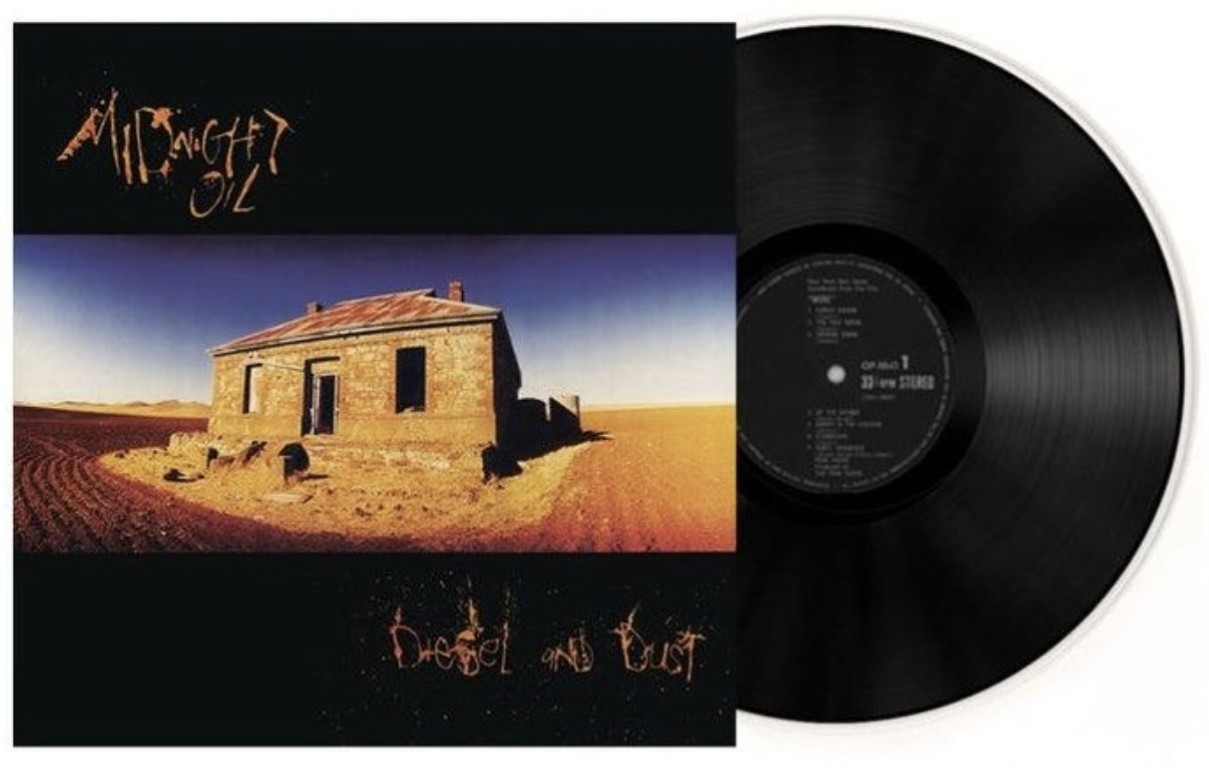
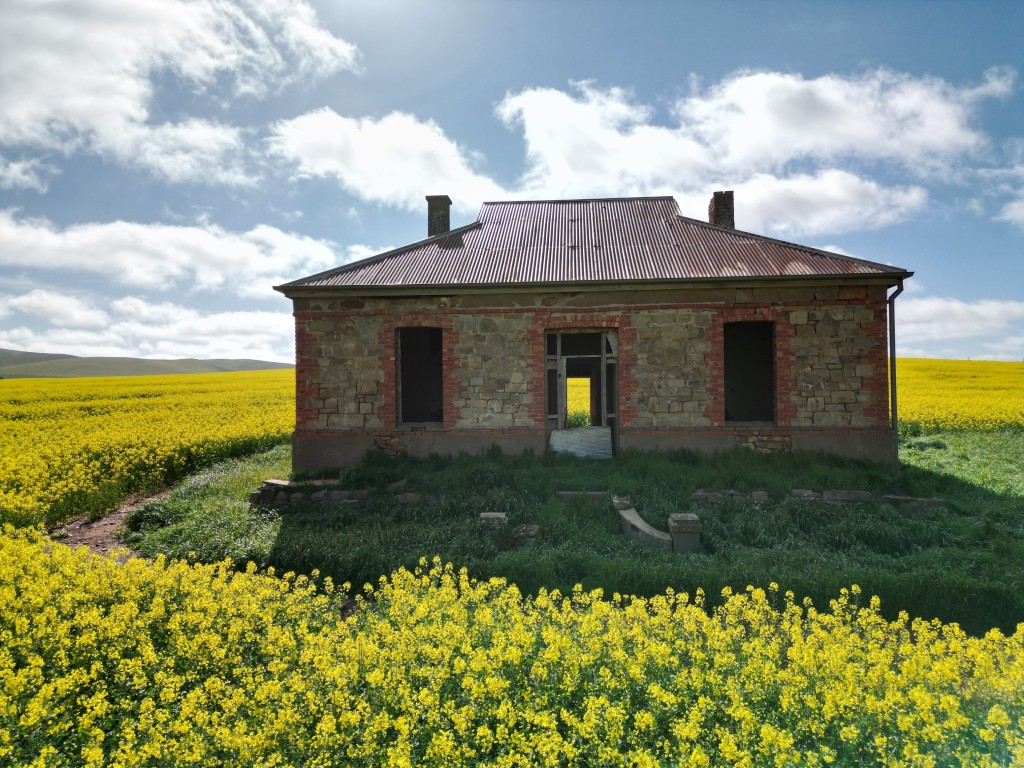
On the way to our next camp we stopped at the canola fields near Burra. In the field is a run-down homestead, but this is not any old ruin, it is the Diesel and Dust Hut.
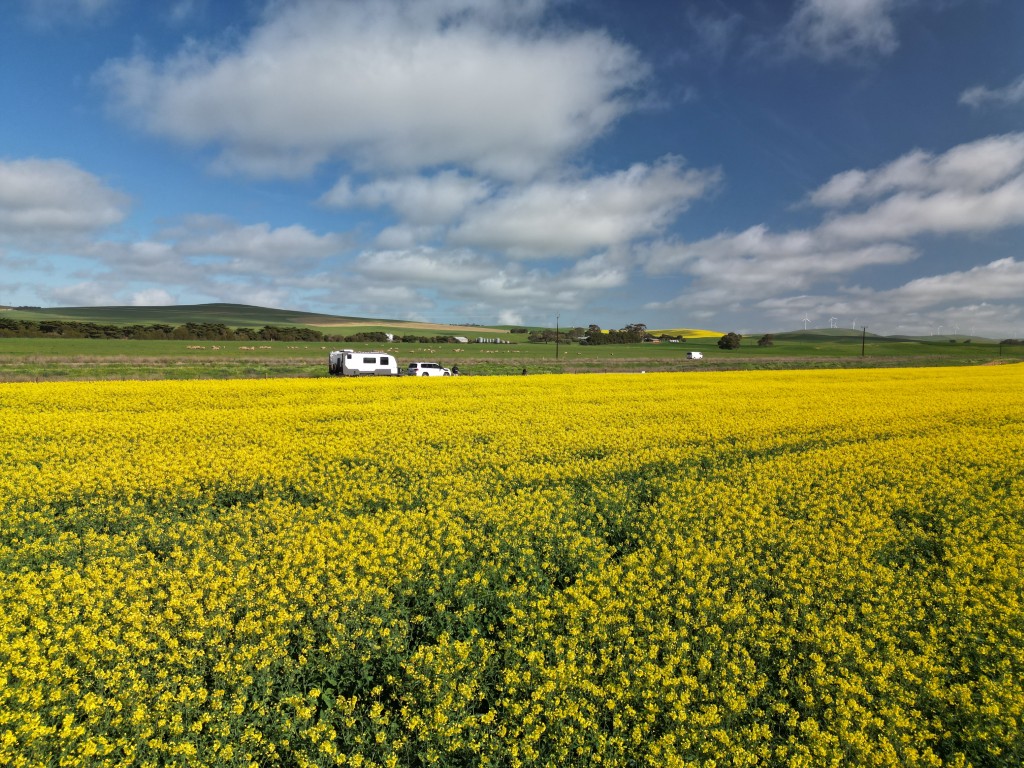
The Diesel and Dust Hut was an abandoned farmhouse, featured on the cover of the 1987 Midnight Oil’s album, Diesel and Dust.
I have seen this house in a documentary before, but it is so much better in real life, especially with the canolas in full bloom.
Our next stop and camp was at Peterborough. Originally known as Petersburg, the name was changed after WWI. This railway town, has a long history aligned with the Australian steam train era. Peterborough was the busiest single track railway station in the world between 1910 and 1914 with 100 trains passing through each day.
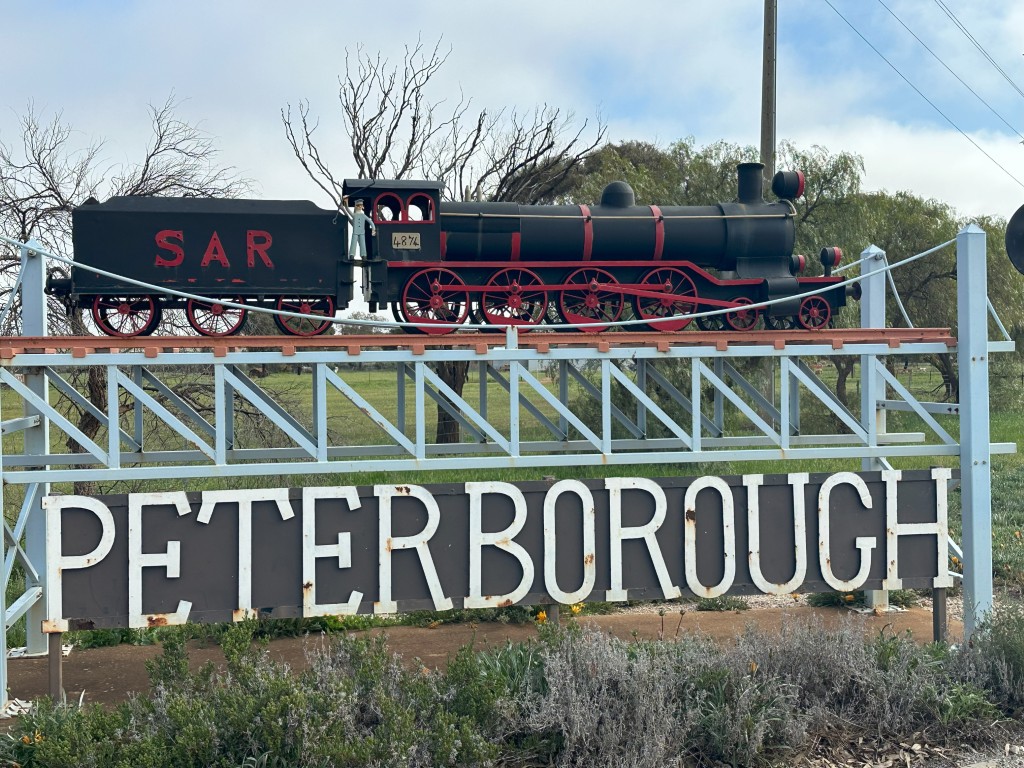
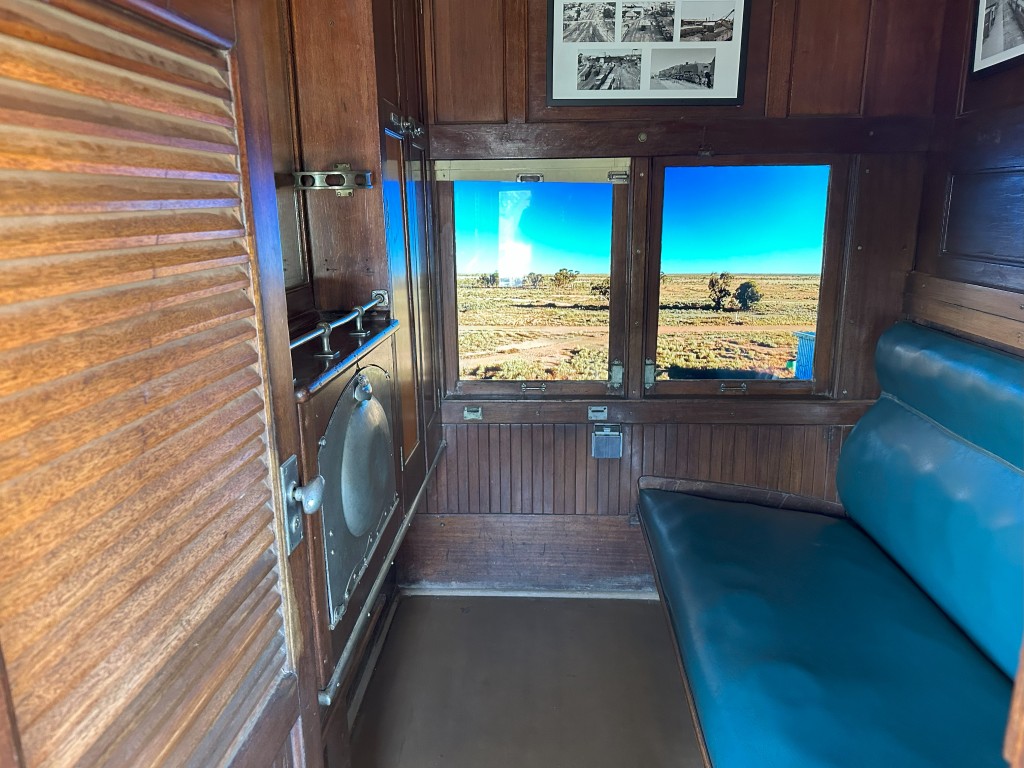
The railway history is evident throughout town. There is the Steam Town Heritage Rail Centre, the Town Carriage Museum, The Burg and also the Meldonfields Miniature Collection.
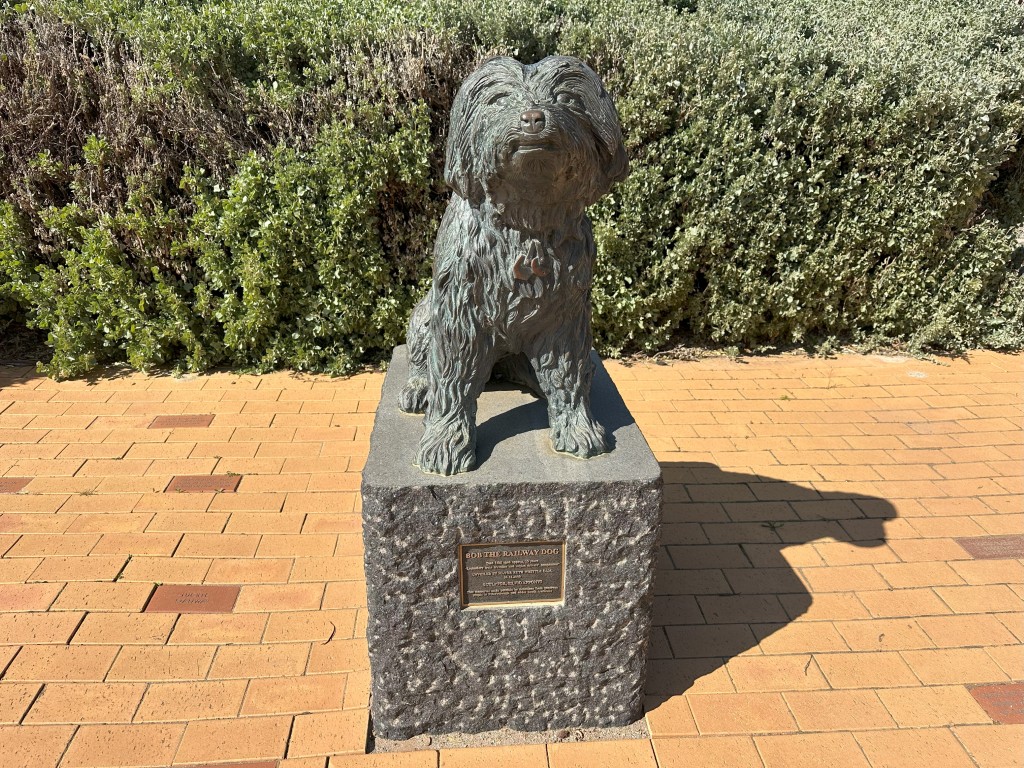
Also in the main street was a statue of Bob the Railway Dog. Bob was a German Collie born in 1882. Bob started of as the publican’s dog but was more interested in the trains and travel, than the pub. He started jumping on the trains and disappeared for months at a time. As a seasoned traveller, all the train drivers knew Bob as he would join them in the locomotive. On the plague under his statue he is remembered as “legendary train traveller and engine drivers’ companion”.
His favourite steam engine was the Yankee and his favourite spot was the coal box. He attended many railway functions and was even seen 1000km from home at the opening of the Hawksbury Bridge in New South Wales.
Bob passed in 1895, at age 13.
An Adelaide newspaper, The Advertiser published an article in 1939 suggesting that Bob travelled freely, like a politician. He was apparently seen on trains, trams and paddle steamers across different states. Bob was seen in Adelaide, Brisbane and Sydney. He often visited a close friend in Adelaide for a feed.
From Peterborough we headed north to the Flinders Ranges. Just before Hawker we passed the Yourambulla Peak, as the mountains start appearing on the horizon.
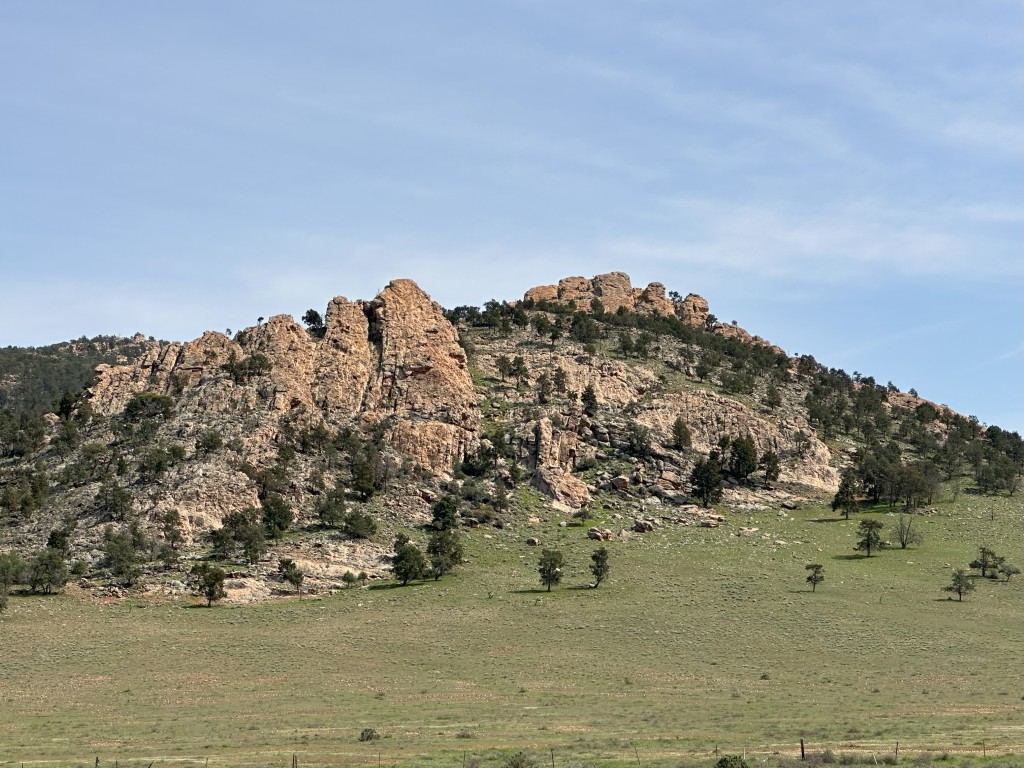
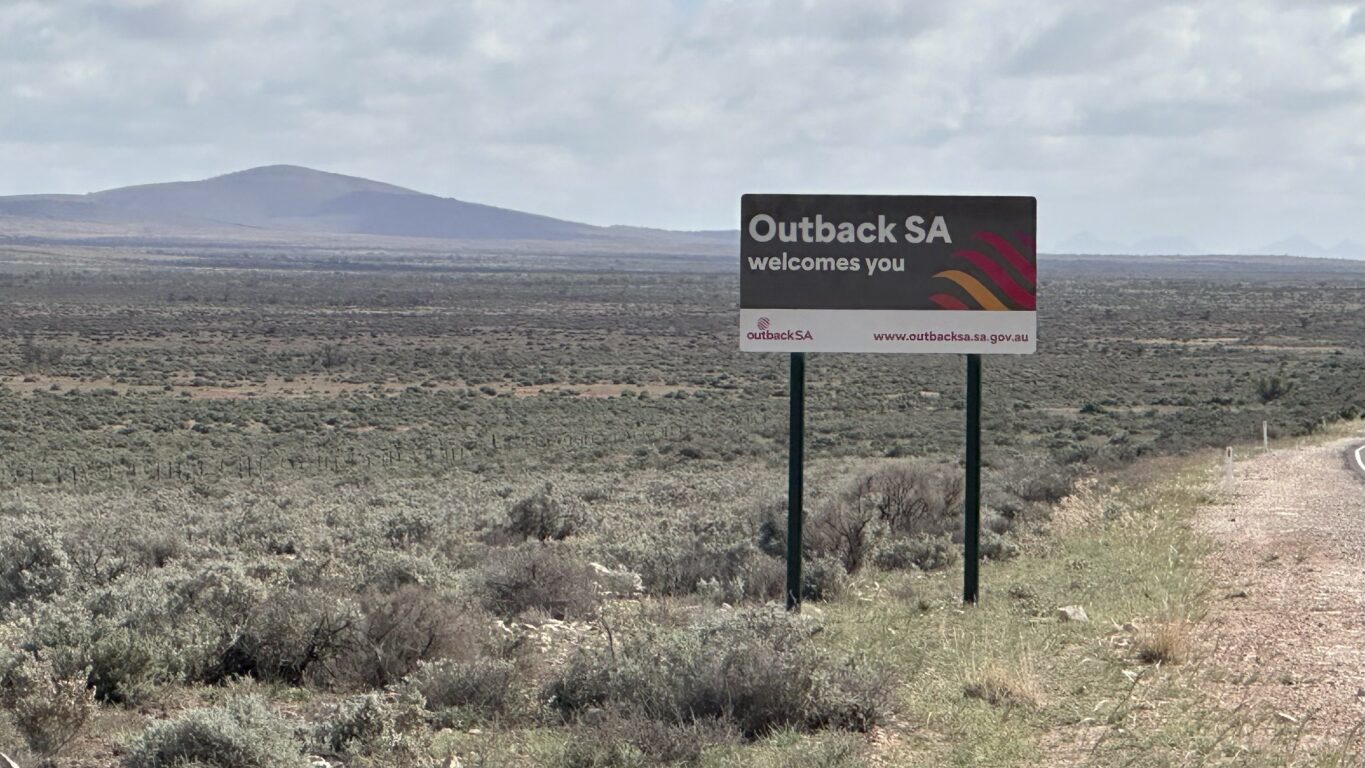
Just north of Hawker it became evident the we have left the big smoke for the outback.
We basically drove past the Flinders Ranges on the western side to Parachilna. From Parachilna we took a dirt road into the gorge, where we set up camp.
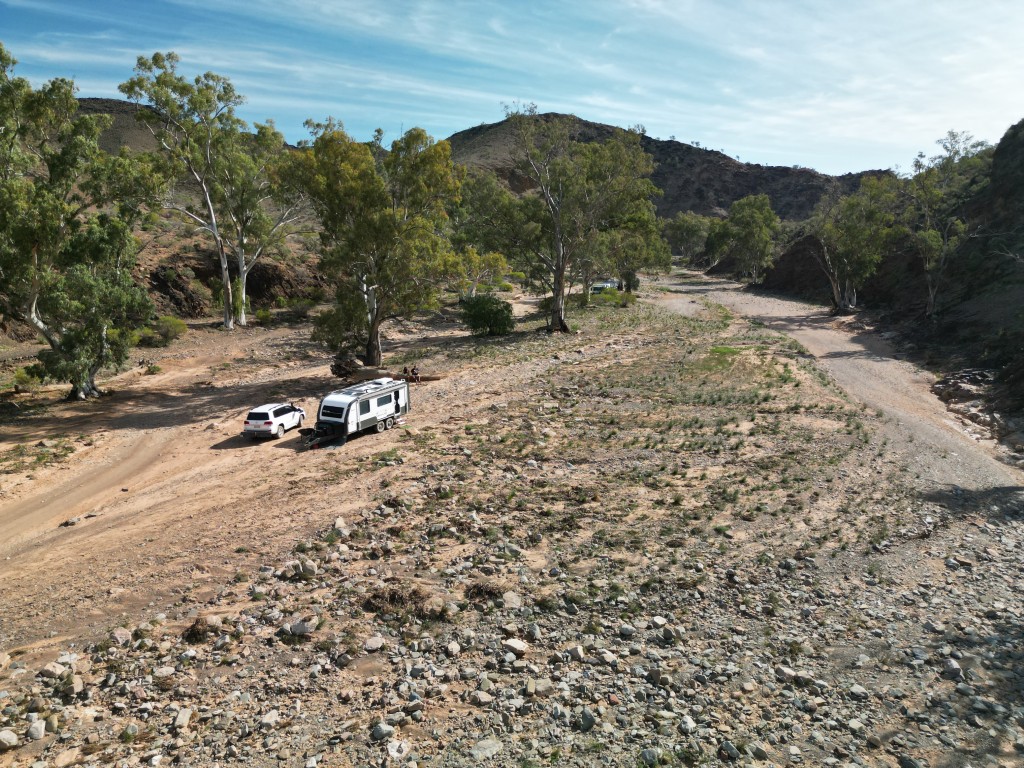
The colours against the rocks were vibrant and the nights were quiet and pitch black.
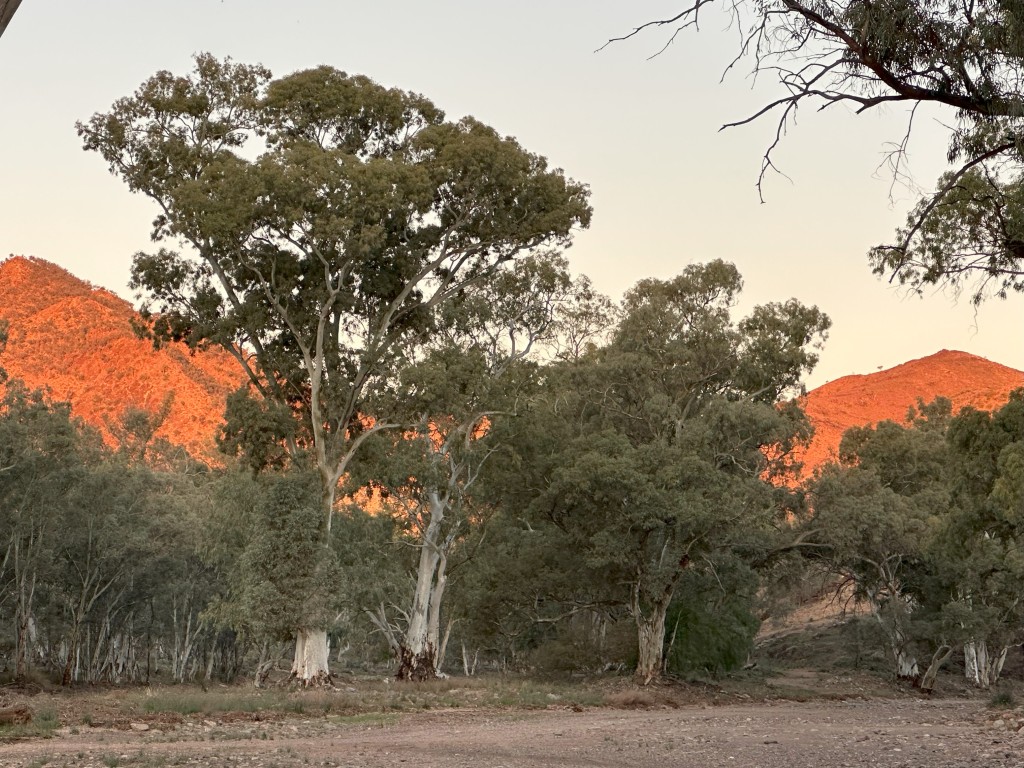
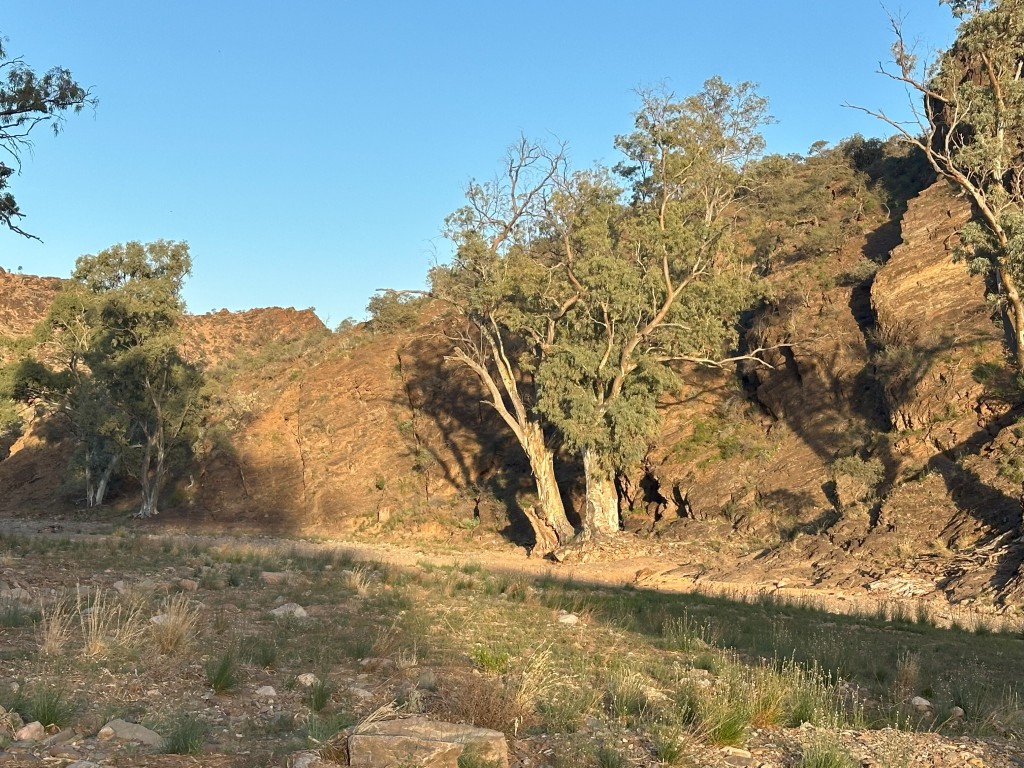
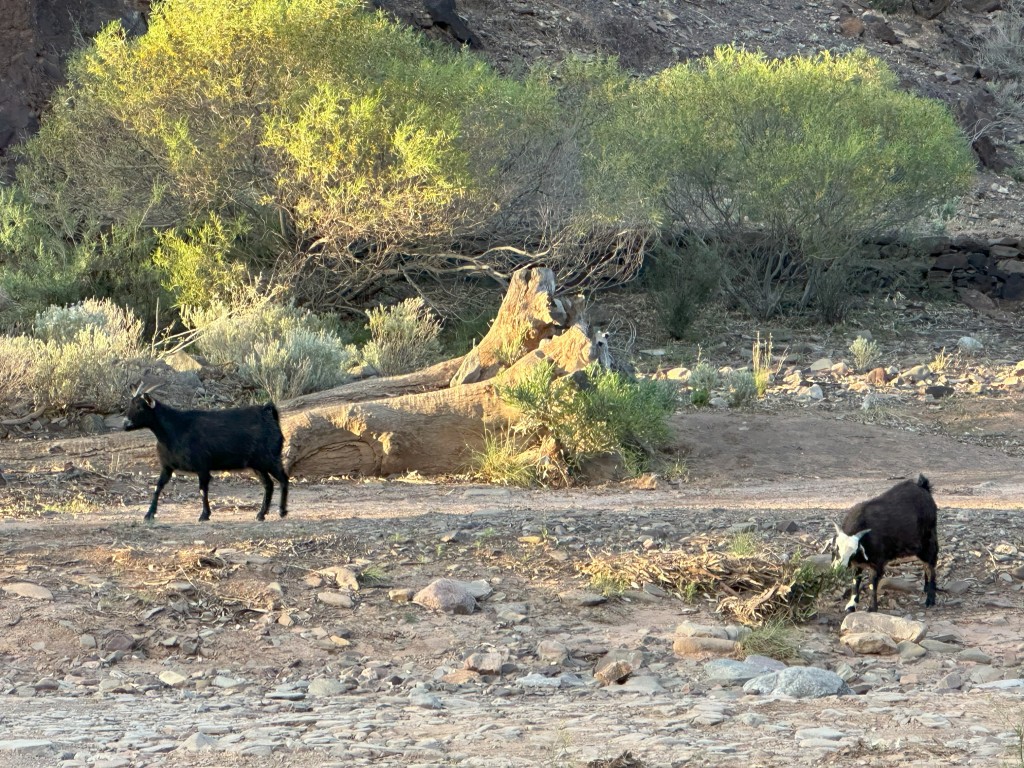
There are many feral goats in the gorge. Introduced by European settles in the 19th century, these goats have become a pest impacting the natural environment.
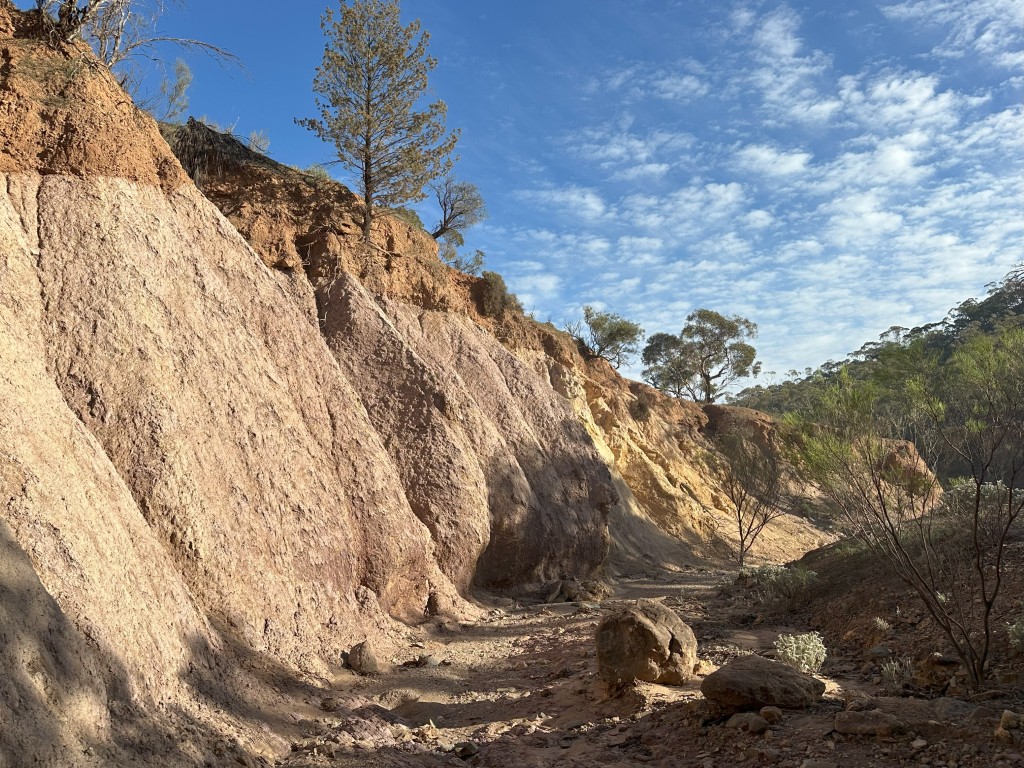
We did a few daytrips into the ranges. On the way we passed through the red ochre walls of Parachilna Gorge.
Our first stop on the way to Ikara-Flinders Ranges National Park, was the Great Wall of China. The top of the hill has a vertical rock face loosely resembling the Great Wall of China.
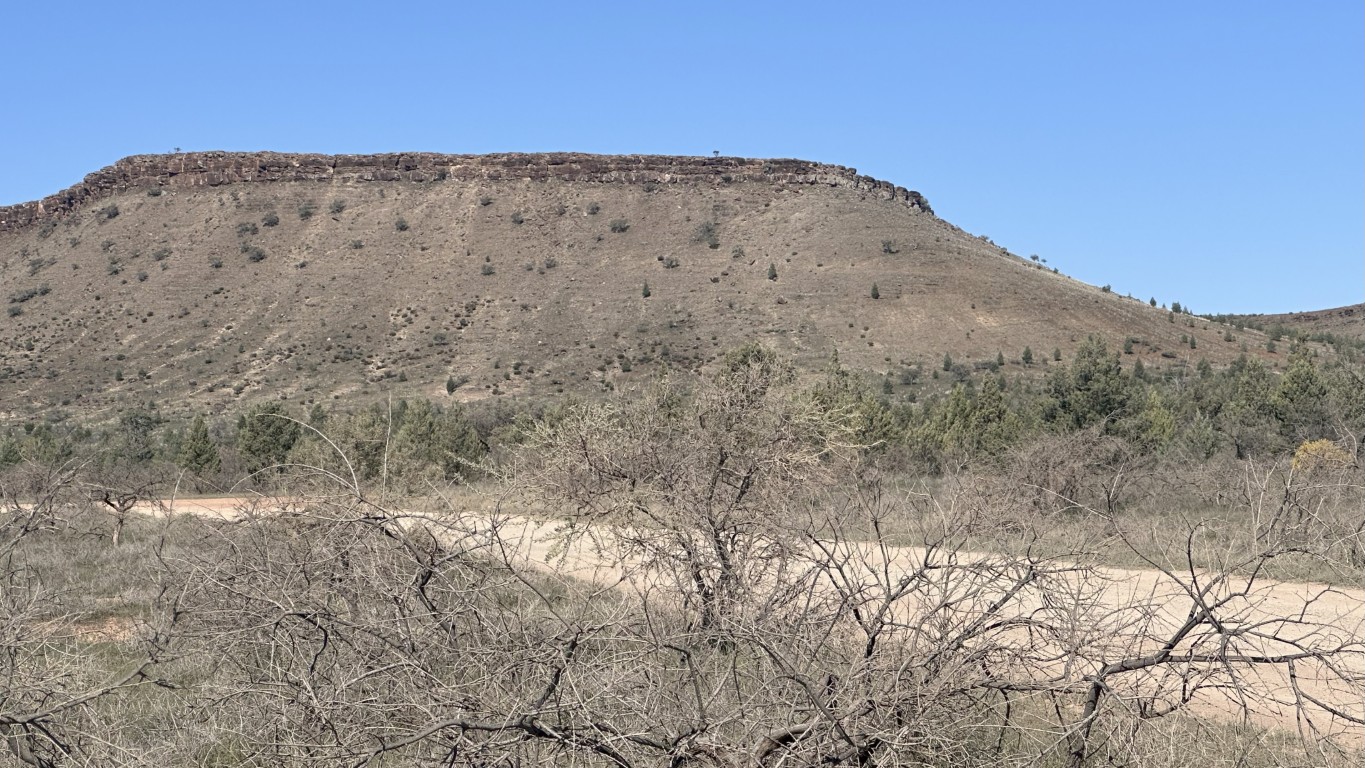
We had a route worked out to cover most of the Flinders ranges in a day.
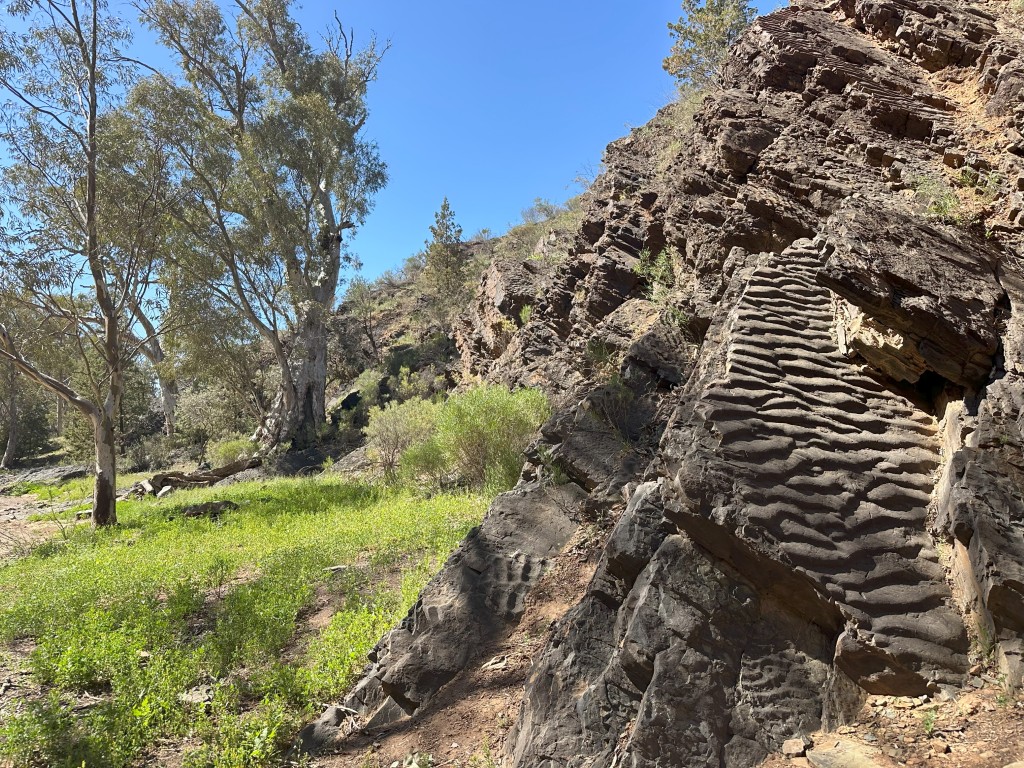
We decided to start with Brachina Gorge. This gorge is of geological significance as it apparently encapsulate 130 million years’ history in its sedimentary layers.
Water was seeping through the rock formations onto the road, leaving a muddy mess.
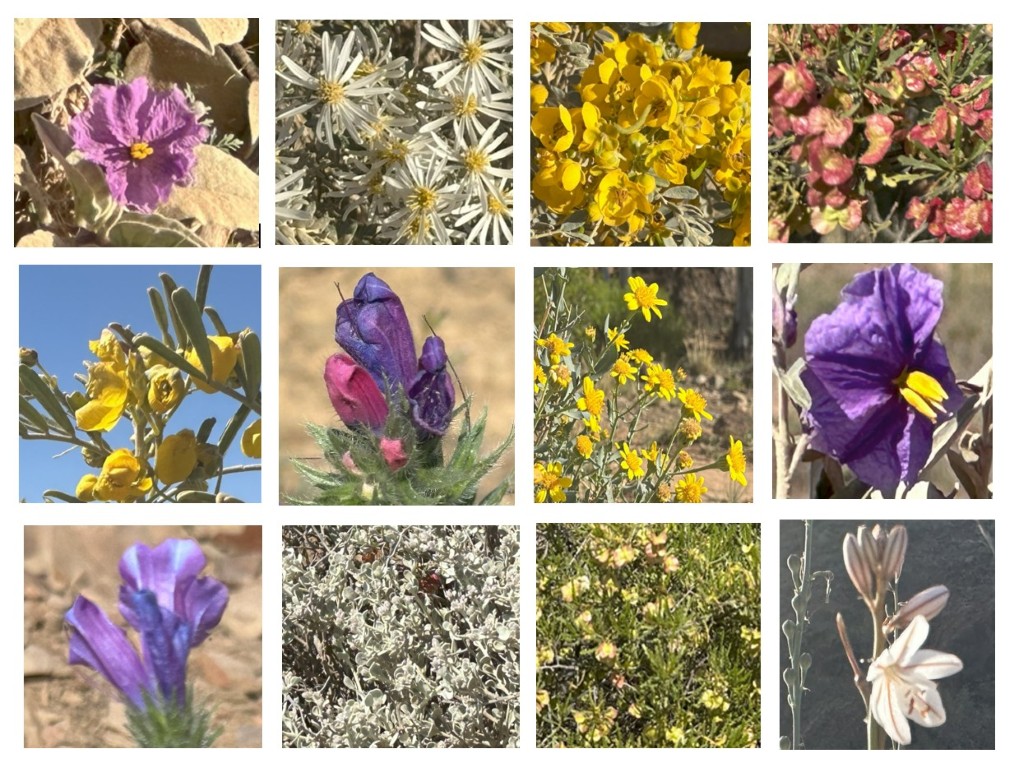
A few weeks before our visit, the ranges had good rainfall sparking a spurt of growth and late spring flowering. The wild flowers along the road were incredible.
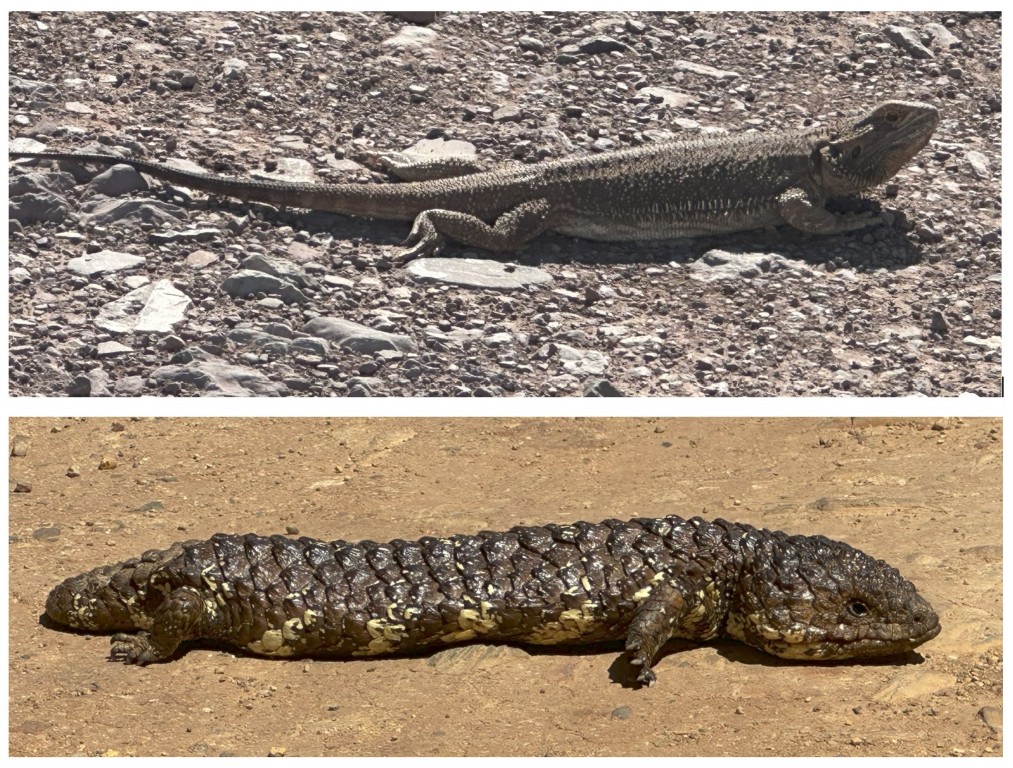
We even saw a few reptiles including Bearded Dragons and Shingleback Lizards.
The Shigleback’s party trick is its head and tail, looking alike. Its rear feet are even facing backwards. This confuses predators and increases their survival rate. Despite their ass looking like their face and vice-vera, they commit to long term monogamous partnerships, lasting decades.
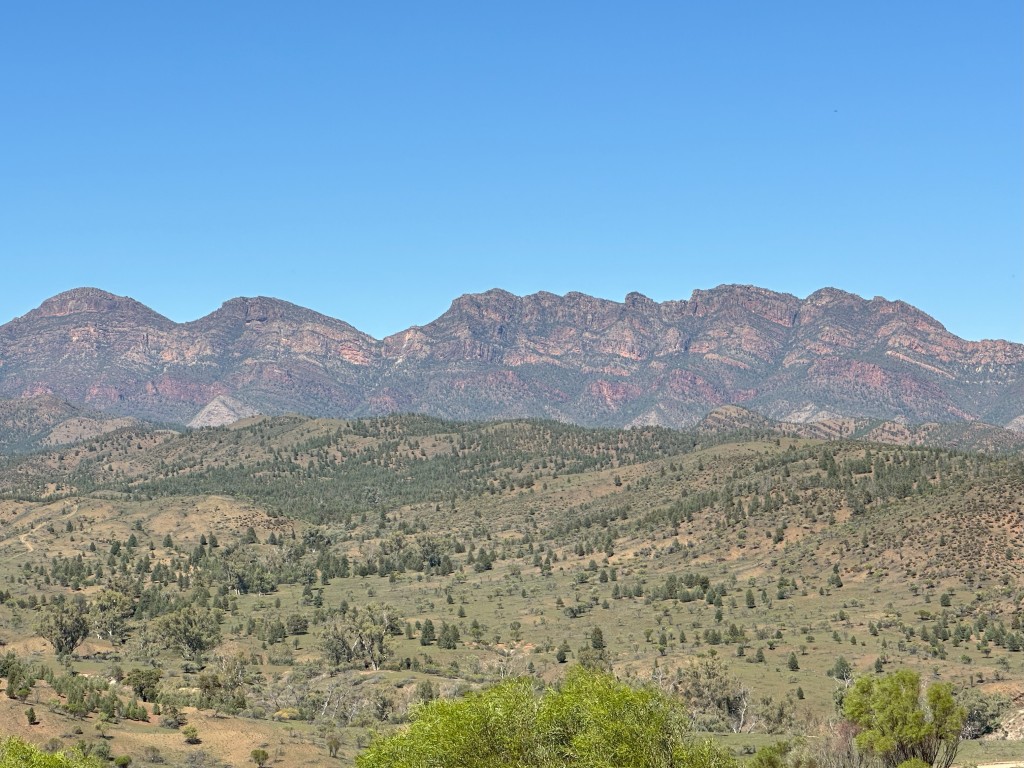
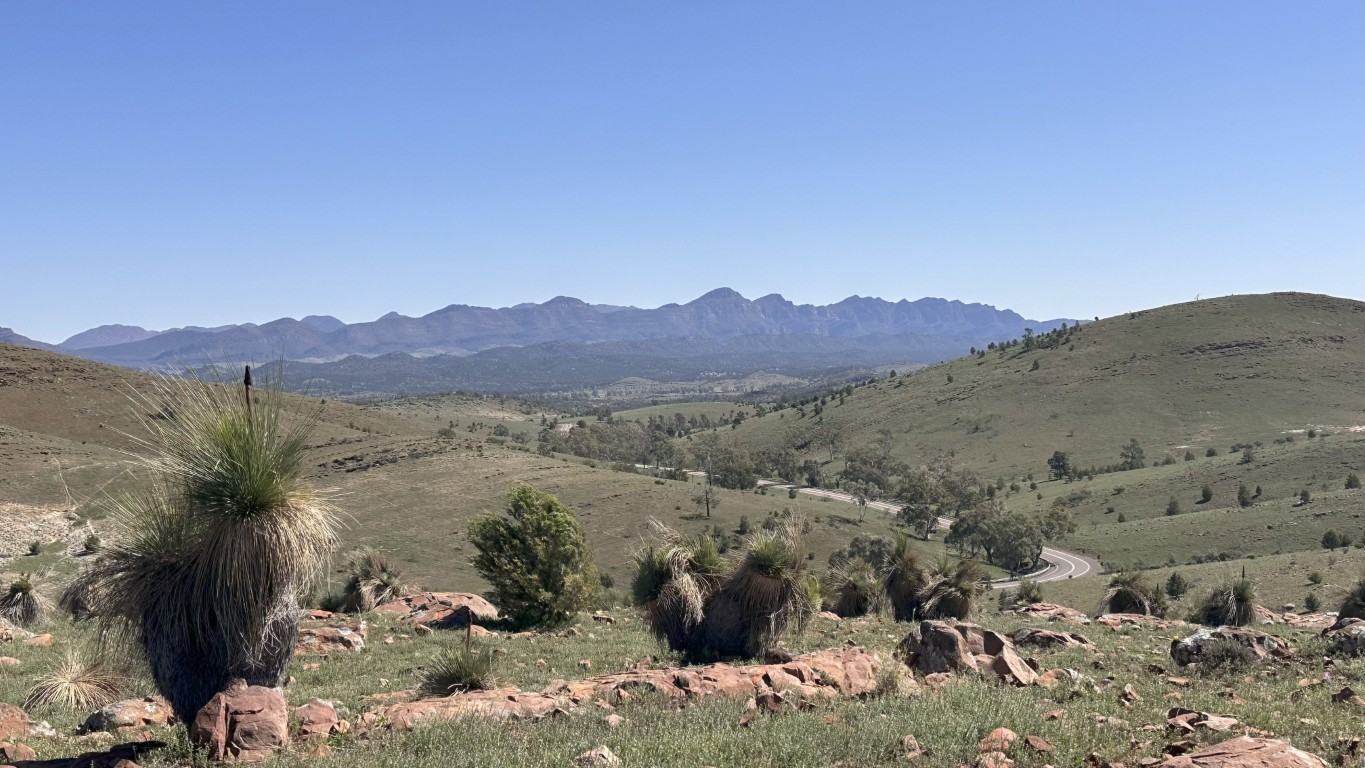
There are strategic lookouts spread throughout, providing great vantage points over the Flinders Ranges. Our first lookout was Razorback lookout.
We also stopped at Bunyeroo lookout, providing a different perspective on the range.
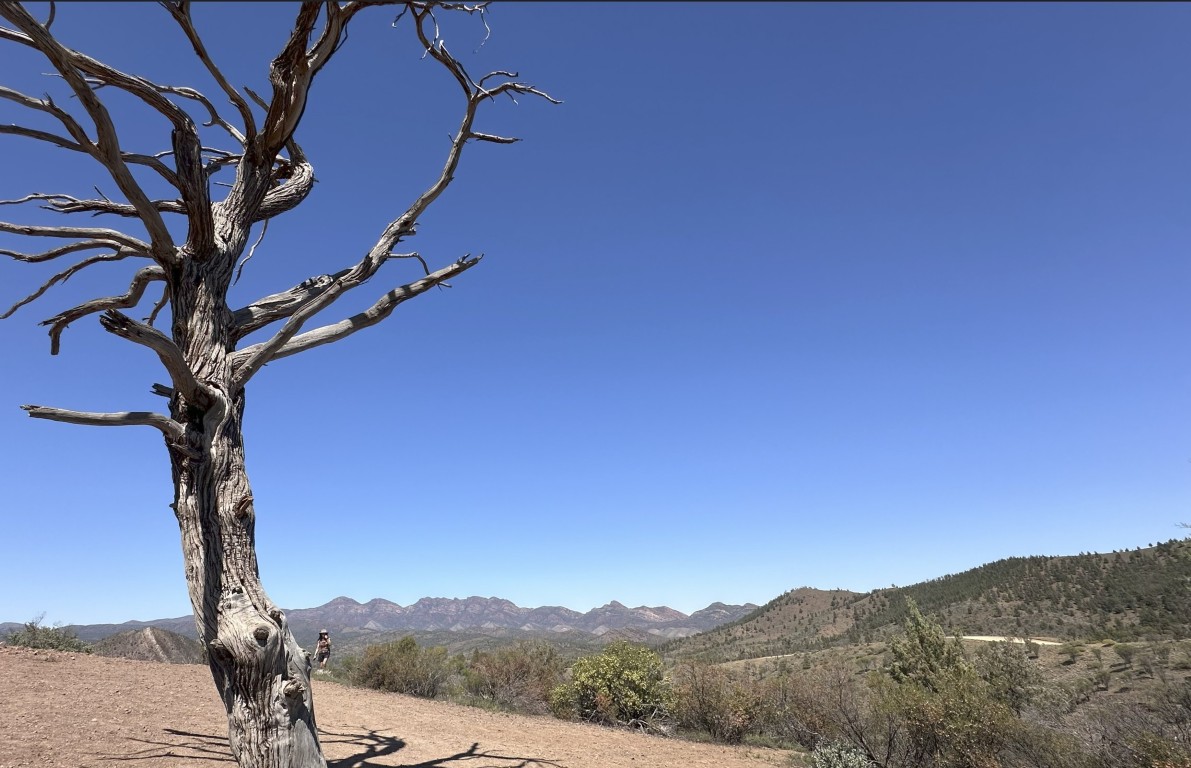
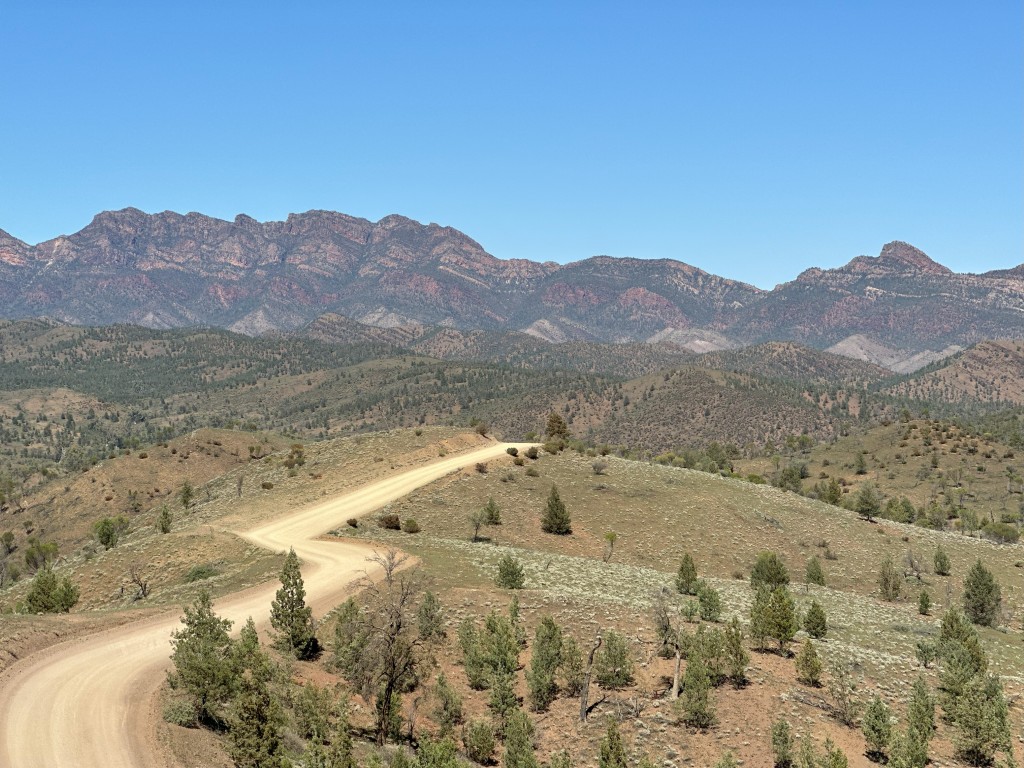
Bunyeroo has a vantage point from the carpark and short hike to a lower vantage point. From the lower vantage point you can see the winding dirt road disappearing in the distance.
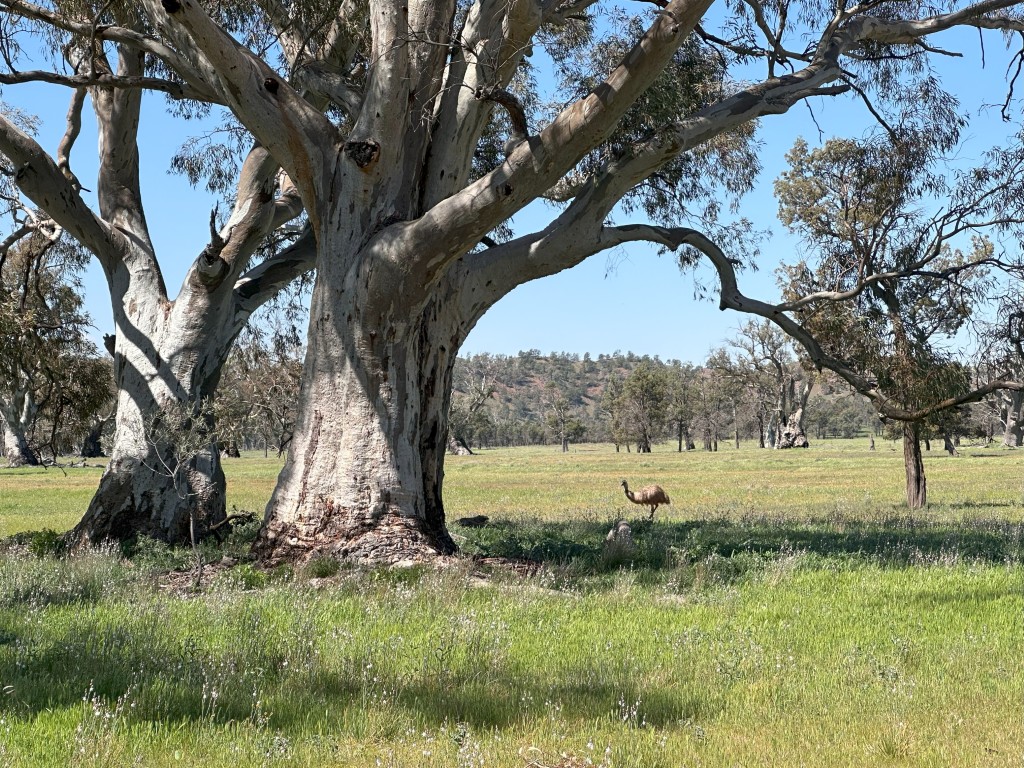
On the way to the Old Wilpena Station homestead we stopped at the Cazneaux River Red Gum trees. The trees were photographed by Harold Cazneaux in 1937 and titled “The Spirit of Endurance”.
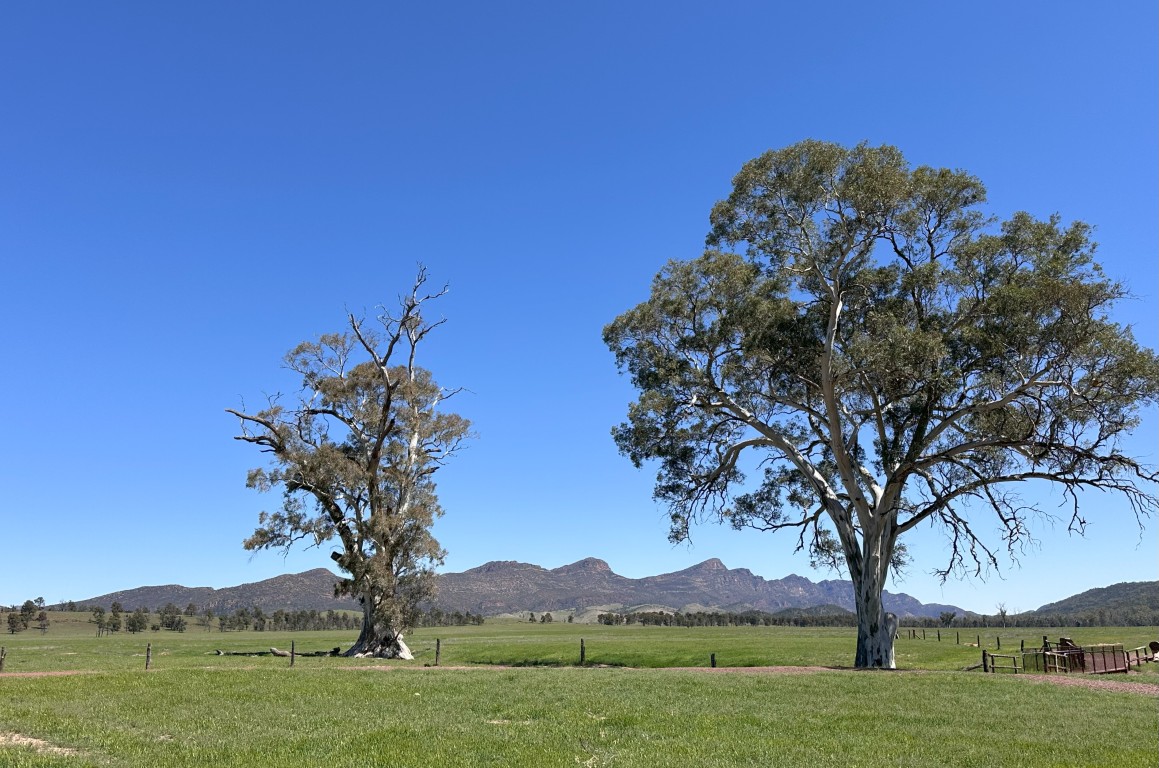
Wilpena Pound is an amphitheatre-like phenomena on top of the mountains. On the side of the mountain is a massive Discovery Park. We stopped for lunch at the Discovery Park. This park boasts with a restaurant, information centre, accommodation options including camping facilities and a pool.
After lunch and filling the car, we headed to the historic Old Wilpena Station Homestead where we were welcomed by an emu on arrival. The old stone homestead provide an insight in early settlement living.
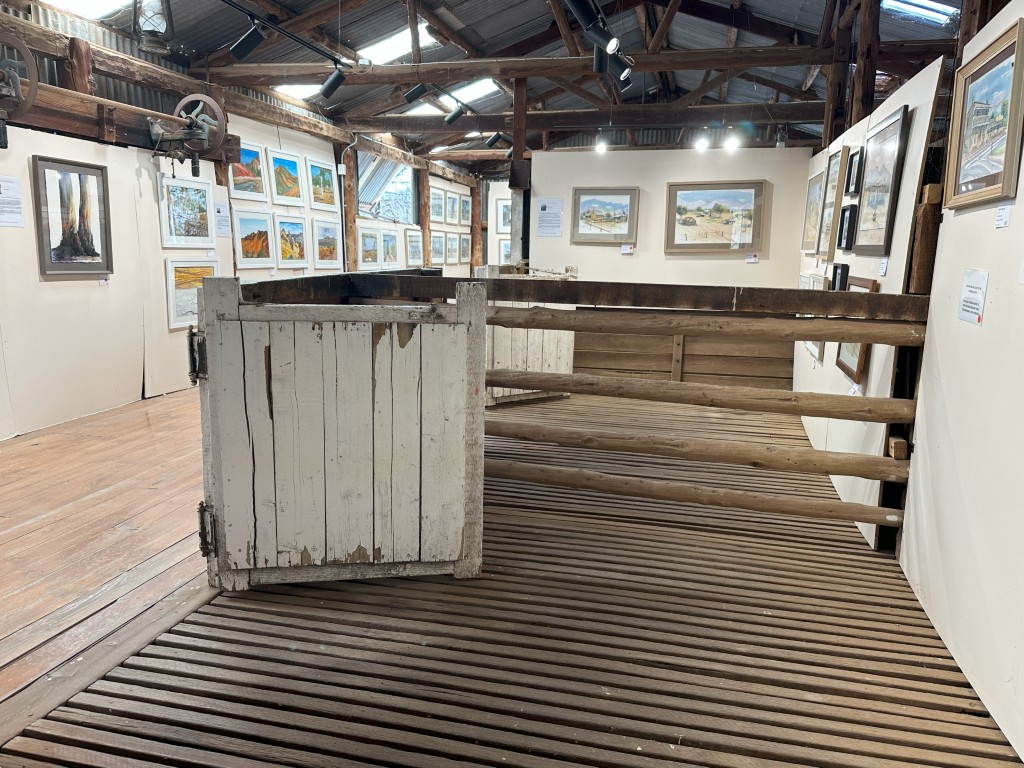
The old woolshed has been restored and was home to an art exhibition while we were there. Painters of Flinders Ranges Art Expedition is an annual event with more than 100 paintings on display. Most of the paintings were marked as sold when we were visiting.
Hucks Lookout was our last lookout leaving the ranges. Looking back, we made the correct decision to include the Finders Ranges in this trip. The recent rainfall definitely reduced the dust on the dirt road and extended the wild flower season.
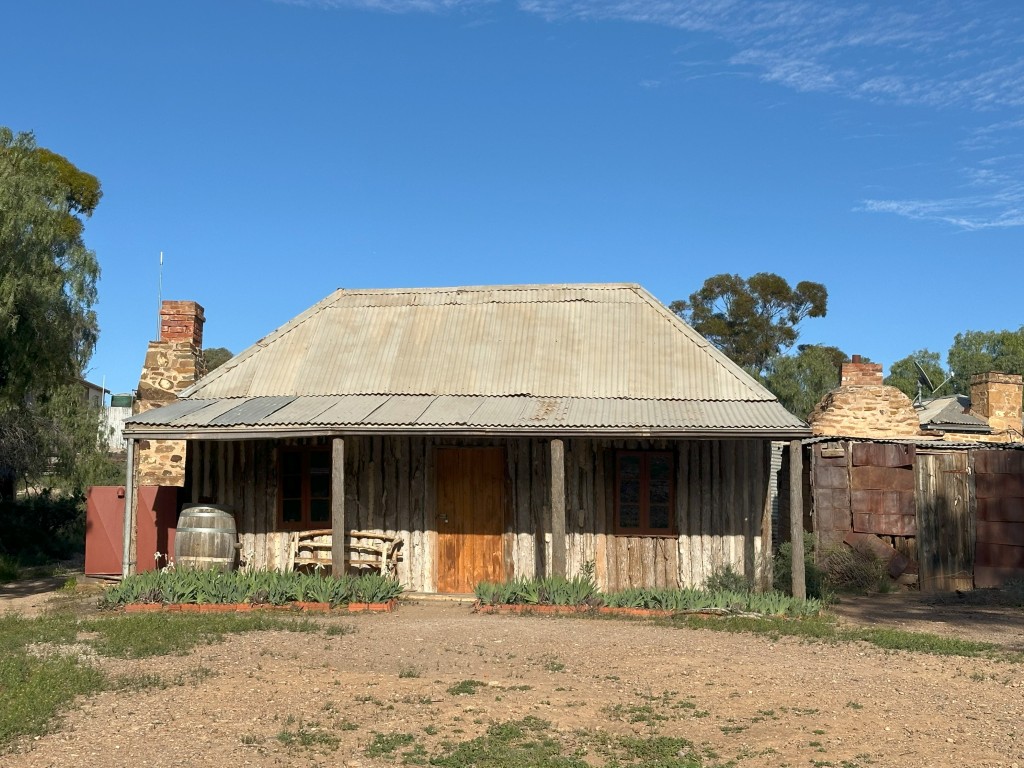
On the way back to camp we visited Blinman. The settlement at Blinman started after the discovery of copper in the area. There are a few buildings left in the main street. The Williams Cottage dating back to the 1890s, was built by the local store owner Fredrick Williams.
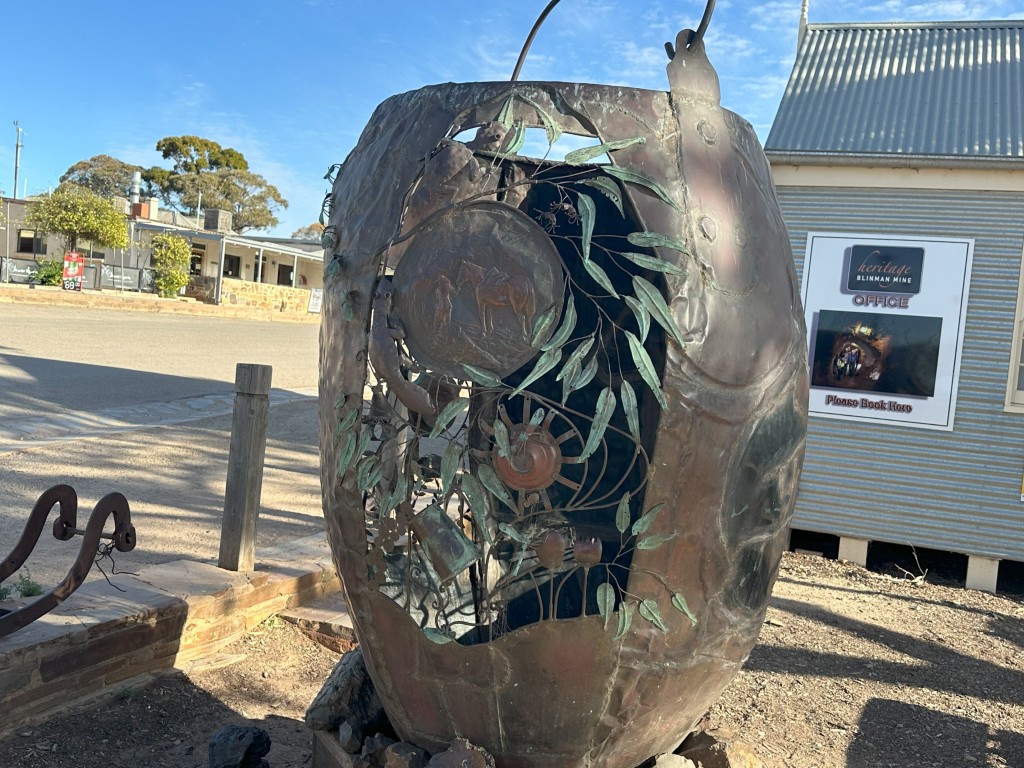
Across the road is the restored Blinman Memorial Hall and a few unexpected sculptures.

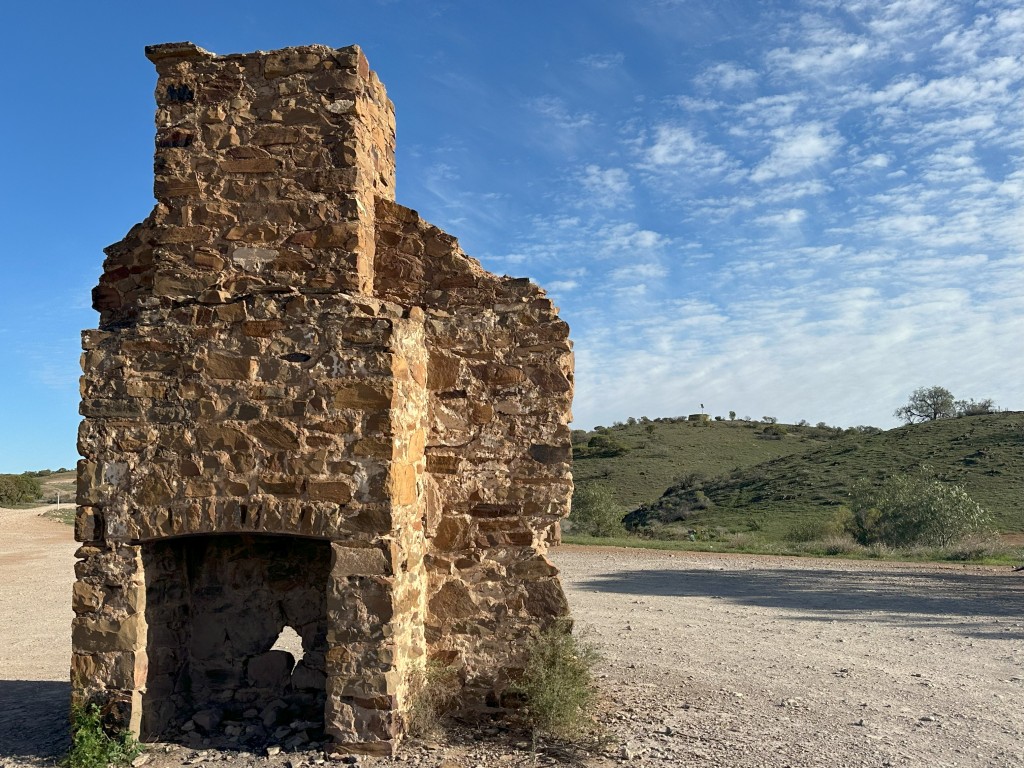
The main road ends in the Chimney Rest Area. As you walk through the ruins you realise how nature reclaims the land over time as manmade structures dissolve to dust.
This concluded our trip to the Flinders Ranges. Our next focus was to stock up and get ready to cross the Nullarbor to Western Australia.